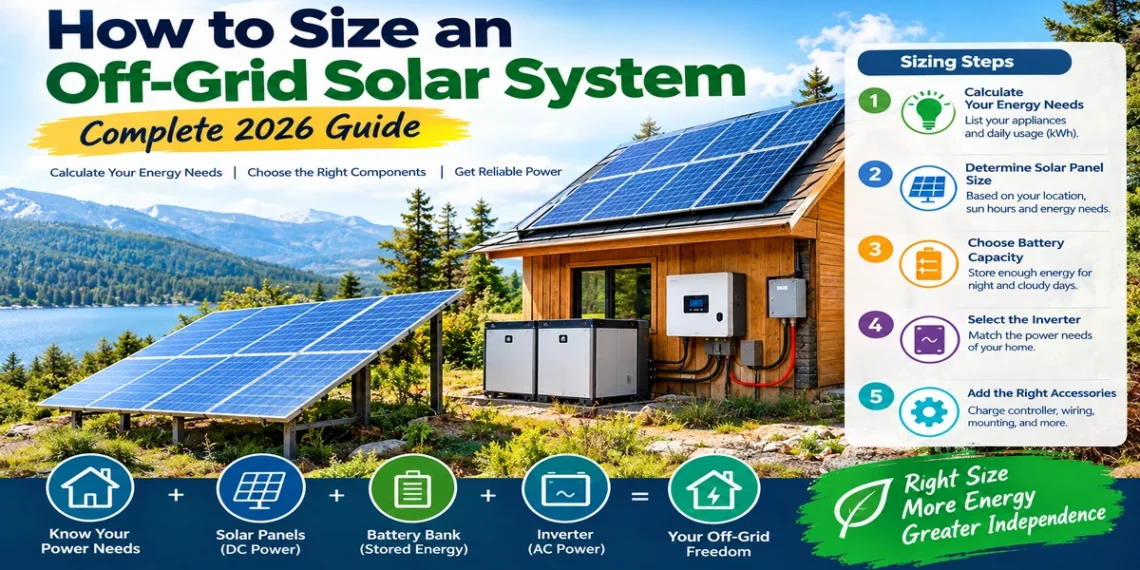

Ground-mounted solar panels can be an excellent alternative when a roof does not have enough usable space, has too much shade, or is poorly oriented for solar production. Instead of attaching panels to the roof, a ground-mounted system uses a dedicated structure installed in the yard or on another suitable piece of land.
But how much do ground-mounted solar panels cost in 2026?
For U.S. homeowners, current marketplace data shows that a typical residential ground-mounted solar system costs around $43,571 before incentives, with an average system size of about 14.7 kW and an average price of approximately $2.96 per watt. Ground-mounted systems are generally more expensive than rooftop systems because they require additional mounting structures, site preparation, labor, and other equipment.
Your actual price can be significantly different depending on system size, soil conditions, land preparation, mounting design, electrical work, permits, local labor rates, and whether you add battery storage.
This guide explains ground-mounted solar costs in 2026, what you are paying for, how to estimate your system price, and how ground-mounted solar compares with rooftop solar.
Quick Answer: How Much Does Ground-Mounted Solar Cost?
For U.S. residential installations, a useful 2026 benchmark is approximately:
| Ground-Mounted Solar Factor | 2026 Example |
|---|---|
| Average system size | 14.7 kW |
| Average cost per watt | $2.96/W |
| Average installed cost | About $43,571 |
| Cost before incentives | Yes |
| Battery included | Not necessarily |
| Land purchase included | No |
These are marketplace averages, not a guaranteed price for every homeowner. A smaller system may cost less overall, while a larger or more complicated installation can cost substantially more.
Ground-mounted solar can also cost more than rooftop solar because rooftop systems can use the existing roof structure, while ground installations require their own support structure and site work.
Important: Solar prices vary significantly by country, state, installer, property, system size, and site conditions. The dollar figures in this article are primarily U.S. examples for 2026.
What Is a Ground-Mounted Solar System?
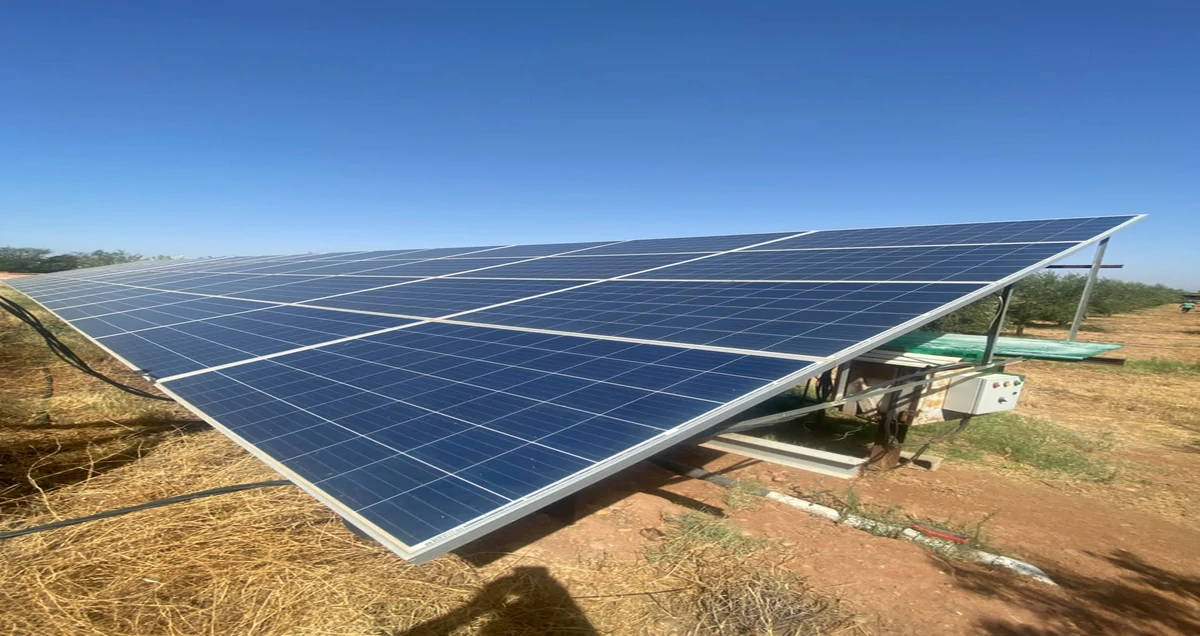
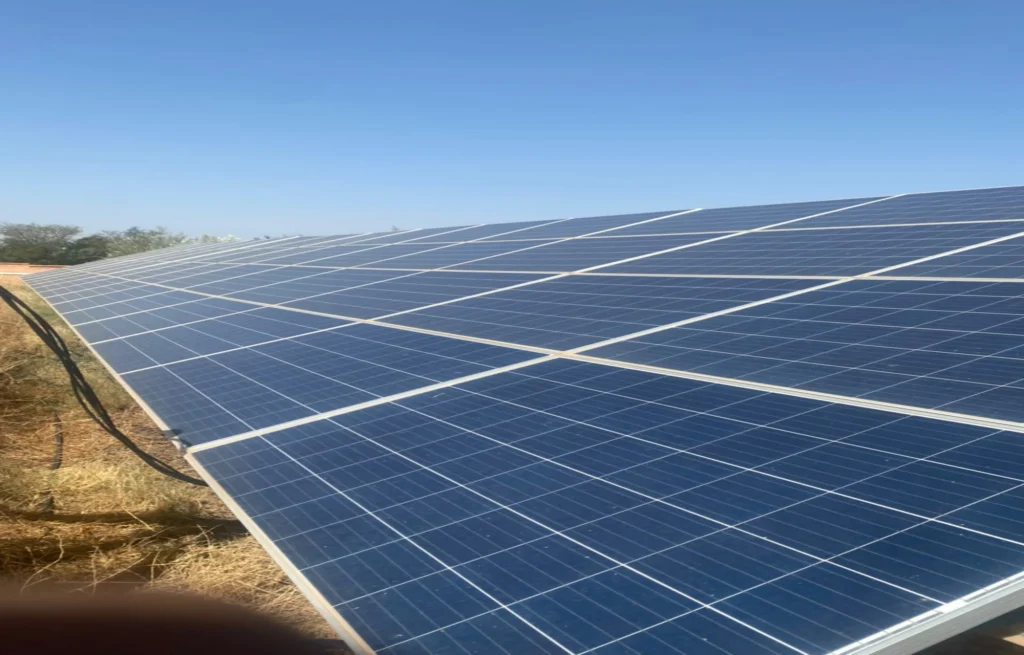
A ground-mounted solar system is a photovoltaic array installed on a structure anchored to the ground instead of being attached directly to a building.
A typical system includes:
- Solar panels
- Ground-mount racking
- Steel or aluminum support structures
- Posts, foundations, or ground anchors
- Solar inverter
- Electrical wiring
- Disconnects and safety equipment
- Monitoring equipment
- Electrical connection to the home or grid
- Installation labor
- Permits and inspections
Some systems also include:
- Solar batteries
- Backup equipment
- Generators
- Energy management systems
- Solar trackers
The mounting structure is one of the major differences between rooftop and ground-mounted solar.
Why Are Ground-Mounted Solar Panels More Expensive?
Ground-mounted solar does not automatically mean expensive solar, but the installation usually involves more work.
A rooftop system can use the existing roof as its mounting surface. A ground-mounted system needs a separate structure that must be designed and secured on the property.
The U.S. Department of Energy identifies mounting structures, fieldwork, design, permitting, installation, interconnection, and other “soft costs” as important components of overall solar-system costs.
Common additional expenses include:
1. Mounting structure
The panels need a strong structure capable of handling wind, snow, weather, and the weight of the equipment.
2. Site preparation
The installer may need to clear vegetation, level an area, improve drainage, or prepare access for construction equipment.
3. Foundations or ground anchors
Depending on the soil and mounting system, installers may use driven posts, concrete foundations, ground screws, or other anchoring methods.
4. Longer electrical runs
If the solar array is far from the house, additional wire, conduit, trenching, and electrical equipment may be required.
5. Additional labor
Ground-mounted systems can require more excavation, structural work, surveying, and construction compared with a straightforward rooftop installation.
Ground-Mounted Solar Cost Per Watt in 2026
One of the easiest ways to estimate solar costs is by using cost per watt.
For example:
System cost = Solar system size × cost per watt
Using the 2026 EnergySage ground-mounted benchmark of approximately $2.96/W:
Example 1: 5 kW system
5,000 W × $2.96 = $14,800
Example 2: 8 kW system
8,000 W × $2.96 = $23,680
Example 3: 10 kW system
10,000 W × $2.96 = $29,600
Example 4: 15 kW system
15,000 W × $2.96 = $44,400
These calculations are only illustrations using one reported marketplace average. Actual installer quotes can be higher or lower depending on the property and equipment.
EnergySage’s 2026 data reports an average residential ground-mounted system size of 14.7 kW and an average price of $2.96/W.
Ground-Mounted Solar Cost by System Size
The following table shows illustrative prices using $2.96/W.
| System Size | Example Panel Count With 400W Panels | Illustrative Cost |
|---|---|---|
| 5 kW | 13 panels | $14,800 |
| 6 kW | 15 panels | $17,760 |
| 8 kW | 20 panels | $23,680 |
| 10 kW | 25 panels | $29,600 |
| 12 kW | 30 panels | $35,520 |
| 15 kW | 38 panels | $44,400 |
| 20 kW | 50 panels | $59,200 |
Panel counts are rounded up because you cannot install a fraction of a panel.
These numbers should not be treated as quotes. Your installer may use different panel wattages, equipment, labor rates, and site-specific costs.
What Does a Ground-Mounted Solar Installation Include?
When you receive a solar quote, look beyond the headline price.
A complete installation may include several categories.
Solar Panels
Panels generate DC electricity from sunlight.
Higher-efficiency panels can produce more electricity from a given area, which can be useful when land is limited.
Inverter
The inverter converts the electricity produced by the solar panels into electricity that can be used by household equipment and, where permitted, exported to the grid.
Ground-Mount Racking
The racking supports the solar modules and determines their orientation and tilt.
Foundations
The mounting system needs a secure connection to the ground.
The exact foundation method depends on the soil, system design, local conditions, and engineering requirements.
Electrical Equipment
This may include:
- Wiring
- Conduit
- Disconnects
- Combiner equipment
- Grounding equipment
- Electrical protection devices
Installation Labor
Labor can represent a significant portion of the total project cost.
Permits and Inspections
Local authorities may require permits, inspections, engineering documents, or other approvals before the system can be energized.
Ground-Mounted Solar vs. Rooftop Solar Cost
Ground-mounted solar systems are generally more expensive than rooftop solar systems.
One reason is that rooftop installations can use the existing roof structure, while ground-mounted systems require dedicated supports.
EnergySage reported in 2026 that residential ground-mounted solar systems cost about 41% more than rooftop solar on average in its marketplace data.
However, price alone should not determine which system is appropriate.
Ground mounting can provide advantages that may justify the additional installation cost.
| Feature | Ground-Mounted Solar | Rooftop Solar |
|---|---|---|
| Uses roof space | No | Yes |
| Uses dedicated structure | Yes | Usually no |
| Installation complexity | Often higher | Often lower |
| Panel orientation flexibility | High | Depends on roof |
| Roof condition matters | Less important | Very important |
| Yard/land required | Yes | No |
| Shade management | Can be easier | Depends on roof |
| Maintenance access | Often easier | Can be harder |
| Typical installation cost | Often higher | Often lower |
The best design depends on the property rather than simply choosing the system with the lowest initial price.
Why Ground-Mounted Solar Can Be Worth the Extra Cost
A ground-mounted system can provide several practical advantages.
1. Better Panel Orientation
With a suitable site, the installer may have more flexibility to select the array’s orientation and tilt.
2. Avoids a Poor Roof
If the roof has significant shading, an unsuitable orientation, limited space, or structural concerns, ground mounting can provide another option.
3. Easier Maintenance
Ground-level equipment can be easier to inspect and access than panels installed on a steep or difficult roof.
4. More Available Solar Space
A large property may have enough open land for a larger solar array than the roof could accommodate.
5. Easier Expansion
Depending on the original design and available land, a ground-mounted array may provide more flexibility for future expansion.
What Factors Affect Ground-Mounted Solar Cost?
The advertised price per watt is only the starting point.
Several site-specific factors can change your final quote.
1. System Size
Larger systems require more panels, racking, wiring, and electrical equipment.
However, some installation costs are relatively fixed, so larger systems do not always cost exactly the same amount per watt as smaller systems.
2. Soil Conditions
The installer needs to understand the site before selecting an appropriate mounting method.
Rocky, unstable, wet, or difficult soil can increase construction complexity.
3. Land Preparation
A relatively flat, clear site may require less preparation than land covered with vegetation, rocks, slopes, or obstacles.
4. Distance From the House
A solar array located far from the electrical service can require longer wire runs and trenching.
5. Electrical Service
Your existing electrical system may need modifications depending on the size and configuration of the solar installation.
6. Mounting Type
Common ground-mounted configurations include:
- Fixed-tilt ground mounts
- Pole-mounted systems
- Adjustable structures
- Tracking systems
Each design has different equipment and installation requirements.
7. Local Permits
Permit requirements and fees vary by location.
The U.S. Department of Energy identifies permitting, installation, interconnection, design, and other non-hardware expenses as part of solar “soft costs.”
8. Labor Rates
Solar installation labor varies significantly by region.
9. Battery Storage
Adding batteries can substantially increase the project cost.
A battery can store excess solar electricity for later use, but it is a separate energy-storage component and should not automatically be assumed to be included in a solar-only quote.
10. Monitoring and Backup Equipment
Advanced monitoring, backup power equipment, and energy-management hardware can add to the project cost.
How Much Land Do Ground-Mounted Solar Panels Need?
The amount of land required depends on:
- Panel wattage
- Panel efficiency
- Number of panels
- Tilt angle
- Row spacing
- Shading requirements
- Local terrain
- Access requirements
- Setbacks
- Electrical equipment
- Mounting configuration
A 10 kW array using 400W panels would require approximately:
10,000 ÷ 400 = 25 panels
But the physical land requirement is larger than the panel surface area because installers need spacing between rows and room for equipment and maintenance.
Therefore, don’t calculate land requirements from panel dimensions alone.
Fixed-Tilt vs. Solar Tracking Systems
Most residential ground-mounted systems use fixed-tilt structures because they are relatively straightforward.
A solar tracker changes the position of the panels during the day to follow the sun.
Tracking can potentially increase solar production, but it also introduces:
- Additional mechanical equipment
- More complex installation
- Additional maintenance
- Higher upfront costs
For a typical home installation, a fixed system may be simpler.
The appropriate choice depends on the site, energy goals, economics, and installer design.
How Much Does a Ground-Mounted Solar System With Batteries Cost?
Adding battery storage increases the total project cost.
For example, a project could include:
Solar panels → inverter → home electrical system → battery
The battery stores some of the electricity generated by the solar array for later use.
Battery storage may be useful when homeowners want:
- Backup power
- More evening solar consumption
- Greater energy independence
- Time-of-use energy management
- Reduced reliance on grid electricity
However, battery sizing should be based on the loads you want to support and the required backup duration—not simply on the size of the solar array.
The U.S. Department of Energy’s residential benchmark modeling separately identifies PV and energy-storage components, illustrating that battery storage is a distinct part of system design and cost.
Does Ground-Mounted Solar Increase Home Value?
Solar can be considered an improvement to a property, but the effect on resale value varies by market, system ownership, location, and buyer demand.
A ground-mounted system can also introduce property-specific considerations because the equipment occupies land.
If you are installing solar partly as a property investment, consider:
- System ownership
- Remaining equipment warranty
- Installation quality
- Electricity production
- Property taxes
- Insurance
- Local buyer preferences
- Transfer requirements
Don’t assume that every dollar spent on solar will automatically return the same amount in resale value.
Are Ground-Mounted Solar Panels Cheaper Than Rooftop Solar?
Usually, no.
Ground-mounted systems generally cost more because they require their own support structures and may require additional site preparation and electrical work.
However, the cheapest installation is not necessarily the lowest-cost energy solution over its lifetime.
For example, a roof with significant shading might produce less electricity than a well-positioned ground array.
Likewise, a roof that requires major repairs before installing solar could change the economics of rooftop solar.
The right comparison should consider:
Total installed cost + expected energy production + maintenance + equipment life + financing + incentives
rather than only the initial installation price.
How to Calculate Your Ground-Mounted Solar Cost
You can make a rough first estimate using this formula:
Estimated solar cost = System size in watts × estimated cost per watt
For example:
8,000 W × $2.96/W = $23,680
Then consider additional project-specific costs or adjustments for:
- Difficult terrain
- Long electrical runs
- Major site preparation
- Battery storage
- Electrical upgrades
- Permits
- Financing
- Special mounting structures
Finally, subtract any incentives you actually qualify for.
Ground-Mounted Solar Cost Example
Suppose a homeowner wants a 10 kW ground-mounted solar system.
Using the $2.96/W benchmark:
10,000 W × $2.96 = $29,600
If the homeowner uses 400W panels:
10,000 ÷ 400 = 25 panels
The project might therefore contain:
- 25 × 400W solar panels
- Ground-mount racking
- Inverter
- Wiring and conduit
- Electrical protection
- Grounding equipment
- Foundation/anchors
- Installation labor
- Permits and inspections
This is an illustrative calculation, not a guaranteed market quote.
The final price could differ substantially depending on the site.
How to Lower the Cost of Ground-Mounted Solar
You don’t necessarily need to choose the cheapest equipment.
Instead, focus on reducing unnecessary project complexity.
Get Multiple Quotes
Compare several installers rather than accepting the first quote.
Ask each installer to provide:
- System size
- Panel model
- Inverter model
- Mounting system
- Warranty
- Estimated annual production
- Installation cost
- Permits
- Electrical work
- Battery price, if applicable
- Financing costs
Choose a Simple Site
A clear, accessible, relatively level location can reduce installation complexity.
Avoid Unnecessary Oversizing
Installing substantially more solar than you need can increase the upfront cost without necessarily providing proportional value.
Compare Fixed Mounts and Trackers
If a fixed structure can meet your energy requirements, compare it with tracking before paying for additional mechanical complexity.
Consider Future Electricity Needs
If you expect an EV, heat pump, electric water heater, workshop, or other large loads, account for them during system design.
What Should You Ask a Solar Installer?
Before signing a contract, ask:
- What is the total system size in kW?
- How much electricity is the system expected to produce annually?
- What panels are being installed?
- What inverter is included?
- What type of ground-mount structure will be used?
- How will the structure be anchored?
- Has the site been evaluated for soil conditions?
- How much land will the system require?
- How far is the array from the home?
- Is trenching included?
- Are permits included?
- Are electrical upgrades included?
- What warranties are included?
- What maintenance is expected?
- Is battery storage included?
- What happens if the grid goes down?
- What is the estimated total price before incentives?
- Which incentives do I actually qualify for?
A detailed quote makes it much easier to compare installers.
Ground-Mounted Solar Common Mistakes
Mistake 1: Looking Only at the Price
A $20,000 system isn’t necessarily cheaper if it produces substantially less electricity than a properly designed $24,000 system.
Mistake 2: Ignoring Land Preparation
A solar quote can change if the site requires extensive clearing, grading, excavation, or special foundations.
Mistake 3: Forgetting Electrical Distance
A distant solar array may require significant trenching and additional wiring.
Mistake 4: Buying Too Many Panels
More panels are not automatically better.
The system should be sized according to electricity consumption, solar resource, future loads, available land, and project goals.
Mistake 5: Assuming Batteries Are Included
Always check whether battery storage is included in the quoted price.
Mistake 6: Ignoring Local Requirements
Permitting and interconnection rules vary by jurisdiction.
Mistake 7: Choosing an Installer Only Because of a Low Price
Installation quality, equipment warranties, workmanship, experience, and project documentation also matter.
Is Ground-Mounted Solar Worth It in 2026?
Ground-mounted solar can make sense when a property has suitable land and the roof is not ideal for solar.
It can be particularly useful when:
- The roof is shaded
- The roof has limited usable area
- The roof orientation is unsuitable
- The homeowner wants a larger solar array
- The property has open land
- Easy panel access is important
- The homeowner wants more control over array orientation
But ground mounting is not automatically the right choice for every property.
The economics depend on the installation price, electricity production, local electricity rates, financing, incentives, maintenance, and the homeowner’s energy goals.
Ground-Mounted Solar Panels: Pros and Cons
Advantages
- Doesn’t require usable roof space
- More flexibility in panel orientation
- Can avoid a shaded roof
- Easier physical access for some maintenance
- Can accommodate a larger array when land is available
- Roof condition is less important
Disadvantages
- Usually higher installation cost
- Requires available land
- May require site preparation
- Requires dedicated mounting structures
- May require trenching
- Can be more visible from the property
- Local zoning and setback requirements may apply
Frequently Asked Questions
How much do ground-mounted solar panels cost in 2026?
For U.S. residential installations, EnergySage reports an average ground-mounted system cost of about $43,571 before incentives, based on an average 14.7 kW system and $2.96/W. Actual prices vary considerably by property and project.
Are ground-mounted solar panels more expensive than roof panels?
Generally, yes. Ground-mounted systems require dedicated structures and can require additional site preparation and electrical work. EnergySage reported that ground-mounted systems were about 41% more expensive than rooftop systems in its 2026 marketplace data.
How much does a 10 kW ground-mounted solar system cost?
Using $2.96/W as an illustrative benchmark, a 10 kW system would calculate to approximately $29,600 before incentives. Actual quotes can differ substantially.
How many panels are needed for a 10 kW system?
With 400W panels:
10,000 ÷ 400 = 25 panels
With 500W panels:
10,000 ÷ 500 = 20 panels
The exact number depends on the selected panel model.
Do ground-mounted solar panels need batteries?
No. A grid-connected ground-mounted solar system can operate without batteries.
Batteries are an optional component that can provide energy storage and, with the appropriate equipment, backup capability.
Can ground-mounted solar work off-grid?
Yes. Ground-mounted panels can be part of an off-grid solar system, but an off-grid installation normally requires battery storage and appropriate inverter/control equipment because solar production changes throughout the day and is unavailable at night.
Do ground-mounted solar panels need planning permission?
Requirements vary by location. Check your local planning, zoning, electrical, building, and utility-interconnection requirements before construction.
Are ground-mounted solar panels easier to maintain?
They can be easier to access than rooftop panels, but maintenance requirements still depend on system design, site conditions, vegetation, weather, and equipment.
Can I install ground-mounted solar myself?
Some smaller systems can be installed as DIY projects, but ground-mounted solar involves structural, electrical, grounding, permitting, and safety considerations. A professional assessment is particularly important for larger residential systems.
Ground-Mounted Solar Cost Calculator Formula
For a quick estimate:
Step 1: Determine system size
Example:
10 kW = 10,000 watts
Step 2: Multiply by estimated cost per watt
10,000 × $2.96 = $29,600
Step 3: Add project-specific expenses
Consider:
- Site preparation
- Foundation
- Trenching
- Electrical upgrades
- Permits
- Battery storage
- Special racking
Step 4: Subtract applicable incentives
Only subtract incentives you actually qualify for and verify current rules before using them in your financial calculation.
Step 5: Compare the final quotes
Look at both:
Price per watt
and
Estimated annual energy production
A complete comparison should also consider warranties, equipment, installation quality, financing, and expected system life.
Final Thoughts: How Much Should You Budget for Ground-Mounted Solar?
Ground-mounted solar panels can provide an excellent solution for homeowners who have available land but limited or unsuitable roof space.
In the U.S., 2026 marketplace data provides a useful benchmark of approximately $2.96 per watt, with an average residential ground-mounted system costing about $43,571 before incentives.
But your final price can be very different.
The most important factors are:
- System size
- Solar panel wattage
- Ground-mount structure
- Soil conditions
- Site preparation
- Distance from the home
- Electrical work
- Permits
- Labor
- Battery storage
- Local incentives
- Financing
The best way to determine your actual ground-mounted solar cost is to obtain multiple detailed quotes and compare both the total installed price and expected energy production.
A good solar project is not simply the one with the lowest upfront price. It is one that is properly sized, safely installed, appropriately designed for the property, and economically sensible for the homeowner.