
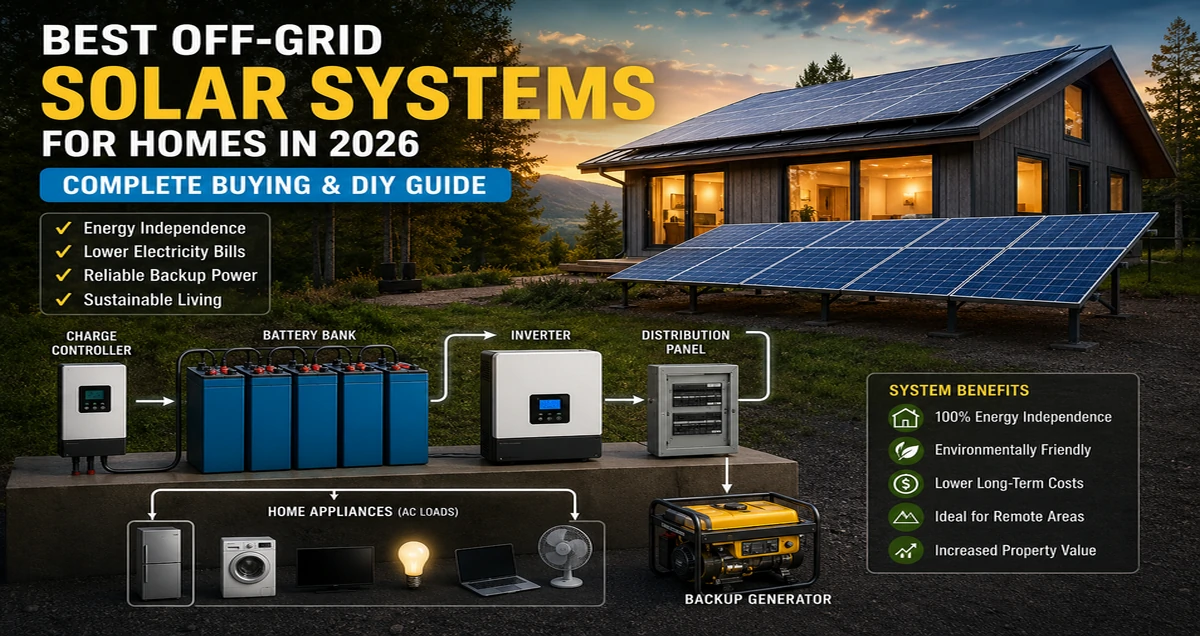
Best Off-Grid Solar Systems
Going off-grid with solar sounds simple: put panels on the roof, add batteries, and enjoy free electricity. In reality, designing a reliable off-grid system requires careful planning. The biggest mistake is buying a large number of panels without first calculating how much energy the home actually uses.
A properly designed off-grid solar system needs to balance solar generation, battery storage, inverter capacity, household loads, and local sunlight conditions. The U.S. Department of Energy’s guidance for sizing small-scale off-grid PV systems starts with household energy requirements, environmental conditions, reliable components, and system analysis. (The Department of Energy’s Energy.gov)
This 2026 guide explains what to look for, how to estimate system size, which components matter most, and when DIY installation makes sense.
What Is an Off-Grid Solar System?
An off-grid solar system is designed to operate without relying on utility electricity. Unlike a typical grid-connected solar installation, an off-grid home needs enough generation and storage to supply electricity when the sun isn’t producing power.
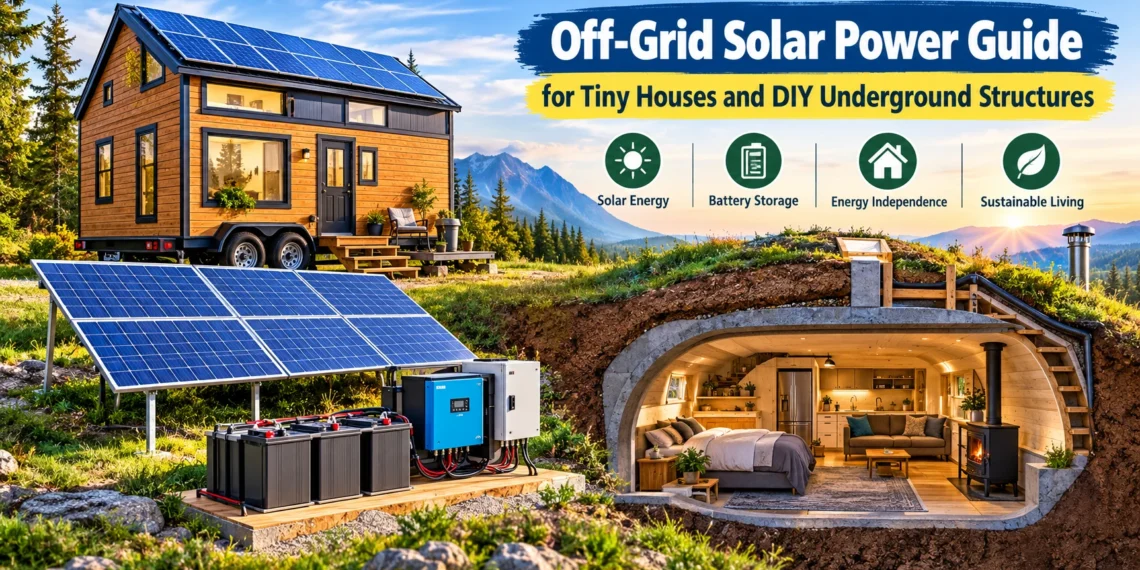
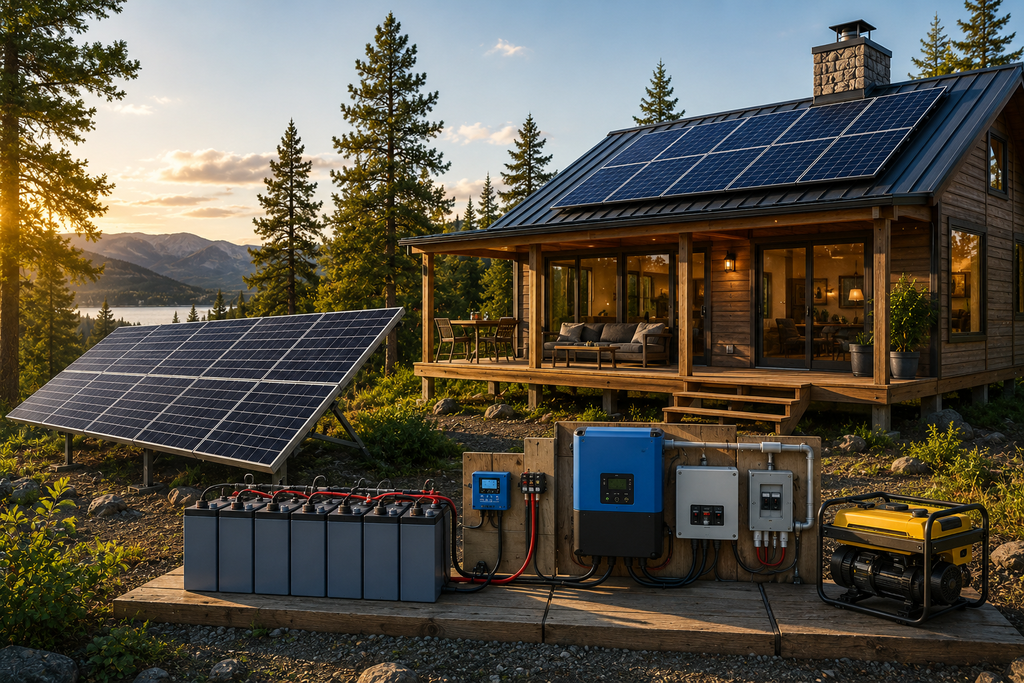
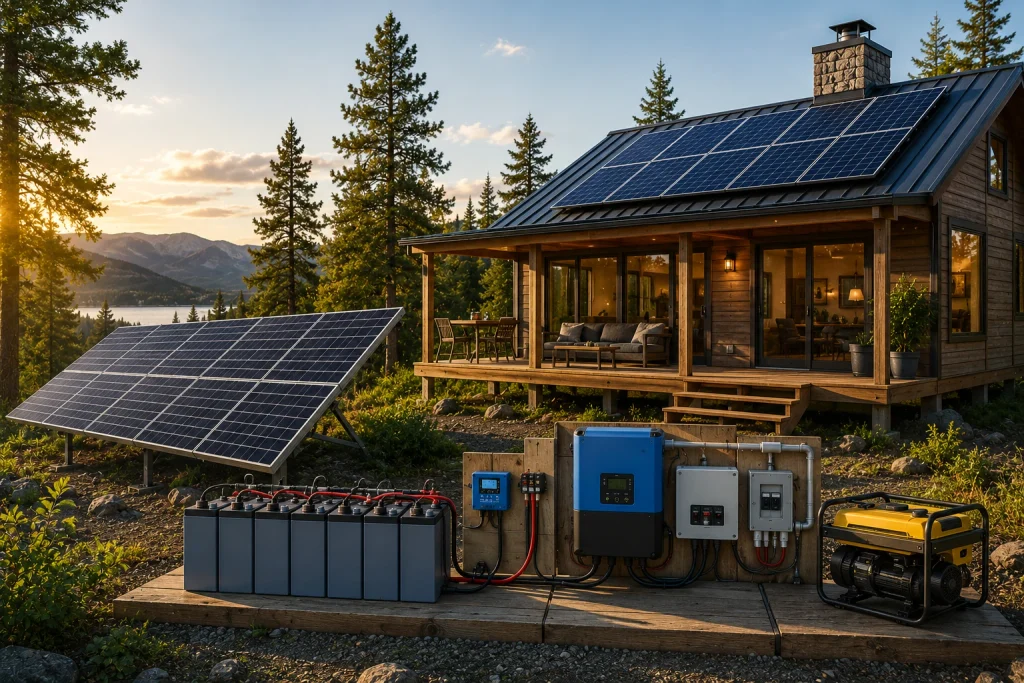
A typical system includes:
- Solar panels
- Battery storage
- Inverter/charger
- Charge-control equipment
- Mounting hardware
- Disconnects and electrical protection
- Monitoring equipment
- Wiring and other balance-of-system components
- Optional backup generator
Solar panels produce electricity during daylight, while batteries store excess energy for nighttime or periods of low solar production. The Department of Energy explains that storage can make solar energy available when the sun isn’t shining and can improve resilience during outages. (The Department of Energy’s Energy.gov)
How to Choose the Best Off-Grid Solar System in 2026
Don’t start by asking, “How many panels should I buy?”
Start with these five questions:
1. How Much Electricity Does Your Home Use?
Check your electricity bills if you’re currently connected to the grid. Look at your monthly kWh consumption and identify seasonal differences.
If you’re building a new off-grid home, list every major appliance and estimate:
Watts × hours of use per day = watt-hours per day
For example, a 100-watt appliance running for 5 hours uses approximately 500 Wh.
Add the daily consumption of your appliances to estimate your household’s energy requirement.
2. How Much Sunlight Does Your Location Receive?
Two identical homes can require different solar systems because their solar resources aren’t the same.
Roof orientation, shading, weather, seasonal sunlight, and other site conditions affect production. (The Department of Energy’s Energy.gov)
For an off-grid system, don’t design around an unusually sunny day. You need to consider periods when solar production is lower.
3. How Much Battery Storage Do You Need?
Battery capacity is measured in kilowatt-hours (kWh), while inverter output is measured in kilowatts (kW).
Those are not the same thing.
Think of it this way:
- kWh = how much energy you can store
- kW = how much power you can deliver at one time
The Department of Energy specifically distinguishes battery energy capacity from power capacity because both are important when designing storage systems. (The Department of Energy’s Energy.gov)
4. What Appliances Will You Run?
A small refrigerator and LED lighting are very different from:
- Electric water heaters
- Central air conditioning
- Heat pumps
- Electric ovens
- Well pumps
- Pool equipment
- EV chargers
High-demand appliances can dramatically increase the required inverter and battery capacity.
5. Do You Need Backup Power?
For a truly independent home, a backup generator can provide another layer of protection during prolonged periods of poor solar production.
It’s especially useful if your home experiences extended cloudy or snowy periods.
Best Off-Grid Solar System Configurations
There isn’t one system that’s perfect for every home. Instead, think about the system size that matches your lifestyle.
Small Off-Grid Solar System: 3–5 kW
A smaller system can work well for:
- Tiny homes
- Cabins
- Small cottages
- Efficient vacation properties
- Basic lighting and electronics
A system in this range might support efficient refrigerators, lighting, computers, communications equipment, and other modest loads.
However, electric heating and other high-power appliances can quickly exceed the system’s capabilities.
Medium Off-Grid Solar System: 6–10 kW
For many efficient homes, this is a more practical starting range.
A medium system can potentially support:
- Refrigeration
- Lighting
- Electronics
- Washing machine
- Internet equipment
- Kitchen appliances
- Pumps
- Moderate HVAC loads
The exact configuration depends heavily on daily electricity consumption and local solar conditions.
Large Off-Grid Solar System: 10–15+ kW
Large homes or households with substantial electrical loads may require a significantly larger system.
This becomes especially important when the home uses:
- Electric heating
- Multiple refrigerators/freezers
- Large water pumps
- Pool equipment
- Multiple HVAC systems
- EV charging
- Electric water heating
Rather than choosing 15 kW simply because the house is large, calculate the actual energy and peak-power requirements first.
The Battery Is Just as Important as the Solar Panels
Here’s where many first-time DIY builders go wrong.
They spend most of their budget on panels and underestimate storage.
Solar panels generate electricity primarily during daylight. Your home, however, can consume electricity 24 hours a day.
That’s why batteries are central to an off-grid design.
A battery bank should be sized according to:
- Daily electricity consumption
- Desired backup duration
- Solar production
- Battery chemistry
- Usable battery capacity
- Maximum discharge rate
- Temperature
- Expected battery lifespan
The DOE notes that energy storage isn’t 100% efficient, meaning some energy is lost during charging and discharging. (The Department of Energy’s Energy.gov)
So don’t size your battery by simply matching it to your daily consumption.
What Battery Chemistry Is Best for Off-Grid Solar?
Lithium-ion batteries are widely used with solar-plus-storage systems, while other chemistries—including lead-acid—also exist. (The Department of Energy’s Energy.gov)
For homeowners comparing modern storage options, you’ll commonly encounter LiFePO4, a lithium-ion chemistry popular for stationary storage.
When comparing batteries, look beyond the advertised kWh number.
Check:
- Usable capacity
- Cycle rating
- Continuous output
- Surge capability
- Operating temperature
- Warranty
- Safety certifications
- Indoor/outdoor installation requirements
- Expandability
- Monitoring
- Manufacturer support
Choosing the Right Off-Grid Inverter
The inverter is one of the most important components in the entire system.
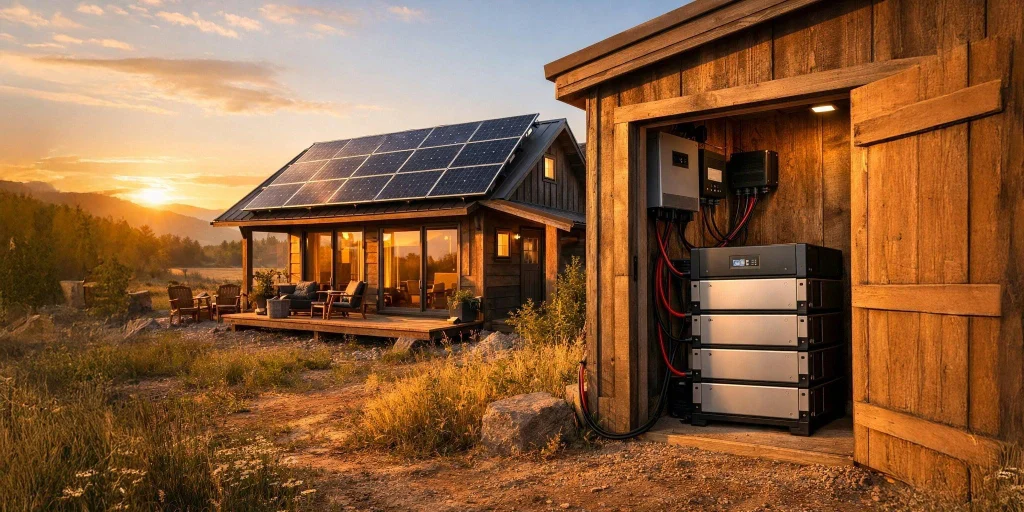
It converts the DC electricity produced by the solar array and stored in the batteries into AC electricity that household appliances can use.
For an off-grid home, look for an inverter/charger designed specifically for standalone operation.
Pay attention to:
Continuous output:
Can it handle your normal household load?
Surge capacity:
Can it start appliances with motors or compressors?
Battery voltage:
Is it compatible with your battery bank?
Solar input:
Can it accept the voltage and current produced by your panels?
Generator integration:
Can it automatically work with a backup generator if needed?
A properly configured inverter and storage system are essential if you want solar to continue powering a home independently during a grid outage. (The Department of Energy’s Energy.gov)
DIY Off-Grid Solar: Can You Build It Yourself?
Yes, some homeowners choose DIY systems, particularly smaller systems using preconfigured equipment.
But there’s an important distinction between assembling equipment and designing and installing a complete residential electrical system.
A residential off-grid installation can involve:
- High DC voltage
- High battery currents
- AC electrical hazards
- Fire risks
- Grounding requirements
- Disconnects
- Overcurrent protection
- Building codes
- Electrical inspections
- Battery installation requirements
The DOE recommends considering applicable building and fire codes when installing battery storage. (The Department of Energy’s Energy.gov)
For a permanent home installation, having a qualified electrician or solar professional review the design is a smart safety step even if you perform some of the work yourself.
DIY Off-Grid Solar System: Basic Planning Steps
Step 1: Calculate Your Energy Consumption
Create a list of appliances and calculate daily Wh/kWh consumption.
Step 2: Determine Your Solar Resource
Estimate the available solar production for your specific location and account for seasonal variation.
Step 3: Size the Solar Array
Your PV array needs to produce enough energy to operate your loads and replenish the battery.
Step 4: Size the Battery
Determine how much energy you need overnight and during periods of reduced solar production.
Step 5: Size the Inverter
Calculate both your normal operating load and the startup requirements of appliances.
Step 6: Add Safety Equipment
Include appropriate disconnects, overcurrent protection, grounding, wiring, and other required components.
Step 7: Plan for Bad Weather
Consider how your system will operate through several days of poor solar production.
Step 8: Add Backup Generation if Necessary
A generator can provide additional resilience when solar and battery storage aren’t sufficient.
This general approach follows the DOE’s off-grid sizing framework: determine household loads, assess environmental conditions, select reliable components, and analyze the complete system. (The Department of Energy’s Energy.gov)
What Makes a Solar System Truly “Off-Grid”?
A large solar array doesn’t automatically make a house off-grid.
A true standalone system needs to manage the entire energy cycle:
Sun → Solar Panels → Inverter/Charge Equipment → Battery → Home
During sunny periods, solar energy can supply the home and charge the batteries.
At night:
Battery → Inverter → Home
During extended low-solar periods, a backup generator may become part of the energy strategy.
Common Mistakes to Avoid
Buying Panels Before Calculating Your Loads
More panels don’t automatically solve every problem.
If your battery or inverter is undersized, you can still experience power shortages.
Ignoring Winter Production
A system that works perfectly in summer may struggle during the lowest-production season.
Forgetting Startup Loads
Refrigerators, pumps, compressors, and some power tools can require significantly more power when starting.
Installing Too Little Battery Storage
Running out of stored energy overnight defeats the purpose of an off-grid system.
Choosing Equipment Without Checking Compatibility
Solar panels, batteries, charge controllers, and inverters need to work together electrically and within their specified operating limits.
Treating DIY as a Weekend Project
Off-grid residential electrical work is not something to improvise. Follow applicable codes and use qualified professionals where required.
How Much Does an Off-Grid Solar System Cost in 2026?
There isn’t one reliable price for every home.
The final cost depends on:
- Solar array size
- Battery capacity
- Inverter type
- Mounting system
- Electrical equipment
- Installation
- Permits
- Backup generator
- Roof or ground installation
- Site preparation
- Local labor
- Equipment brand
The battery can represent a substantial portion of an off-grid system’s overall investment, particularly when you want multiple days of energy storage.
For that reason, compare the total installed system cost, not just the price per solar panel.
Best Off-Grid Solar System: What Should You Buy?
For most homeowners, the “best” system isn’t necessarily the biggest or cheapest.
Look for a system that offers:
✅ Enough solar generation for your location
✅ Adequate usable battery capacity
✅ An inverter sized for your peak loads
✅ Compatible components
✅ Expandable storage where appropriate
✅ Reliable monitoring
✅ Strong manufacturer support
✅ Appropriate safety certifications
✅ Professional installation or qualified inspection when required
A smaller, carefully designed system can be much more useful than an oversized collection of incompatible components.
Is an Off-Grid Solar System Worth It in 2026?
For the right homeowner, absolutely.
Off-grid solar can provide energy independence, reduce dependence on fuel or utility infrastructure, and provide electricity in locations where grid connection is difficult or expensive.
But independence comes with responsibility.
You need to understand your electricity consumption, maintain the equipment, monitor battery health, and plan for periods when solar production is low.
The biggest lesson is simple:
Don’t buy your solar system based on the number of panels. Design the system around the way you actually use electricity.
Frequently Asked Questions
How many solar panels does an off-grid home need?
There is no universal number. Panel requirements depend on household energy consumption, panel wattage, sunlight availability, system losses, and the desired level of energy independence.
How much battery storage does an off-grid home need?
It depends on daily consumption and how much backup time you want. A home that needs several days of autonomy will require substantially more storage than a system designed primarily for overnight use.
Can solar panels work without the grid?
Yes, but a standalone home system needs the appropriate inverter and energy storage configuration. Standard grid-tied solar systems generally shut down when the grid fails for safety reasons. (The Department of Energy’s Energy.gov)
Can I install an off-grid solar system myself?
Some smaller systems can be suitable for DIY installation, but permanent residential systems involve significant electrical and safety considerations. Local regulations may also require permits, inspections, or licensed professionals.
Do I need a generator with off-grid solar?
Not necessarily, but a backup generator can add resilience during prolonged periods of low solar production.
Are batteries necessary for off-grid solar?
For a conventional 24/7 off-grid home, battery storage is generally a fundamental part of the system because solar production doesn’t match household demand at all times. (The Department of Energy’s Energy.gov)
Final Verdict
The best off-grid solar system for a home in 2026 is the one correctly sized for the home’s actual energy needs—not simply the system with the most panels or the largest battery.
Start with your electricity consumption. Then evaluate your solar resource, battery requirements, peak loads, inverter capacity, safety requirements, and backup strategy.
If you’re building a DIY system, take the time to understand every component before purchasing anything. And for permanent residential electrical work, use qualified professionals wherever required by local codes.