
How to Build an Off-Grid Solar Power System for a Food Truck (Step-by-Step)
Running a food truck requires reliable electricity for refrigeration, lighting, ventilation, payment terminals, and food preparation equipment. When shore power is unavailable, an off-grid solar power system for a food truck can help supply electricity without depending entirely on a traditional electrical hookup.
However, designing a solar system for a mobile kitchen requires more than installing panels on the roof. You must calculate your daily electricity consumption, choose an appropriately sized battery, select a compatible inverter, and determine whether the roof can accommodate enough solar panels.
This step-by-step guide explains how to plan a food truck solar system, estimate its components, understand the costs, and identify situations where additional charging or backup power may be necessary.
1. What Is an Off-Grid Solar Power System for a Food Truck?
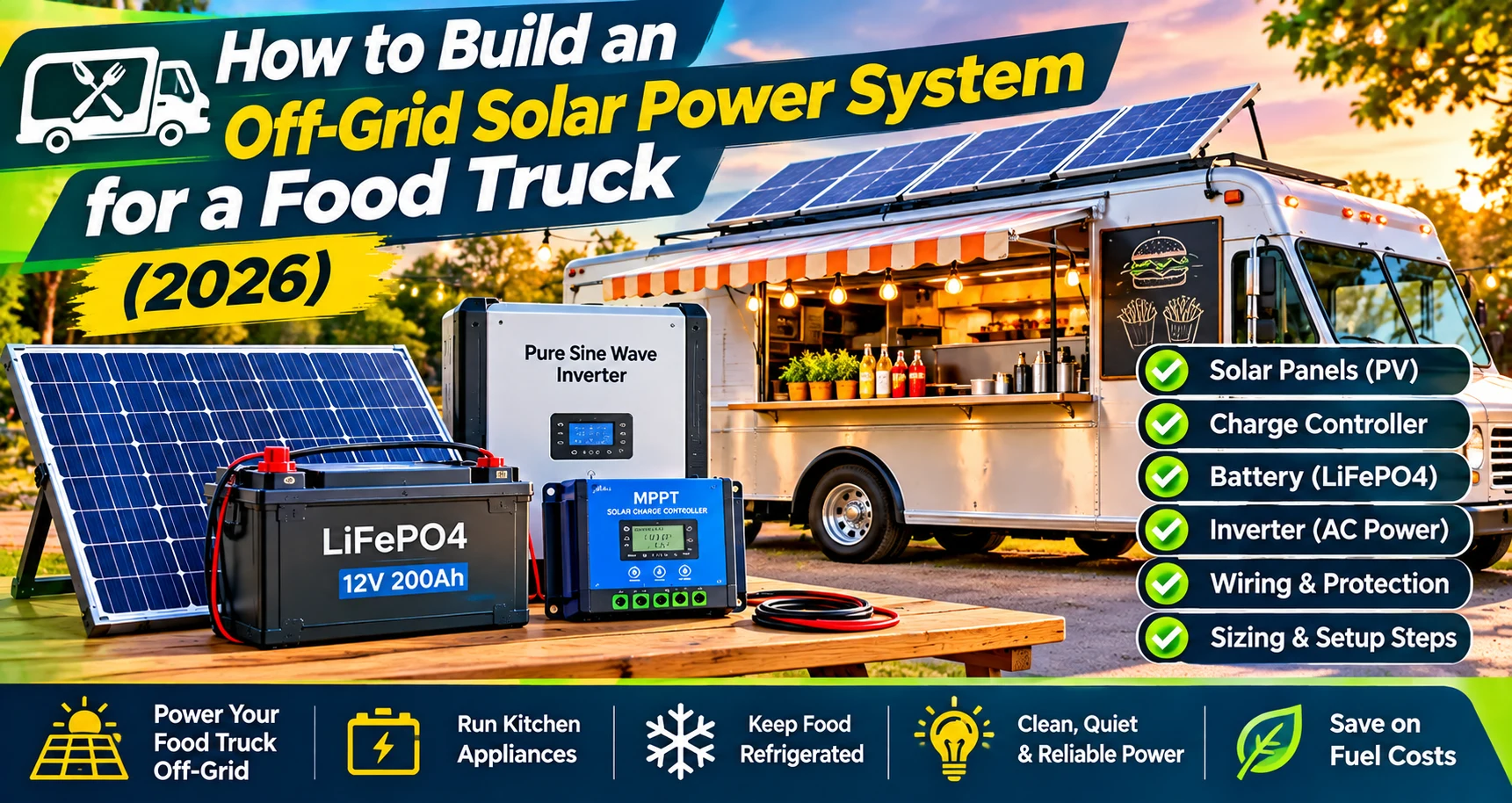
An off-grid solar power system generates and stores electricity without requiring a permanent connection to the utility grid. For a food truck, the system typically includes rooftop or portable solar panels, a battery bank, a solar charge controller, and an inverter for compatible AC appliances.
Related Post
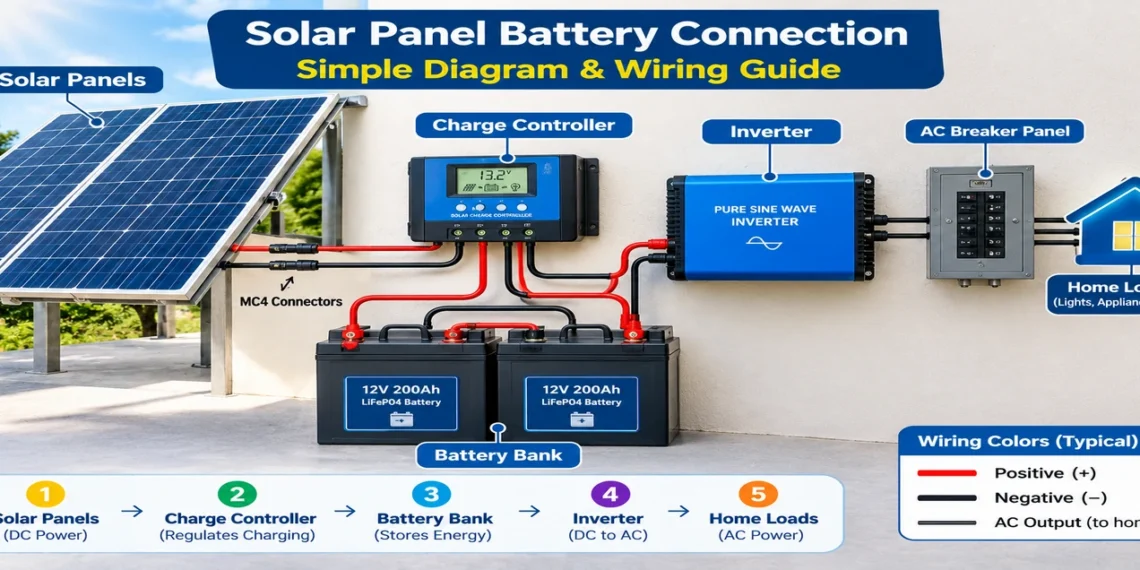
Solar panels produce electricity during daylight. A charge controller regulates the energy entering the battery, which stores electricity for use when solar production is low or unavailable. The inverter converts battery DC electricity into AC electricity for equipment that requires it.
Depending on the design, the system may also support charging from an approved shore-power connection, a vehicle alternator through compatible equipment, or another permitted charging source. These additional sources can be important because a food truck may use more electricity than its roof panels can generate.
2. Benefits and Limitations of Food Truck Solar Power
Greater Energy Independence
Stored solar energy can reduce reliance on external electrical hookups when the system is correctly sized.
Quiet Battery Operation
A battery-based system can supply power without running a combustion generator at the point of use.
Potential Fuel Savings
Solar generation may reduce generator runtime and fuel consumption when enough solar energy is available.
Limited Roof Space
Roof dimensions, shading, ventilation equipment, and structural limits can restrict the size of a solar array.
Solar power is particularly useful for low- and moderate-power loads, such as LED lighting, electronics, and some refrigeration systems. High-power cooking appliances can require a much larger battery and inverter than a typical food truck roof can support economically.
3. Step 1: Calculate Your Food Truck’s Daily Electricity Needs
Before buying equipment, identify every electrical device you plan to operate. Record its power consumption in watts and estimate how many hours it will run each day.
Daily Energy Formula
Daily energy (Wh) = Power (W) × Operating hours
For example, a device using 100 watts for 8 hours consumes approximately 800 watt-hours (Wh), or 0.8 kilowatt-hours (kWh).
Example: Food Truck Daily Energy Audit
The following table is an illustrative example. Real consumption varies by equipment model, ambient temperature, duty cycle, and operating practices. Use manufacturer specifications or measured consumption wherever possible.
| Equipment | Average Power Assumption | Daily Use | Estimated Energy |
|---|---|---|---|
| Refrigeration | 100 W average | 12 hours | 1,200 Wh |
| LED lighting | 40 W | 8 hours | 320 Wh |
| POS system and router | 35 W | 10 hours | 350 Wh |
| Ventilation fan | 150 W | 6 hours | 900 Wh |
| Small electronics | 50 W | 4 hours | 200 Wh |
| Total illustrative daily consumption | 2,970 Wh | ||
In this example, the listed equipment consumes approximately 2.97 kWh per day. This estimate excludes cooking appliances, air conditioning, water heaters, pumps, and other unlisted loads.
Refrigerators and compressors cycle on and off, so their average energy consumption can be much lower than their rated running power. Conversely, hot weather and frequent door openings can increase refrigeration demand. Measure real-world consumption whenever possible.
4. Step 2: Choose the Right Solar Panels
Solar panels generate electricity from sunlight. For a food truck, panels may be mounted on the roof or deployed separately when the truck is parked, provided the installation is secure and practical.
Rooftop panels can charge the battery while the truck is parked outdoors, but their output depends on roof area, panel orientation, shade, weather, and the number of available peak sun hours.
Estimate Your Required Solar Array
A useful first estimate is:
Solar array size (W) ≈ Daily energy use (Wh) ÷ (Peak sun hours × System efficiency)
Suppose the truck uses 3,000 Wh per day, receives an estimated 5 peak sun hours, and the planning assumption for overall system efficiency is 75%.
3,000 ÷ (5 × 0.75) = 800 W
Under those assumptions, an array rated at approximately 800 W could theoretically generate the required daily energy. However, this is a preliminary estimate, not a guarantee that the system will meet the truck’s demand every day.
Actual production may be lower because of clouds, shade, panel temperature, limited roof space, and seasonal changes in sunlight. You may need a larger array, additional charging sources, reduced energy consumption, or some combination of these.
Important Rooftop Installation Considerations
- Measure the usable roof area before selecting panels.
- Account for vents, exhaust outlets, access points, and shading.
- Check the vehicle manufacturer’s roof load limits.
- Use mounting hardware designed for the vehicle and expected road conditions.
- Protect cables from abrasion, water ingress, and excessive heat.
- Have penetrations and mounting points sealed appropriately.
5. Step 3: Size the Battery Bank
The battery stores electricity for use at night, during cloudy weather, or when the truck’s power demand exceeds current solar production. Its required capacity depends on daily energy use, desired autonomy, battery chemistry, and allowable depth of discharge.
Battery Capacity Formula
Nominal battery capacity (Wh) = Daily energy demand × Days of autonomy ÷ Usable depth of discharge
For an illustrative daily requirement of 3,000 Wh, one day of autonomy, and an assumed usable depth of discharge of 80%:
3,000 Wh ÷ 0.80 = 3,750 Wh
This calculation suggests a nominal battery capacity of approximately 3.75 kWh before additional allowances for inverter losses, battery operating limits, aging, temperature, and unexpected loads. The final design should account for these factors.
Which Battery Chemistry Should You Consider?
Lithium iron phosphate (LiFePO4 or LFP) batteries are commonly considered for deep-cycle solar storage because of their cycle-life characteristics and relatively stable chemistry. Other battery types may be suitable in some applications.
Compare usable capacity, manufacturer-approved charging temperatures, continuous discharge current, battery management features, warranty, physical dimensions, and the installation requirements for a mobile vehicle.
Do not install a household battery in a moving vehicle unless it is approved for that application and can be securely mounted and protected according to its instructions.
6. Step 4: Select the Right Inverter
The inverter converts battery DC electricity into AC electricity for appliances that require it. Choosing an inverter involves two separate checks: continuous output power and short-duration surge capacity.
Continuous Power Rating
Add the running wattage of the AC devices that may operate simultaneously. The inverter must be able to support the combined load while remaining within its rated output and temperature limits.
Surge Power Rating
Refrigerators, compressors, and pumps can draw more power briefly when starting. Check the appliance’s startup requirements and the inverter’s surge rating, including how long the inverter can sustain that surge.
Pure Sine Wave Inverters
A pure sine wave inverter is often a suitable choice for modern electronic equipment and many motor-driven appliances. Nevertheless, compatibility must be checked for each appliance, especially refrigeration and specialized commercial equipment.
Inverter selection also depends on battery voltage, cable length, DC current, protective devices, grounding, and applicable electrical codes. A qualified installer should design the high-current battery connections and AC distribution system.
7. Step 5: Choose a Compatible Solar Charge Controller
The charge controller regulates the energy produced by the solar array before it reaches the battery. Many modern solar systems use maximum power point tracking (MPPT) technology to improve energy harvesting under changing conditions.
Select a controller based on the solar array’s maximum open-circuit voltage, operating current, expected power, and the battery’s charging specifications. Cold temperatures can increase solar panel open-circuit voltage, so the controller must remain within its limits under the relevant design conditions.
- Confirm the controller supports the chosen battery chemistry.
- Follow the manufacturer’s maximum PV voltage and current ratings.
- Configure the correct battery charging profile.
- Use appropriately rated cables, fuses, and disconnects.
- Follow the specified connection and shutdown sequence.
8. Step 6: Understand the Food Truck Solar System Layout
A typical battery-based solar installation follows this general energy path. The exact layout depends on the selected equipment and must follow each manufacturer’s wiring instructions.
Generate DC electricity
↓
Regulates solar charging
↓
Stores energy and supports DC loads
↓
Supplies compatible AC equipment
In a real installation, appropriately rated overcurrent protection, disconnects, wiring, grounding or bonding arrangements, and other safety components may be required at several points in the system. Their selection and placement depend on the equipment, system voltage, local electrical rules, and vehicle requirements.
Do not use this simplified illustration as a construction wiring diagram. High-current battery systems and commercial vehicle electrical installations should be designed and verified by a qualified professional.
9. Step 7: Plan the Installation Carefully
Prepare the Truck
Begin by measuring the roof and identifying suitable mounting locations. Confirm that panels will not obstruct ventilation, service access, exhaust equipment, or other required openings. Check structural and weight limits before adding panels or batteries.
Choose a Suitable Battery Location
The battery must be securely mounted for vehicle movement and protected from impact, excessive heat, moisture, and unauthorized access. The location must also meet the battery manufacturer’s ventilation, temperature, clearance, and service requirements.
Install Electrical Protection
Solar and battery wiring must use appropriately rated conductors, connectors, fuses or circuit breakers, and disconnects. Protection must be selected for the circuit and installed according to applicable standards. Undersized wiring and poorly protected battery circuits can create serious overheating and fire hazards.
Connect and Test the Equipment
Have a qualified installer verify polarity, voltage, protective devices, grounding or bonding, inverter operation, and battery charging settings. Test expected loads individually before operating the complete food truck during a busy service period.
Check Food Safety Requirements
Refrigeration and other temperature-controlled food equipment must maintain safe conditions throughout the working day. Confirm that the solar and battery system can support the required loads during poor weather and overnight storage, and maintain an appropriate backup plan if power becomes unavailable.
10. Example: Planning a Food Truck Solar System
Consider a food truck with an estimated daily electricity demand of 3 kWh, including refrigeration, lights, networking equipment, and selected small electronics. This example does not include electric cooking, air conditioning, or other high-power appliances.
| Component | Illustrative Planning Target | What to Verify |
|---|---|---|
| Solar array | Around 800 W as an initial estimate | Actual solar resource and usable roof space |
| Battery | At least 3.75 kWh nominal under the stated assumptions | Usable capacity, losses, autonomy, and temperature limits |
| Inverter | Selected after measuring simultaneous AC loads | Continuous output and startup surge |
| Charge controller | Compatible with the final array and battery | PV voltage, current, and charging profile |
| Backup charging | Shore power or another approved source, if needed | Compatibility and safe installation |
This example is a starting point for system planning, not a final equipment specification. The actual system may need to be larger if sunlight is limited, loads are higher, several cloudy days are expected, or the truck must operate for long periods without another charging source.
11. How Much Does a Food Truck Solar System Cost?
The cost of an off-grid solar power system for a food truck depends on battery capacity, solar panel wattage, inverter size, mounting hardware, wiring, protective equipment, installation labor, and any required vehicle modifications.
A small system intended mainly for lighting, communications, and device charging can cost considerably less than a commercial-grade system intended to support refrigeration and multiple substantial electrical loads.
Main Cost Factors
- Solar panels: Number, rated wattage, type, and mounting requirements.
- Battery bank: Usable storage capacity, chemistry, and warranty.
- Inverter: Continuous output, surge rating, and supported voltage.
- Charge controller: Solar input capacity and battery compatibility.
- Electrical protection: Properly rated wiring, fuses, disconnects, and enclosures.
- Installation: Professional design, mounting, testing, and compliance work.
- Additional charging: Compatible shore-power or vehicle-charging equipment.
Request itemized quotes using the same daily energy requirement and battery autonomy target. This makes it easier to compare complete systems rather than comparing panel prices alone.
12. Can Solar Power Run All Food Truck Equipment?
Not always. The feasibility depends on the truck’s energy demand, available roof area, sunlight, battery capacity, and inverter output. Solar power can be effective for selected loads, but electric cooking appliances and air conditioning may require substantial amounts of energy.
Appliances such as induction cooktops, deep fryers, electric grills, kettles, and water heaters can draw high power. Operating them for long periods may require a much larger battery, inverter, and charging system than a roof-mounted array alone can provide.
If your truck relies on high-power cooking equipment, consider reducing electricity demand where practical, using appropriately approved alternative energy sources, arranging shore power at regular locations, or designing a hybrid system with a qualified professional.
Never assume a solar system is sufficient for commercial food service until the loads have been measured and the design has been checked under realistic operating conditions.
13. Maintenance and Safety Tips
- Inspect panel mounts and fasteners regularly, especially after driving on rough roads.
- Keep solar panels clean using the manufacturer’s recommended method.
- Check cables, connectors, and protective enclosures for wear or damage.
- Monitor battery state of charge and charging performance.
- Keep batteries within their approved operating and charging temperature ranges.
- Ensure ventilation openings remain unobstructed.
- Do not exceed the rated power of the inverter, controller, or wiring.
- Have electrical connections and safety devices inspected by a qualified professional.
- Maintain a backup plan for extended cloudy weather or equipment failure.
- Follow local requirements for commercial vehicles, fire safety, and food handling.
Solar panels and batteries involve electrical hazards even when the system is disconnected from the utility grid. Battery circuits can deliver very high fault currents. Installation, protection, and testing should be performed by qualified personnel in accordance with the equipment instructions and applicable codes.
14. Frequently Asked Questions
How many solar panels does a food truck need?
The number depends on the truck’s daily electricity consumption, the wattage of each panel, available roof space, and local sunlight. Calculate the required array wattage first, then determine how many compatible panels can fit within the installation limits.
Can solar panels power a food truck refrigerator overnight?
Yes, if the battery has sufficient usable capacity to support the refrigerator for the required period. Estimate the refrigerator’s real energy consumption and account for inverter losses, ambient temperature, and any other overnight loads.
Can a food truck run entirely on solar power?
Some food trucks with modest electrical loads and favorable conditions may operate primarily on solar energy. Trucks using electric cooking appliances, air conditioning, or substantial refrigeration may need a much larger system and additional charging sources.
What battery is suitable for a food truck solar system?
A properly specified deep-cycle battery may be suitable, and LiFePO4 batteries are often considered for solar storage. Compare usable capacity, current ratings, cycle-life specifications, charging temperature limits, warranty, and vehicle installation requirements before selecting a battery.
Do I need an inverter for a food truck solar system?
You generally need an inverter for appliances that operate on AC power. Equipment designed for compatible DC power may be supplied directly from a suitable DC circuit, using appropriate protection. The system must support the actual electrical requirements of every connected device.
Can I install solar panels on any food truck roof?
No. Roof structure, weight limits, ventilation openings, vehicle height, mounting points, and driving conditions must be considered. Confirm that the installation is structurally suitable and compliant with applicable requirements.
Does a food truck solar system still work on cloudy days?
Solar panels can produce electricity in cloudy conditions, but output is usually reduced. A battery can provide stored energy when solar production falls, although prolonged poor weather may require another charging source or reduced electricity use.
15. Final Thoughts: Building a Reliable Off-Grid Solar System
Building an off-grid solar power system for a food truck begins with understanding your actual energy requirements. From there, you can estimate the solar array, battery capacity, inverter output, and charging equipment needed for your business.
The most important step is to size the system around real equipment consumption rather than choosing components based only on price or advertised wattage. Roof space, weather, battery autonomy, startup surges, and commercial operating hours all affect performance.
With careful planning, compatible equipment, professional installation, and a realistic backup strategy, solar power can become a useful part of a food truck’s electrical setup and help reduce dependence on external power sources.