
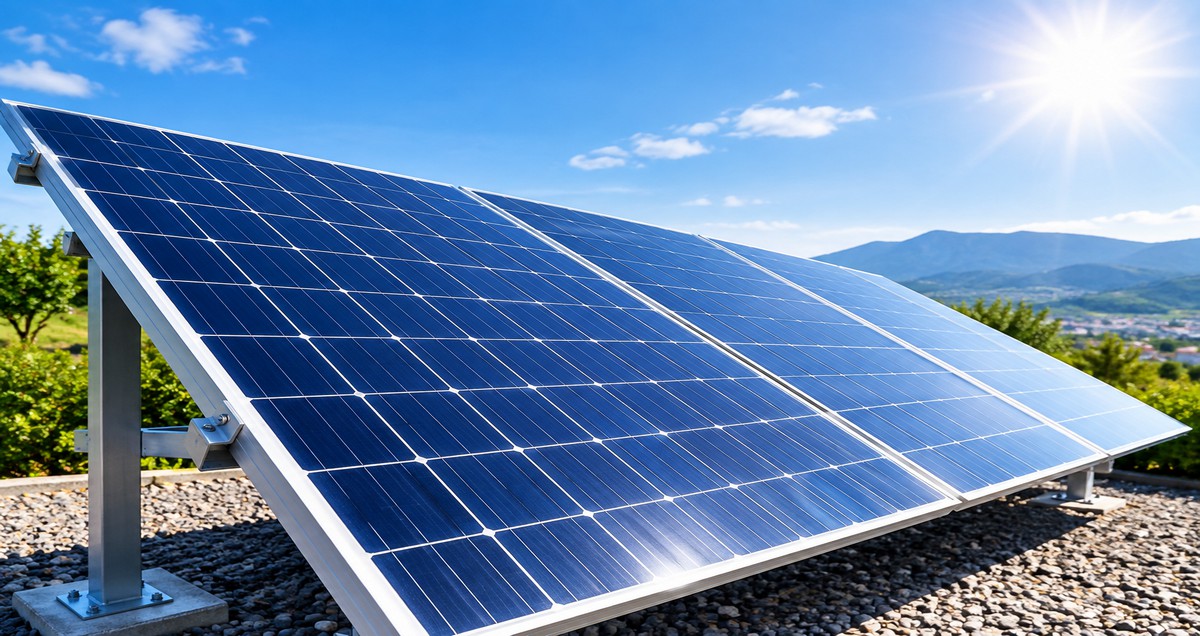
Solar panels are one of the most recognizable technologies in renewable energy. They can turn sunlight into electricity for homes, businesses, farms, remote properties, and large-scale power projects.
But choosing solar panels is about more than looking at the wattage printed on a product label. Panel efficiency, available roof space, sunlight, shading, temperature, system design, inverter compatibility, installation conditions, warranties, and electricity consumption can all affect the performance of a solar system.
In this complete guide, you’ll learn what solar panels are, how they work, the different types, how much power they can produce, how many panels a home may need, how to choose them, maintenance requirements, solar batteries, common mistakes, and important questions to ask before buying.
What Are Solar Panels?
Solar panels, also called photovoltaic (PV) modules, convert sunlight into electrical energy.
A solar panel contains multiple photovoltaic cells. When sunlight reaches these cells, semiconductor materials absorb the light and generate electrical charges that can be collected as electricity. Multiple cells are connected together to create a module, and multiple modules can be connected to create a larger solar array.
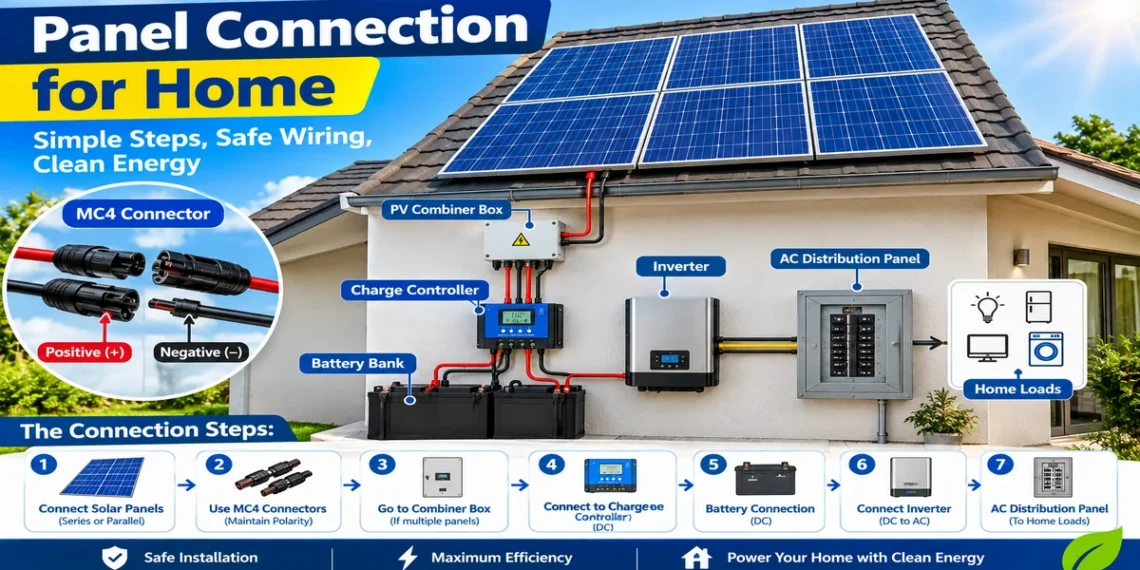
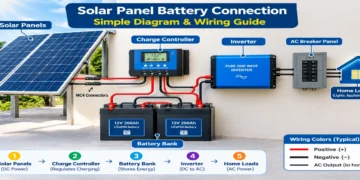
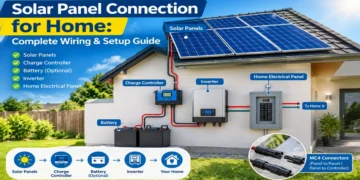
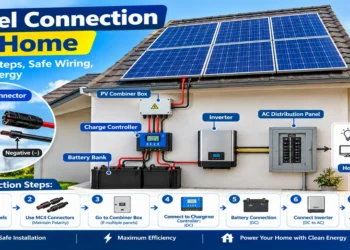
A complete residential solar system normally includes more than just panels.
Depending on the design, it can include:
- Solar panels
- Mounting equipment
- Inverter or microinverters
- Electrical wiring
- Disconnects and protection equipment
- Monitoring equipment
- Electrical panel connection
- Battery storage
- Utility interconnection equipment
The panels generate the electricity, while the other components help convert, manage, distribute, store, and monitor it.
How Do Solar Panels Work?
The basic process is simple:
Sunlight → Solar Cells → DC Electricity → Inverter → AC Electricity → Home or Grid
When sunlight reaches a photovoltaic cell, energy from the light causes electrons in the semiconductor material to move. This creates an electrical current.
Solar panels produce direct current (DC) electricity.
Most household appliances use alternating current (AC) electricity, so an inverter is generally used to convert the solar-generated DC electricity into AC electricity suitable for the home’s electrical system.
A simplified residential system looks like this:
              SUNLIGHT
                  ↓
            SOLAR PANELS
                  ↓
              DC POWER
                  ↓
              INVERTER
                  ↓
              AC POWER
                  ↓
        HOME ELECTRICAL PANEL
             ↙         ↘
       HOME LOADS       GRID
If a battery is included, excess energy can also be stored for later use, depending on the system configuration.
How Much Electricity Do Solar Panels Produce?
Solar panel production depends on much more than the panel’s rated wattage.
Important factors include:
- Panel wattage
- Number of panels
- Sunlight availability
- Roof orientation
- Tilt
- Shading
- Temperature
- Dirt and debris
- System losses
- Inverter performance
- Local weather
- Seasonal changes
The amount of solar radiation available varies with location, time of day, season, weather, and local landscape.
For example, a 400-watt panel does not continuously produce 400 watts throughout the day. Its rated power is measured under specified test conditions.
A useful conceptual calculation is:
Solar energy production ≈ System capacity × Available solar resource × System performance
This is only a simplified estimate. A professional solar design should use location-specific solar data and system assumptions.
What Does Solar Panel Wattage Mean?
Solar panel wattage describes the panel’s rated power under specified test conditions.
Common residential panel ratings can include approximately:
- 350 W
- 400 W
- 450 W
- 500 W
- Higher-power modules
A higher-wattage panel can produce more power per panel under comparable conditions, but that does not automatically make it the best choice for every roof.
For example:
20 × 400 W = 8,000 W = 8 kW
So 20 panels rated at 400 watts each represent an 8 kW DC array.
This is a capacity calculation, not a guarantee of daily or annual energy production.
What Is Solar Panel Efficiency?
Solar panel efficiency describes how effectively a panel converts incoming solar energy into electrical energy.
A higher-efficiency panel can produce more electricity from a given amount of surface area, assuming comparable conditions.
This can be especially useful when roof space is limited.
However, efficiency should not be considered alone.
Other factors include:
- Panel power rating
- Temperature characteristics
- Degradation specifications
- Warranty
- Physical dimensions
- Mechanical load ratings
- Installer availability
- Price
- Inverter compatibility
- Roof layout
DOE explains that PV conversion efficiency is affected by several physical factors, including wavelength, recombination, temperature, and reflection.
Does Heat Reduce Solar Panel Performance?
Yes.
Solar cells generally perform better at lower temperatures, while higher temperatures can reduce voltage and therefore affect electrical output.
This is one reason panel specifications include temperature-related performance information.
A hot sunny day can therefore produce excellent solar conditions while the panel itself operates at a temperature significantly above the standard test temperature.
Good system design accounts for the local climate and equipment specifications.
Types of Solar Panels
There are several photovoltaic technologies available.
Monocrystalline Solar Panels
Monocrystalline panels use crystalline silicon cells manufactured from a single-crystal structure.
They are widely used in residential solar systems.
Potential advantages include:
- High power density
- Good efficiency
- Extensive market availability
- Suitable for many residential rooftops
Polycrystalline Solar Panels
Polycrystalline panels also use silicon, but their manufacturing process differs from monocrystalline technology.
They have historically been used in residential and commercial installations, although the market has increasingly favored newer high-performance crystalline-silicon technologies.
Thin-Film Solar Panels
Thin-film photovoltaic modules use very thin layers of semiconductor material deposited onto a supporting surface.
Common thin-film technologies include:
- Cadmium telluride (CdTe)
- Copper indium gallium diselenide (CIGS)
DOE identifies silicon as the most common semiconductor used in solar cells while also describing thin-film technologies such as CdTe and CIGS.
Monocrystalline vs. Polycrystalline vs. Thin-Film
| Feature | Monocrystalline | Polycrystalline | Thin-Film |
|---|---|---|---|
| Main technology | Crystalline silicon | Crystalline silicon | Thin semiconductor layers |
| Typical application | Homes and businesses | Various applications | Certain specialized applications |
| Efficiency | Generally high | Historically lower than mono | Varies by technology |
| Physical design | Rigid modules | Rigid modules | Can offer different form factors |
| Market availability | Very high | Lower than historically | Depends on technology |
The right technology depends on the installation rather than one universal ranking.
How Many Solar Panels Does a House Need?
There is no single number of solar panels that every home needs.
The calculation should start with electricity consumption.
Consider:
- Monthly electricity use
- Annual electricity use
- Local solar resource
- Roof space
- Roof orientation
- Shading
- Panel wattage
- Desired solar offset
- Future electricity use
- Battery requirements
For example, if a hypothetical home requires an 8 kW solar array and uses 400 W panels:
8,000 W ÷ 400 W = 20 panels
If the same 8 kW system uses 500 W panels:
8,000 W ÷ 500 W = 16 panels
The energy produced by both systems cannot be assumed to be identical in practice without considering the complete design and operating conditions.
Do You Need a Large Roof for Solar Panels?
Not necessarily.
The amount of roof area required depends on:
- Number of panels
- Panel dimensions
- Panel efficiency
- Roof geometry
- Setbacks
- Chimneys
- Skylights
- Vents
- Shading
- Access requirements
Higher-efficiency panels can be useful when roof space is limited because more rated capacity can potentially fit into the same general area.
However, the usable roof area—not simply the total roof size—is what matters.
What Roof Is Best for Solar Panels?
A suitable solar roof generally needs:
- Adequate usable area
- Good solar exposure
- Appropriate structural condition
- Limited shading
- Suitable orientation and tilt
- Sufficient remaining roof life
The ideal orientation depends on geographic location.
For example, in the Northern Hemisphere, south-facing surfaces are often favorable for annual solar production, but east- and west-facing roof sections can also be useful depending on the project’s energy goals and local conditions. DOE notes that array orientation and tilt affect solar output.
How Does Shade Affect Solar Panels?
Shade can reduce solar production.
Potential sources include:
- Trees
- Chimneys
- Nearby buildings
- Roof structures
- Utility equipment
- Neighboring properties
Even partial shading can affect production depending on the electrical architecture.
Possible solutions include:
- Better panel placement
- Module-level power electronics
- Microinverters
- Power optimizers
- Removing or trimming suitable vegetation where practical
The right solution depends on the specific roof and system design.
Solar Panels With a Battery
Solar panels can be combined with battery storage.
A simplified solar-plus-battery system looks like:
SOLAR PANELS
     ↓
INVERTER / CHARGING SYSTEM
     ↓
   BATTERY
     ↓
INVERTER
     ↓
HOME ELECTRICAL SYSTEM
During periods of solar production, electricity can supply household loads and potentially charge the battery.
Later, stored energy can be used when solar production is lower, depending on the battery system’s configuration.
Battery storage can also be designed to provide backup power, but not every solar system provides backup during a grid outage.
Solar Panels Without a Battery
A battery is not required for every grid-connected solar installation.
A basic grid-connected system can operate as:
Solar Panels → Inverter → Home → Grid
During sunny periods, solar electricity can serve household loads. Depending on the utility arrangement, excess electricity may be exported to the grid.
When solar production is insufficient, the home can draw electricity from the grid.
The exact arrangement depends on local utility rules and the system’s interconnection design.
Solar Panels for Off-Grid Homes
Solar panels can also be used in off-grid systems.
An off-grid installation typically requires more than panels because there is no utility grid available to provide electricity when solar generation is insufficient.
A typical system may include:
- Solar panels
- Charge controller or hybrid inverter
- Battery storage
- Inverter
- Electrical protection
- Backup generator in some applications
- Monitoring equipment
Battery sizing becomes particularly important because energy may need to be stored for nighttime use and periods of low solar production.
Solar Panels and Inverters
Solar panels produce DC electricity, while typical residential electrical loads use AC electricity.
The inverter performs the conversion between these electrical forms.
Common inverter architectures include:
String Inverters
Several solar panels are connected into strings that feed a central inverter.
Microinverters
Individual modules have their own microinverters.
Hybrid Inverters
Hybrid inverters can manage solar generation and battery storage in a combined system, depending on the equipment.
The best architecture depends on roof design, shading, battery plans, system size, and other project requirements.
How Long Do Solar Panels Last?
Solar modules are designed for long-term outdoor operation.
DOE states that silicon solar cells provide a combination of efficiency, cost, and long lifetime, and that modules are expected to last 25 years or more, while still producing more than 80% of their original power after that period.
Actual performance depends on:
- Product quality
- Installation
- Climate
- Temperature
- Moisture
- Mechanical stress
- Maintenance
- Degradation characteristics
Always check the specific manufacturer’s warranty and degradation specifications rather than assuming every panel performs identically.
Solar Panel Degradation
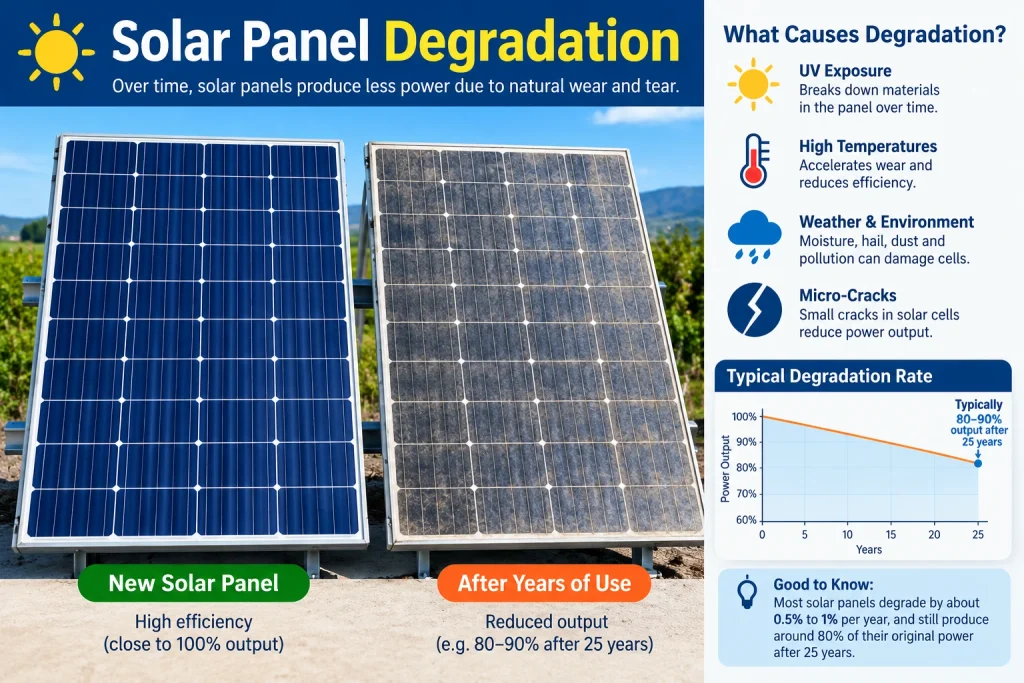
Solar panels generally lose some production capacity over time.
This gradual reduction is called degradation.
A panel’s datasheet and warranty may specify a degradation rate or guaranteed output over a particular period.
When comparing panels, look beyond the initial wattage.
Check:
- First-year degradation
- Annual degradation
- Long-term guaranteed output
- Product warranty
- Performance warranty
A panel with a slightly different initial rating may have a different long-term output profile.
Do Solar Panels Need Maintenance?
Solar panels generally require relatively little routine maintenance, but they should not simply be ignored.
Potential maintenance includes:
- Visual inspections
- Checking for physical damage
- Monitoring system production
- Removing significant dirt where appropriate
- Checking wiring and mounting equipment
- Inspecting for shading changes
The amount of cleaning required depends heavily on local conditions.
Dust, pollen, leaves, bird droppings, snow, and other debris can reduce sunlight reaching the module.
How Often Should Solar Panels Be Cleaned?
There is no universal cleaning schedule.
Cleaning requirements depend on:
- Rainfall
- Dust
- Pollen
- Pollution
- Nearby trees
- Bird activity
- Panel tilt
- Local climate
If production falls unexpectedly, monitoring data can help determine whether the issue is related to weather, equipment, shading, dirt, or another problem.
Avoid using aggressive cleaning methods that could damage the glass or equipment.
Solar Panels in Cloudy Weather
Solar panels can still produce electricity under cloudy conditions, although production can be substantially lower than during strong direct sunlight.
Solar radiation includes both direct and diffuse components, and atmospheric conditions such as clouds, dust, and water vapor affect the amount of sunlight reaching the Earth’s surface.
This is why annual solar production estimates should use location-specific solar data rather than assuming the same output every day.
Do Solar Panels Work at Night?
No.
Photovoltaic panels require light to generate electricity.
At night, a solar PV array does not generate normal electricity from sunlight.
A home can still use electricity at night by:
- Using the utility grid
- Using stored battery energy
- Using another generation source
This is one reason battery storage can be valuable for certain solar installations.
Solar Panels vs. Solar Batteries
Solar panels and batteries perform different jobs.
Solar panels: Generate electricity.
Battery: Stores electricity for later use.
For example:
Sunlight → Solar Panels → Electricity → Battery → Electricity Later
Adding a battery does not replace the need for solar panels in a solar-generation system.
How Much Do Solar Panels Cost?
The total cost of a solar installation depends on much more than the price of the panels.
Major cost factors include:
- Number of panels
- Panel wattage
- Inverter
- Mounting equipment
- Electrical work
- Roof condition
- Labor
- Permits
- System complexity
- Battery storage
- Electrical-panel upgrades
- Location
- Utility requirements
Therefore, quoting one universal “solar panel price” can be misleading.
When comparing offers, compare the complete installed system, not only the module price.
What Should You Look for When Buying Solar Panels?
Before choosing a panel, check:
1. Power Rating
Look at the rated wattage.
2. Efficiency
Compare efficiency when roof space is limited.
3. Warranty
Review both product and performance warranties.
4. Degradation
Check the manufacturer’s long-term output guarantee.
5. Temperature Characteristics
Look at the temperature coefficient and other relevant specifications.
6. Physical Dimensions
A high-wattage panel may also be physically larger.
7. Mechanical Ratings
Consider wind, snow, and other applicable environmental loads.
8. Installer Compatibility
Make sure the selected module works with the planned mounting and electrical system.
9. Availability
A panel that is difficult to source or replace may create future challenges.
10. Total Installed Cost
The cheapest panel is not necessarily the lowest-cost complete system.
Solar Panel Buying Checklist
Before purchasing, ask:
- What is the panel’s rated power?
- What is its efficiency?
- What is the warranty period?
- What degradation is guaranteed?
- What are its dimensions?
- What is its weight?
- What are its temperature specifications?
- Is it compatible with the inverter?
- Is it suitable for the installation environment?
- Who will install the system?
- What permits are required?
- What happens if a panel fails?
- Is monitoring included?
- Is battery storage planned now or later?
Common Solar Panel Mistakes
Choosing Panels Based Only on Wattage
A higher wattage number does not automatically mean a better complete system.
Ignoring Roof Space
Panel dimensions matter just as much as wattage when designing a rooftop array.
Ignoring Shading
A beautiful roof may still have significant shading problems.
Buying Before Checking the Inverter
Panel electrical characteristics must be compatible with the inverter.
Forgetting Future Electricity Loads
EV charging, heat pumps, electric water heating, and other new loads can increase electricity demand.
Comparing Only Panel Prices
Installation, inverter, mounting, electrical work, permits, and other components can represent a significant part of total project cost.
Assuming All Solar Panels Are Identical
Different modules can have substantially different specifications, warranties, dimensions, and performance characteristics.
Are Solar Panels Worth It?
Whether solar panels make sense depends on the individual property and energy situation.
Important factors include:
- Electricity price
- Annual electricity consumption
- Solar resource
- Roof condition
- Shading
- Installation cost
- Financing
- Available incentives
- Utility compensation rules
- Expected time at the property
- Battery requirements
Solar can reduce electricity purchases in suitable situations, but the financial outcome varies from one property and market to another.
Instead of relying on a generic promise of savings, calculate the economics using your actual electricity consumption, local solar resource, installed cost, utility rules, and expected system production.
Solar Panels for Different Applications
Solar panels are used in many different applications.
Residential Solar
Rooftop systems can supply electricity to homes.
Commercial Solar
Businesses can use larger arrays to offset electricity consumption.
Off-Grid Solar
Remote properties can use solar and batteries without relying on the utility grid.
Agricultural Solar
Solar can support farms, irrigation, water pumping, and other electrical loads.
Solar EV Charging
Solar electricity can be used to supply an EV charger through an appropriately designed electrical system.
Portable Solar
Smaller panels can charge portable power stations and other compatible equipment.
Solar Panels and Electric Vehicles
An EV can significantly increase a home’s electricity consumption.
A solar system can be designed to supply some of the energy needed for EV charging.
For example:
Solar Panels → Inverter → Home Electrical System → EV Charger → Electric Vehicle
Smart charging can help schedule charging when solar generation is available, depending on the charger and energy-management system.
A battery can provide another option for storing solar energy for later charging.
Solar Panels and Heat Pumps
Heat pumps can also increase household electricity demand.
If you are planning both solar and a heat pump, it can be useful to consider the combined electricity requirements when sizing the solar system.
Future loads should be considered before finalizing the panel count.
Solar Panel Installation
Professional installation generally involves several stages:
- Site assessment
- Electricity-use analysis
- Roof inspection
- Shading analysis
- System design
- Panel selection
- Inverter selection
- Structural design
- Electrical design
- Permitting where required
- Installation
- Inspection
- Utility interconnection where applicable
- System commissioning
- Monitoring
The exact process varies by country, utility, and local authority.
Solar Panel Safety
Solar PV systems produce electrical energy whenever sufficient light reaches the modules.
Important safety considerations include:
- Electrical shock hazards
- DC arc hazards
- Roof fall hazards
- Proper grounding
- Appropriate disconnects
- Correct wiring
- Structural attachment
- Weather-resistant equipment
- Fire and electrical-code requirements
Solar installations should follow applicable building, fire, and electrical requirements and manufacturer instructions. DOE’s homeowner guidance also emphasizes qualified installation and compliance with local codes.
Frequently Asked Questions About Solar Panels
What are solar panels?
Solar panels are photovoltaic modules containing solar cells that convert sunlight into electrical energy.
How do solar panels work?
Solar cells absorb sunlight and generate electrical current. The panel produces DC electricity, which is typically converted to AC electricity by an inverter for use in a home or grid-connected system.
How many solar panels does a home need?
The number depends on electricity consumption, solar resource, panel wattage, roof space, shading, and the desired system capacity.
Are solar panels worth it?
They can be, but the financial result depends on the property’s electricity use, solar resource, installed cost, utility rules, incentives, and other factors.
Do solar panels work on cloudy days?
Yes. They can produce electricity from available sunlight under cloudy conditions, although output can be lower than under strong direct sunlight.
Do solar panels work at night?
No. Photovoltaic panels require light to generate electricity.
How long do solar panels last?
Modern photovoltaic modules are designed for long-term operation. DOE says silicon modules are expected to last 25 years or more while retaining more than 80% of their original power after that period.
Do solar panels need batteries?
No. A grid-connected solar system can operate without battery storage. Batteries are useful when energy storage or backup power is desired.
What is the best solar panel?
There is no universal best panel for every home. The appropriate choice depends on efficiency, power, dimensions, warranty, degradation, price, availability, roof conditions, and compatibility with the complete system.
Can solar panels power an entire house?
A properly sized solar system can potentially generate enough annual energy to cover a substantial portion or all of a home’s electricity consumption, but actual results depend on the location, system size, sunlight, roof conditions, energy use, and utility arrangement.
Can solar panels work without an inverter?
Solar panels generate DC electricity. Most conventional household electrical loads require AC electricity, so an appropriate inverter or power-conversion system is normally needed to supply them.
Final Thoughts
Solar panels are the foundation of many renewable-energy systems. They use photovoltaic cells to convert sunlight into DC electricity, which can then be converted by an inverter for household or grid use.
The most important lesson is that buying solar panels should not be reduced to choosing the highest wattage or lowest price.
A good solar system considers the entire picture:
Electricity Use + Solar Resource + Roof Space + Shading + Panel Specifications + Inverter + Installation + Future Loads
For homeowners, the right panel is the one that works well within the complete system design and makes sense for the property’s energy needs and budget.
Before purchasing, compare complete system proposals, review technical specifications and warranties, verify installer qualifications, and check local permitting and utility requirements.