
Canadian Well: Complete Guide to Underground Air Heating and Cooling
Discover how a Canadian well uses the relatively stable temperature of the ground to preheat or precool fresh outdoor air, improve indoor comfort, and potentially reduce household energy consumption.
What if your home could use the natural temperature of the earth to make incoming air more comfortable before it enters your living space? This is the basic idea behind a Canadian well system, also known as an earth tube or earth-to-air heat exchanger.
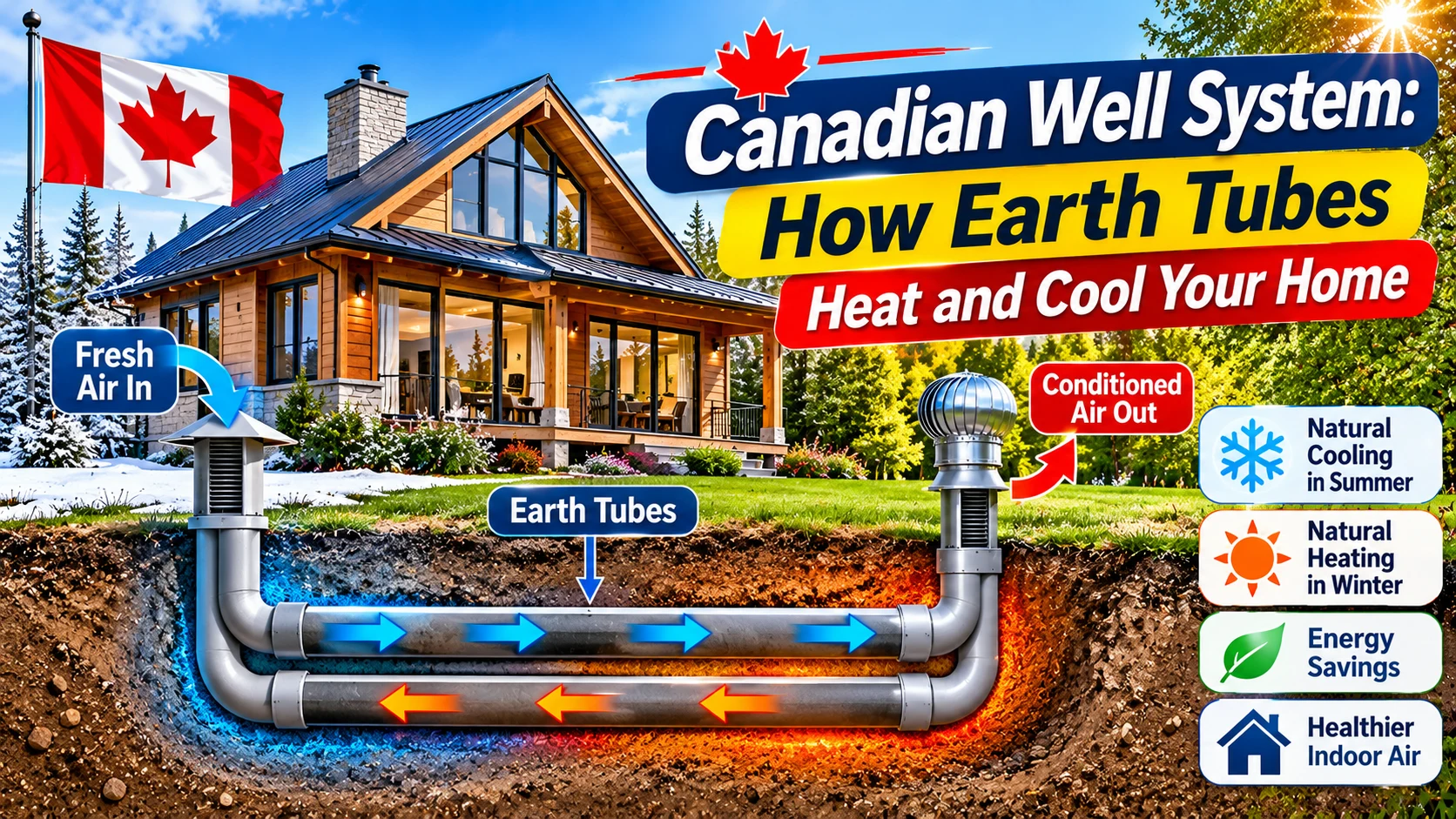
Instead of relying entirely on conventional heating and air conditioning, this system moves outdoor air through specially designed pipes buried underground. As the air travels through the pipes, it exchanges heat with the surrounding soil before entering the house.
During hot weather, underground soil is often cooler than outdoor air. During cold weather, it is often warmer. This temperature difference can help reduce the amount of heating or cooling required to condition fresh ventilation air.
Related Post


Canadian wells are particularly interesting for sustainable homes, off-grid cabins, energy-efficient buildings, and passive-house design. However, their performance depends heavily on soil conditions, climate, pipe design, airflow, and moisture management.
1. What Is a Canadian Well System?
A Canadian well is a type of ground-coupled air heat exchanger. It consists of an outdoor air intake, buried pipes, an air circulation system, condensate management, and an indoor air outlet.
The underground pipes are installed at a suitable depth where soil temperatures are generally more stable than outdoor air temperatures. Fresh air enters the system and travels through the buried pipe network before reaching the building.
The earth surrounding the pipes acts as a natural thermal reservoir. It absorbs heat from incoming air during warmer conditions and transfers heat to incoming air during colder conditions.
Is a Canadian Well the Same as a Water Well?
No. Despite its name, a Canadian well does not normally extract groundwater. It uses buried air pipes to exchange heat with the surrounding soil.
It is also different from a conventional geothermal heat pump. A geothermal heat pump uses a refrigeration cycle and mechanical equipment to move heat between a building and the ground. A Canadian well primarily preconditions ventilation air through direct heat exchange with the soil.
2. How Does a Canadian Well Work?
The operating principle is relatively simple. Outdoor air is drawn into an underground pipe system, where it exchanges heat with the surrounding ground.
How an Earth Tube System Works
Fresh air intake
Underground heat exchange
Preconditioned ventilation
A fan or appropriately designed ventilation system moves air through the installation.
During Summer
When outdoor temperatures become high, the soil below the surface is often cooler than the outside air.
As warm air travels through the buried pipes, some of its heat transfers to the surrounding soil. The air reaching the building can therefore be cooler than the outdoor air entering the system.
This can reduce the cooling load associated with introducing fresh ventilation air, although it does not necessarily replace an air conditioner.
During Winter
During colder weather, the soil may be warmer than the outside air. Incoming cold air can absorb some heat from the ground as it travels through the buried pipes.
The result is preheated ventilation air, which may reduce the amount of additional heating needed to bring fresh air to a comfortable indoor temperature.
3. Main Components of a Canadian Well
A properly designed earth tube installation requires more than simply burying a long pipe. Every component has an important role in maintaining airflow, thermal performance, indoor air quality, and moisture control.
1. Outdoor Air Intake
The air intake is the entrance point for fresh outdoor air. It should be positioned where it is protected from rainwater, insects, animals, dust, and other contaminants.
Its location should also avoid exhaust outlets, vehicle emissions, waste storage areas, and other potential pollution sources.
2. Buried Underground Pipes
The buried pipe is the main heat-exchange component. It carries outdoor air through the soil, allowing thermal energy to move between the air and the surrounding ground.
Pipe selection should consider:
- Material durability and suitability for underground installation.
- A smooth, cleanable internal surface.
- Resistance to groundwater infiltration.
- Airtight connections and suitable seals.
- Structural strength against soil pressure.
- Compatibility with the required airflow.
Materials and joints must be suitable for the intended ventilation application. Ordinary drainage pipes should not automatically be assumed suitable for delivering ventilation air into a home.
3. Air Circulation Fan
A fan is commonly used to move air through the underground pipe. The fan must be selected according to the required airflow and the pressure losses created by the pipe length, bends, filters, and other components.
Some installations may use mechanical ventilation equipment that integrates air supply with the building’s wider ventilation strategy.
4. Condensation Drain
When warm, humid air encounters a cooler pipe surface, moisture can condense inside the system.
For this reason, a Canadian well must include a properly designed condensate drainage solution. The pipe should not allow water to collect in low points, and drainage components must remain accessible for inspection and cleaning.
Natural Resources Canada’s earth-to-air exchanger design guidance discusses pipe slope, condensate removal, sealed connections, and the importance of preventing groundwater and soil gas from entering the air system.
5. Air Filter
An appropriately selected filter can help reduce dust, insects, and airborne particles entering the ventilation system.
Filters need regular inspection and replacement according to the manufacturer’s instructions. A blocked filter can significantly reduce airflow.
6. Indoor Air Outlet
The treated air is delivered into the building through a suitable ventilation connection. The outlet should be integrated into the home’s ventilation design rather than simply releasing air into an unsuitable cavity or enclosed space.
4. How Deep Should a Canadian Well Be Installed?
Installation depth is one of the important factors influencing system performance.
Soil temperature changes with depth and season. Near the surface, temperatures are strongly influenced by daily weather conditions. Deeper soil generally experiences smaller and slower temperature variations.
However, there is no single installation depth that works perfectly for every property.
The appropriate depth depends on:
- Local climate and seasonal temperature variations.
- Soil type and moisture content.
- Groundwater level.
- Available land and excavation conditions.
- Building foundation location.
- Underground utilities and drainage systems.
- Local construction and environmental regulations.
A professional designer should evaluate local ground temperatures and soil conditions before choosing the pipe depth and layout.
5. What Type of Pipe Is Best for a Canadian Well?
The pipe is one of the most important components because it remains underground and is difficult to replace after the installation is complete.
A suitable pipe should be durable, airtight, resistant to moisture, and designed for the intended air-handling application.
| Material | Potential Advantages | Considerations |
|---|---|---|
| HDPE | Durable and corrosion-resistant. | Select a suitable smooth-interior product and approved joints. |
| PVC | Widely available and relatively easy to work with. | Must be suitable for the application, temperature, and installation conditions. |
| Specialized ventilation pipe | May offer purpose-designed joints and internal surfaces. | Product cost and availability vary. |
Natural Resources Canada recommends considering smooth internal surfaces and proper condensate management. It also warns against drainage openings that can allow soil gases, including radon, to enter the ventilation air.
6. Why Is Condensation Management So Important?
Condensation is one of the most important technical challenges in earth tube systems.
When humid air enters a cool underground pipe, water vapor can condense on the internal pipe surface. If moisture remains inside the system, it may encourage microbial growth, create unpleasant odors, and affect indoor air quality.
A well-designed system should therefore include:
- A continuous drainage strategy.
- A suitable pipe slope without unwanted low points.
- Accessible inspection and cleaning points.
- Sealed joints that prevent groundwater infiltration.
- Materials with smooth, cleanable internal surfaces.
- Regular inspection for standing water and contamination.
Natural Resources Canada’s technical guidance discusses a minimum slope of approximately 2% as one design approach for condensate removal in earth-to-air heat exchangers. The final drainage arrangement should be determined by a qualified designer for the specific site.
7. Can a Canadian Well Reduce Electricity Consumption?
Yes, it can potentially reduce some heating and cooling energy consumption by preconditioning incoming ventilation air.
For example, during summer, outdoor air may be cooled before entering the building. This can reduce the cooling energy required to condition that fresh air.
During winter, incoming air may be warmed by the ground, reducing the temperature difference that the heating system needs to overcome.
However, actual savings depend on several variables:
- Outdoor temperature and humidity.
- Underground soil temperature.
- Airflow rate through the system.
- Pipe diameter, length, and configuration.
- Fan electricity consumption.
- Building insulation and airtightness.
- Existing heating and cooling equipment.
There is no guaranteed percentage of energy savings that applies to every Canadian well. A site-specific thermal and ventilation assessment is necessary before estimating financial benefits.
8. Advantages of a Canadian Well System
Uses the thermal properties of the ground to precondition outdoor air.
May reduce the cooling load associated with fresh ventilation air.
Can warm cold outdoor air before it enters the building.
Uses natural ground temperatures instead of generating all temperature changes mechanically.
9. Disadvantages and Limitations
Although Canadian wells offer interesting possibilities, they are not suitable for every building or location.
High Initial Installation Cost
Excavation, underground pipe installation, drainage, filtration, and ventilation equipment can make the initial project expensive.
Condensation and Moisture
Moisture can collect inside the pipes, especially in humid conditions. Without appropriate drainage and maintenance, this can create hygiene problems.
Soil and Groundwater Conditions
Some sites have unsuitable soil conditions, high groundwater levels, rocky ground, or limited space for underground installation.
Radon and Soil Gas Risk
Radon is a naturally occurring radioactive gas that can enter buildings from the ground. Earth tube systems must be designed with airtight pipes and sealed connections to prevent soil gases from entering the ventilation air.
Limited Temperature Control
A Canadian well does not provide the same precise temperature control as a properly sized heating or cooling system. Additional equipment may still be required.
10. Is a Canadian Well Suitable for Off-Grid Homes?
A Canadian well can be an interesting addition to an off-grid home because it may reduce the heating and cooling load associated with ventilation.
For example, a remote cabin could combine several energy-efficient technologies:
- Solar panels for electricity generation.
- Battery storage for nighttime energy use.
- Passive solar design for winter heating.
- High-performance insulation.
- External shading for summer comfort.
- A Canadian well for ventilation-air preconditioning.
- A heat recovery ventilator where appropriate.
Combining these technologies can help reduce the amount of energy a building requires. However, the ventilation system must be designed to maintain healthy indoor air quality, not simply to minimize electricity consumption.
11. Canadian Well vs. Geothermal Heat Pump
These two technologies both exchange heat with the ground, but their operating principles are different.
| Feature | Canadian Well | Geothermal Heat Pump |
|---|---|---|
| Main purpose | Preconditions ventilation air. | Provides heating and cooling. |
| Heat exchange | Air exchanges heat directly with the ground. | A heat pump transfers energy through a ground loop or groundwater system. |
| Mechanical equipment | Usually requires an air-moving fan. | Requires a heat pump and circulation equipment. |
| Temperature control | Limited preheating or precooling. | Active heating and cooling control. |
A Canadian well may complement a conventional heating system or heat pump, but it should not automatically be considered a replacement for one.
12. Maintenance Tips for Better Performance
Regular maintenance is important because the underground pipe network is difficult to access after construction.
- Inspect outdoor air intake screens regularly.
- Replace or clean filters according to manufacturer instructions.
- Check that condensate drains remain clear.
- Inspect accessible pipe connections for air or water leakage.
- Check the fan and ventilation equipment.
- Monitor airflow and unusual odors.
- Keep inspection and cleaning access available.
- Test indoor radon levels according to recognized guidance.
13. Is a Canadian Well Worth Installing?
A Canadian well may be worth considering when a property has suitable soil conditions, enough space for underground pipes, and a building design that can benefit from preconditioned ventilation air.
It is especially interesting for energy-efficient homes, rural properties, and sustainable building projects.
However, installation should not be based on a simple drawing or an assumed pipe length. A professional assessment should consider local ground temperatures, airflow requirements, condensation, soil gas, drainage, and installation costs.
Final Thoughts
A Canadian well is an innovative way to use the natural thermal properties of the earth to help condition fresh air. By moving outdoor air through buried pipes, it can provide useful preheating during winter and precooling during summer.
For homeowners interested in sustainable architecture and off-grid living, earth tube ventilation is worth exploring. The key to success is careful design, moisture management, airtight construction, and regular maintenance.
Frequently Asked Questions
1. What is a Canadian well?
A Canadian well is an underground air heat exchanger that uses buried pipes to transfer heat between outdoor ventilation air and the surrounding soil.
2. Does a Canadian well work in summer?
Yes. When the soil is cooler than outdoor air, the underground pipes can help reduce the temperature of incoming ventilation air.
3. Does a Canadian well work in winter?
Yes. When the soil is warmer than outdoor air, the system can transfer some ground heat to the incoming air before it enters the building.
4. Does a Canadian well need electricity?
Most systems use a fan to move air through the buried pipes. The fan consumes electricity, although its power requirements depend on the system design and airflow.
5. Can a Canadian well replace air conditioning?
Not necessarily. It can help precool incoming ventilation air, but its cooling capacity is limited and depends on ground and outdoor conditions.
6. Can mold grow inside underground air pipes?
Yes, if moisture and contamination accumulate. Proper drainage, suitable materials, cleanable surfaces, filtration, and inspection are essential.
7. Is a Canadian well the same as geothermal energy?
Both technologies use ground temperatures, but a Canadian well directly exchanges heat with ventilation air, while a geothermal heat pump uses a refrigeration cycle to provide active heating and cooling.
8. Is a Canadian well safe for indoor air?
It can be designed to supply ventilation air safely, but airtight construction, soil-gas protection, condensate drainage, filtration, and maintenance are essential. Radon testing is also important.
Disclaimer: This article is for educational purposes. Earth tube systems require site-specific engineering and professional assessment. Incorrect design can cause moisture accumulation, poor indoor air quality, or soil-gas infiltration. Follow applicable building codes and ventilation standards.