
Cold weather can turn a simple solar battery setup into a headache pretty quickly. I learned that the hard way when I started paying closer attention to how temperature affects battery performance. If you use solar power for your home, RV, cabin, shed, or off-grid setup, understanding how to prevent solar battery freeze is important, especially if you use LiFePO4 batteries.
LiFePO4 batteries are excellent for solar energy storage. They are efficient, last a long time, and need less maintenance than many older battery types. But they have one important weakness: most standard LiFePO4 batteries should not be charged when their cells are below freezing unless the manufacturer specifically allows it.
In this guide, I’ll explain how cold weather affects lithium solar batteries, how to protect them during winter, and what you can do to keep your solar power system working when temperatures drop.
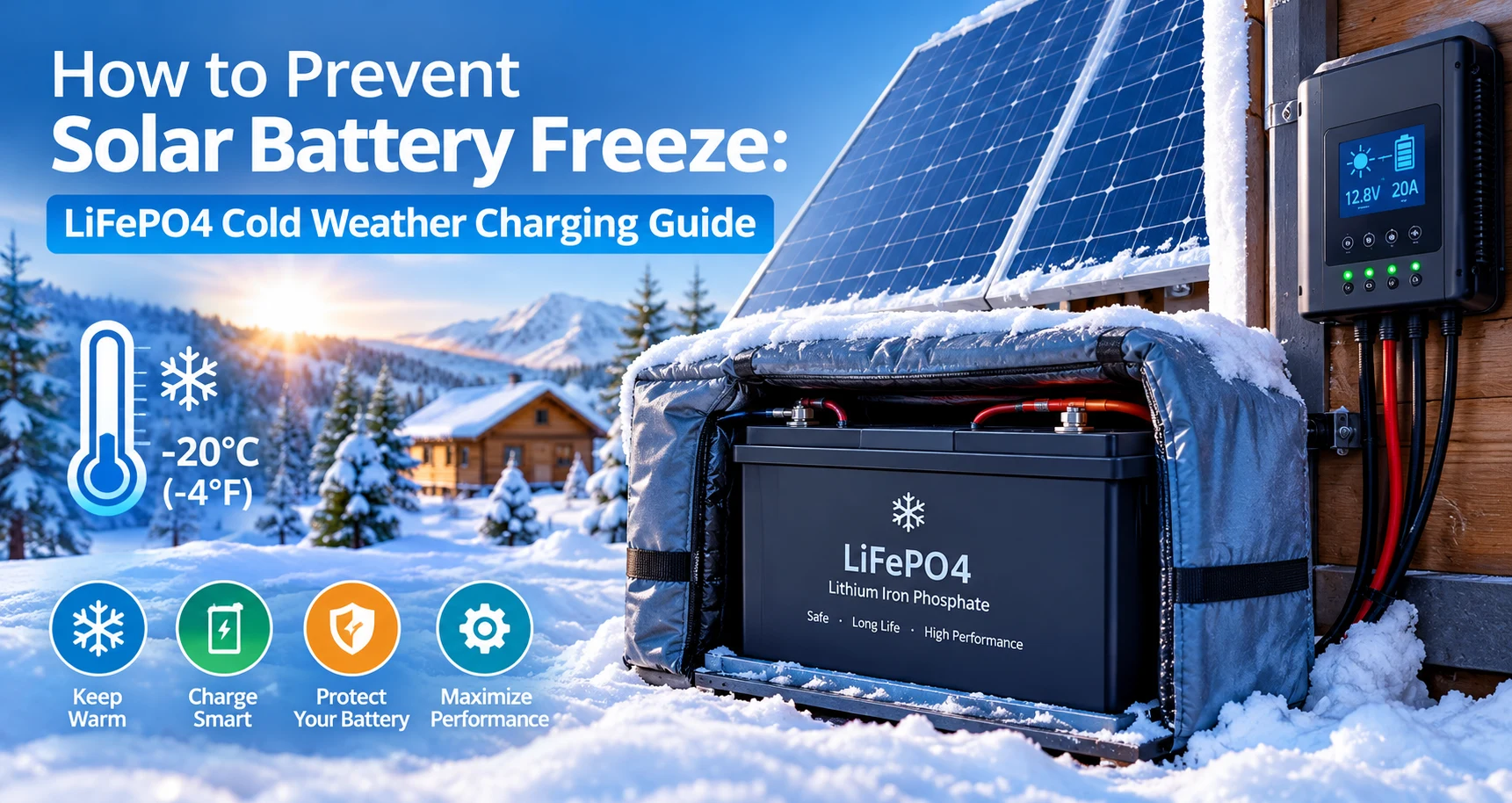
Quick Answer: How Do You Prevent a Solar Battery From Freezing?
Keep your LiFePO4 battery within the temperature range specified by its manufacturer. Use an insulated battery enclosure, a temperature-controlled heating system when needed, and a battery management system (BMS) with low-temperature charging protection. Most standard LiFePO4 batteries must not be charged below 32°F (0°C), although the exact limit varies by model. Many can discharge below freezing, but their available power and capacity may decrease.
Why Cold Weather Is a Problem for LiFePO4 Solar Batteries
LiFePO4 stands for lithium iron phosphate. It is a type of lithium-ion battery commonly used in home solar systems, RVs, boats, and off-grid cabins.
These batteries perform well in many conditions, but low temperatures slow down the chemical reactions inside their cells. That makes it harder for the battery to accept and deliver energy.
The biggest concern is charging a standard LiFePO4 battery when it is too cold. Charging below the manufacturer’s minimum temperature can cause lithium plating inside the cells. This damage can permanently reduce battery capacity and may create a safety risk.
Does a LiFePO4 Battery Actually Freeze?
Unlike a typical lead-acid battery, a lithium iron phosphate battery does not contain the same kind of liquid electrolyte that freezes in the same way as water. However, its electrolyte and internal components are still affected by extreme temperatures.
So, the real winter concern is not simply whether the battery turns into a frozen block. It is whether the cold prevents safe charging, reduces performance, or damages the cells.
What Happens at Different Temperatures?
| Battery Temperature | What It Means | What to Do |
|---|---|---|
| Above 50°F (10°C) | Generally comfortable operating conditions for many batteries | Follow the manufacturer’s charging limits |
| 32–50°F (0–10°C) | Charging may be allowed, but cold can affect performance | Check the battery specifications |
| Below 32°F (0°C) | Most standard LiFePO4 batteries must not be charged | Disable charging unless the manufacturer permits it |
| Below 14°F (-10°C) | Discharge performance may be reduced, depending on the model | Check the minimum discharge temperature and available capacity |
Important: These are general examples, not universal limits. Your battery’s manual takes priority. Some batteries support charging at lower temperatures because they include specially designed heating or other approved technology.
1. Install Your Solar Battery in a Protected Location
One of the easiest ways to protect a solar battery in winter is to put it somewhere that stays within its recommended operating temperature range.
If your battery is currently sitting outside in an exposed location, cold wind and overnight temperature drops can make winter operation more difficult. A garage, utility room, insulated shed, or properly designed battery compartment may offer better protection.
Here are a few things I would check before moving a battery:
- Choose a dry location protected from rain, snow, and direct weather exposure.
- Keep the battery away from heaters, stoves, and other uncontrolled heat sources.
- Follow the manufacturer’s ventilation, clearance, and mounting requirements.
- Make sure the floor or mounting surface can safely support the battery’s weight.
- Keep the battery accessible for inspection and maintenance.
Never place a battery in an occupied space or sealed box unless the installation is suitable for that battery and follows the manufacturer’s instructions and applicable electrical and fire codes.
2. Use an Insulated Battery Enclosure
If you cannot install your battery indoors, insulation may help slow down heat loss. It is especially useful when temperatures fall overnight but rise again during the day.
An insulated enclosure does not create heat by itself. It only helps retain heat that is already inside. After several hours in freezing conditions, an unheated enclosure can still become too cold for safe charging.
What Should a Battery Box Include?
- Insulation suitable for the enclosure and its environment.
- Protection against moisture and condensation.
- Enough room for wiring, terminals, and required clearances.
- A temperature sensor placed where it can accurately monitor the battery.
- A safe heating method if active temperature control is required.
- Access for inspection without removing the entire installation.
Do not wrap a battery in blankets or surround it with loose insulation that blocks required cooling, covers terminals, or creates a fire hazard. Use an enclosure designed for battery installation, and follow the battery manufacturer’s instructions.
3. Choose a LiFePO4 Battery With Built-In Heating
If you live somewhere with long, cold winters, a self-heating LiFePO4 battery may be worth considering. These batteries include a heating system designed to warm the cells before charging when the temperature is too low.
Depending on the model, the battery management system may pause charging, use available energy to warm the battery, and allow charging to begin after the cells reach an acceptable temperature.
What to Check Before Buying a Heated Battery
- Heating activation temperature: Find out when the heater turns on.
- Charging temperature: Check the temperature required before charging can resume.
- Heater power consumption: Heating uses energy that would otherwise be available to your home or equipment.
- Solar compatibility: Confirm that the battery works with your charge controller and inverter.
- BMS protection: Verify that low-temperature charging is properly controlled.
- Warranty: Read the manufacturer’s terms for cold-weather use.
A heated battery is not a magic solution. If your solar panels produce very little power during a cloudy winter week, there may not be enough energy to keep the heater running and recharge the battery. Plan for those low-production days before relying on solar power alone.
4. Install a Safe Battery Heating System
What if you already own a LiFePO4 battery without built-in heating? You may be able to use an approved external heating solution, but compatibility is essential.
Some battery enclosures use thermostatically controlled heating pads or other purpose-built heating systems. The heater must be approved for the application and installed according to its instructions. It should warm the battery evenly without creating hot spots or overheating nearby materials.
Basic Safety Rules for Battery Heating
- Use a heater approved by the battery manufacturer or qualified installer.
- Use suitable temperature controls and independent over-temperature protection where required.
- Keep the heater’s electrical supply properly fused and protected.
- Do not connect a heating pad directly to a battery without confirming voltage, current, and compatibility.
- Never use a flame, heat gun, or uncontrolled space heater to warm a battery.
- Do not bypass the battery management system to force charging in cold weather.
If you are not comfortable working with DC wiring, fuses, and temperature controls, ask a qualified installer to set up the heating system. Saving a few dollars is not worth risking a damaged battery or electrical fire.
5. Set Up Your Battery Management System Correctly
The battery management system, or BMS, is one of the most important parts of a lithium solar battery. It monitors conditions such as voltage and temperature and can disconnect charging or discharging when certain limits are reached.
For winter operation, confirm that your battery has low-temperature charging protection. The BMS should prevent charging when the cells are below the permitted charging temperature, unless the battery uses a manufacturer-approved cold-weather charging system.
Check These Settings Before Winter
- Verify the low-temperature charging cutoff.
- Check whether the battery also has a low-temperature discharge cutoff.
- Confirm that temperature sensors are connected and reporting correctly.
- Review the charge controller’s battery profile and temperature settings.
- Check communication between the battery, inverter, and charge controller if supported.
- Follow the manufacturer’s instructions for firmware updates and system configuration.
One detail that is easy to miss: the temperature reported by your solar charge controller may not match the actual temperature of the battery cells. Use the manufacturer’s recommended monitoring method rather than assuming that the temperature in the room tells the whole story.
6. Protect Your Solar Charge Controller From Cold-Weather Charging
Your solar panels can continue producing electricity on a cold, sunny day. That sounds great, but it also means they may try to charge a battery that is still below freezing.
The battery’s low-temperature protection must work with the rest of the solar system. A charge controller with a lithium battery profile is helpful, but selecting a lithium profile alone does not guarantee that cold-weather charging is safe.
Check whether the system receives reliable battery temperature information and whether charging is stopped when the cells are too cold. If the battery and controller cannot communicate temperature information, use a protection method specifically approved for that setup.
Never disable temperature protection just because the solar panels are producing power. The goal is to store energy without damaging the battery.
7. Keep an Eye on Battery Temperature Overnight
Solar batteries often face their lowest temperatures just before sunrise. The panels may have been charging during the previous afternoon, but the battery can cool down significantly overnight.
A temperature monitor makes it easier to understand what is happening. Some batteries display cell or internal temperature through a mobile app, while others provide readings through an inverter or monitoring system.
- Check battery temperature before cold-weather charging periods.
- Look for low-temperature warnings in your monitoring app.
- Review overnight temperature records after a cold spell.
- Confirm that any battery heater turns on and off as expected.
- Investigate repeated charging interruptions instead of ignoring them.
If your battery repeatedly reaches its low-temperature cutoff, the enclosure or heating arrangement may need improvement. Fixing the cause is better than constantly restarting the system.
8. Understand Charging Versus Discharging in Winter
This is where people sometimes get confused. A LiFePO4 battery may be allowed to discharge at temperatures where charging is not permitted. The exact limits depend on the battery model.
Discharging means the battery is supplying power to an inverter, lights, a refrigerator, or other equipment. Charging means energy is going into the battery from solar panels, a generator, or another charger.
Cold temperatures can reduce available capacity and increase voltage drop during discharge. So even if your battery is technically allowed to power your equipment in freezing weather, you may get less usable energy than you expect.
Check both the minimum charging temperature and minimum discharging temperature in your battery manual. They are not necessarily the same.
9. Reduce Your Winter Energy Consumption
Cold weather can make a solar system work harder. Shorter days, snow-covered panels, cloudy skies, and battery heating can all reduce the energy available for your home or off-grid cabin.
You do not always need to buy a bigger battery. Sometimes, adjusting your energy habits makes a noticeable difference.
- Run energy-hungry appliances during the sunniest part of the day when practical.
- Use LED lights instead of older, inefficient bulbs.
- Reduce unnecessary standby loads.
- Keep refrigerators and freezers in locations that meet their operating requirements.
- Make sure your inverter is not consuming more standby power than necessary.
- Allow enough battery reserve for overnight use and unexpected cloudy weather.
Remember to include the battery heater’s energy use in your calculations. A heater that runs frequently can consume a meaningful portion of a small solar system’s winter production.
10. What Should You Do if Your LiFePO4 Battery Gets Too Cold?
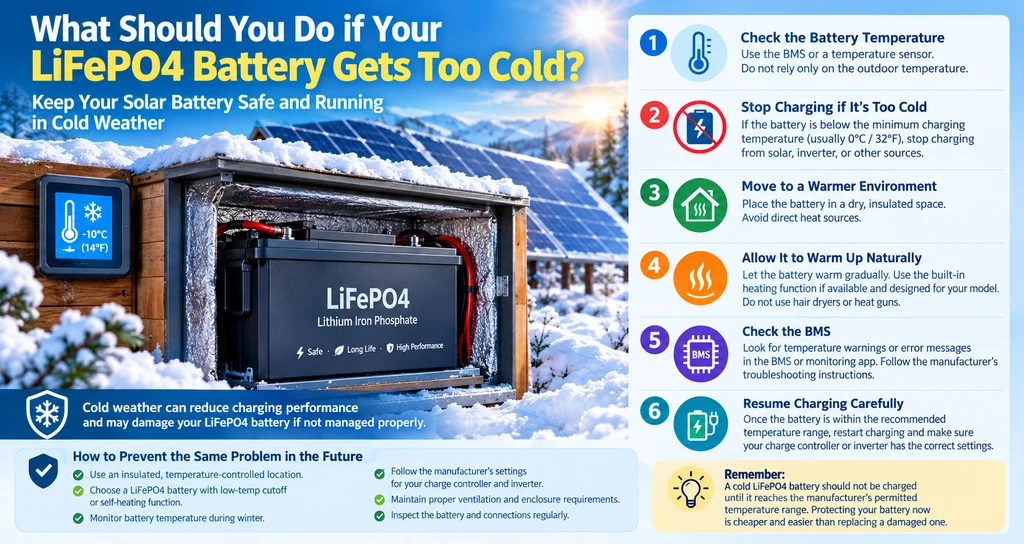
If you discover that your battery is below its permitted charging temperature, do not panic. The first step is to stop or prevent charging until the battery is within the manufacturer’s approved temperature range.
- Check the temperature: Use the battery’s monitoring system or recommended sensor.
- Stop unsafe charging: Let the BMS and approved system controls protect the battery.
- Warm it gradually: Use a built-in heater or an approved external heating system.
- Wait for the correct temperature: Confirm that the battery cells, not just the surrounding air, have reached the required range.
- Check for warnings: Review the BMS and inverter for fault messages.
- Resume charging safely: Follow the manufacturer’s restart procedure.
Do not force a charge simply because the battery voltage looks normal. A normal voltage reading does not prove that cold charging is safe.
If the battery has been charged below its permitted temperature, shows unusual swelling, smells strange, leaks, becomes abnormally hot, or behaves unexpectedly, stop using it if you can do so safely and contact the manufacturer or a qualified battery professional. If there is smoke, fire, or an immediate danger, keep away and contact emergency services.
Common Mistakes to Avoid When Protecting Solar Batteries in Winter
Here are a few mistakes worth avoiding before the first serious cold snap.
- Assuming insulation is enough: An insulated box can still become freezing cold after a long night.
- Ignoring the battery manual: Temperature limits vary by manufacturer and model.
- Trusting the BMS without checking: Confirm that low-temperature protection is available and configured correctly.
- Using an improvised heater: Uncontrolled heat can damage cells and create fire risks.
- Forgetting heater power consumption: Battery heating can reduce your available stored energy.
- Charging immediately after bringing the battery indoors: Allow the battery cells to warm up to the required temperature first.
- Ignoring snow and shade on panels: Reduced solar production can leave less energy for heating and household loads.
LiFePO4 Winter Battery Protection Checklist
Before winter arrives, use this checklist to make sure your solar battery setup is ready.
- Confirm the battery’s minimum charging and discharging temperatures.
- Check that low-temperature charging protection works correctly.
- Move the battery to a protected location if practical.
- Inspect the enclosure for moisture and insulation problems.
- Install an approved heating system if needed.
- Verify that the battery heater has enough available energy.
- Check solar charge controller settings and battery communications.
- Test temperature monitoring and review warning messages.
- Plan for several cloudy days and low winter solar production.
- Keep the battery manual and manufacturer support information available.
Frequently Asked Questions
Can I charge a LiFePO4 battery below freezing?
Most standard LiFePO4 batteries should not be charged below 32°F (0°C). Some models have approved low-temperature charging features or built-in heaters. Always follow the exact temperature limits in your battery manual.
Will a LiFePO4 solar battery stop working in winter?
Not necessarily. Many LiFePO4 batteries can discharge in cold weather within their specified limits. However, available capacity and power may decrease, and charging may be disabled until the battery warms up.
Is an insulated battery box enough to prevent freezing?
Not always. Insulation slows heat loss but does not generate heat. In prolonged freezing conditions, you may need a heated enclosure or a battery with built-in heating and suitable temperature controls.
Can I leave my solar battery outside during winter?
Only if the battery is approved for the expected outdoor conditions and is installed in a suitable enclosure. Check the manufacturer’s temperature, moisture, and installation requirements before leaving it outdoors.
Do solar panels still charge batteries on cold, sunny days?
Yes, solar panels can produce electricity in cold weather, sometimes quite efficiently. The important issue is whether the battery is warm enough to accept a charge safely. Your system must prevent charging when the battery is below its permitted temperature.
Final Thoughts: Keep Your Solar Battery Safe All Winter
Learning how to prevent solar battery freeze is an important part of running a reliable solar power system. The key is to protect the battery from extreme cold, prevent unsafe charging, and make sure your temperature controls work correctly.
For many homeowners, the best approach is a combination of a protected installation location, good insulation, accurate temperature monitoring, and a reliable battery management system. If your winters are especially cold, a LiFePO4 battery with built-in heating may be worth the extra cost.
My advice is simple: check your battery’s specifications before winter arrives instead of waiting until the first freezing morning. A little preparation can help protect your investment and keep your solar system running when you need it most.
What’s Your Winter Solar Setup?
Are you using LiFePO4 batteries in an RV, an off-grid cabin, or a home solar system? Share your setup and the coldest temperatures you experience. Your experience might help another solar owner prepare for winter.