
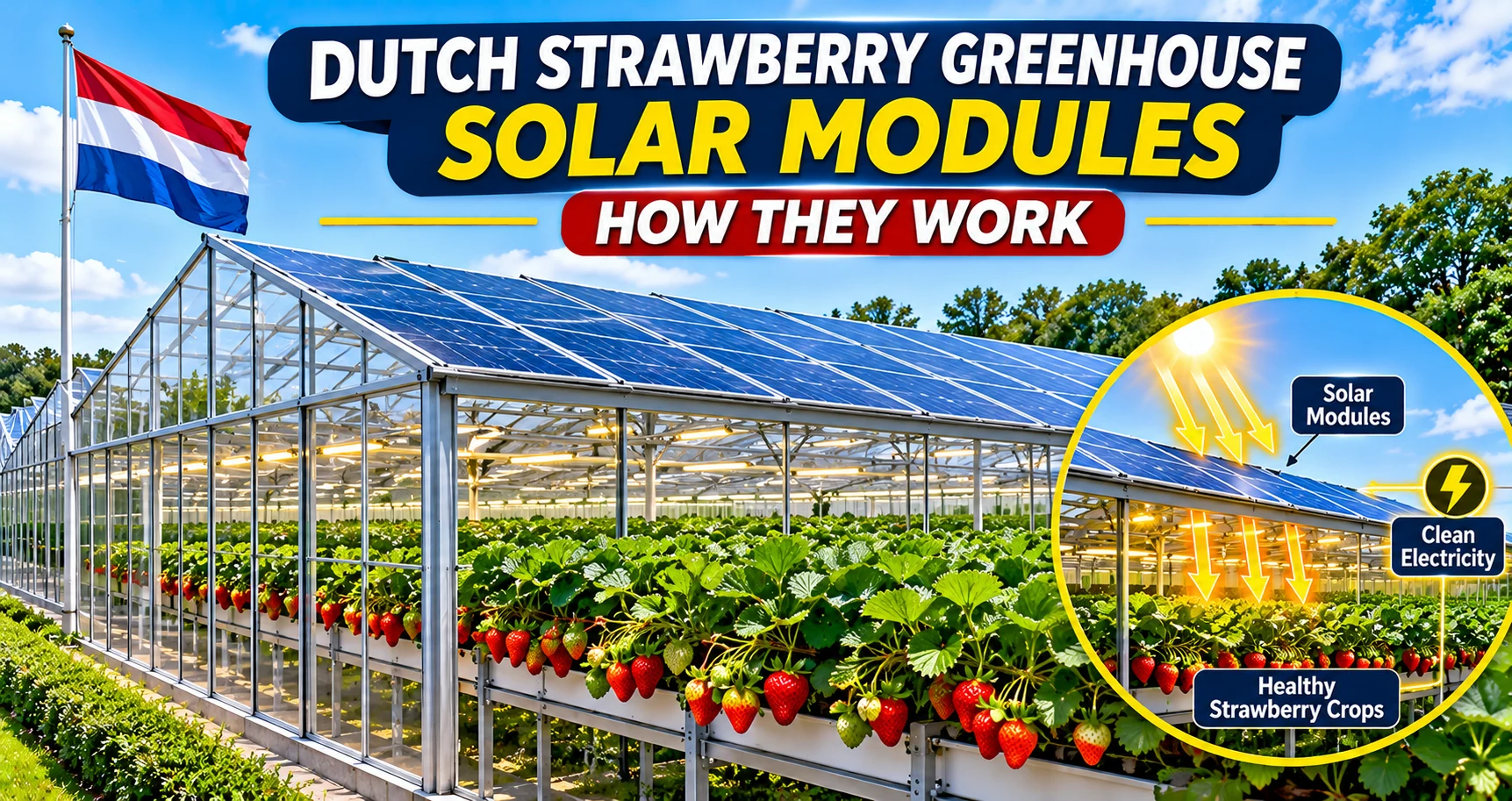
Dutch Strawberry Greenhouse Solar Modules: A New Approach to Clean Energy
Greenhouses help farmers grow fresh produce in controlled environments, but they also create an important challenge: managing sunlight and heat while keeping energy costs under control. In the Netherlands, an innovative project is showing how solar technology could help address both challenges at the same time.
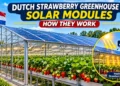
A strawberry greenhouse operated by Genson Fresh Fruits in Someren has become the location of a major solar installation using specialized spectral-filtering modules developed by Voltiris. Instead of simply covering the greenhouse with conventional opaque solar panels, this technology separates different parts of sunlight, allowing useful light to reach the plants while capturing part of the sunlight’s energy to generate electricity.
This approach connects renewable energy with modern food production. It is an example of agrivoltaics, a growing field that explores how agricultural production and solar electricity can work together.
- Solar modules can be integrated into greenhouse structures.
- Spectral-filtering technology separates useful plant light from some heat-carrying sunlight.
- The Dutch Genson project covers approximately one hectare of strawberry greenhouse.
- Nearly 2,000 Voltiris modules were installed.
- The system generates electricity on-site while the greenhouse continues producing strawberries.
1. What Are Dutch Strawberry Greenhouse Solar Modules?
Dutch strawberry greenhouse solar modules are specialized photovoltaic components designed to work inside or as part of a greenhouse roof structure. Their purpose is different from that of traditional solar panels installed on ordinary rooftops.
Related Post


Conventional opaque solar panels block much of the sunlight that reaches the surface beneath them. That can be a problem for greenhouse crops because plants need sufficient light for photosynthesis.
Spectral-filtering solar technology takes a different approach. It is designed to separate incoming sunlight according to its wavelengths. The light needed by plants can pass through toward the crop, while selected parts of the sunlight are redirected toward photovoltaic cells to produce electricity.
This allows growers to explore two uses for the same greenhouse roof: supporting crop production and generating renewable energy.
2. How Does the Voltiris Solar Technology Work?
The Voltiris system uses spectral-filtering modules installed beneath the greenhouse roof. These modules are designed to manage different parts of the sunlight rather than treating all incoming solar radiation in the same way.
Step 1: Sunlight Enters the Greenhouse
Sunlight reaches the greenhouse through its transparent roof. Plants use a portion of this light, known as photosynthetically active radiation (PAR), to support photosynthesis and growth.
Step 2: The Modules Filter Selected Wavelengths
The spectral-filtering modules separate light used by plants from selected near-infrared wavelengths associated with solar heat. The system is designed to allow photosynthetically active light to reach the crop while capturing part of the remaining solar energy.
Step 3: Captured Energy Produces Electricity
The selected sunlight is directed toward photovoltaic cells, which convert solar energy into electrical power. Small mirrors in the Voltiris system track the sun during the day to help maintain the optical process.
Step 4: Electricity Is Used at the Greenhouse
The electricity can support on-site energy needs. Depending on the installation design, this may include electrical equipment, pumps, lighting, climate-control systems, and other greenhouse operations.
3. The Dutch Strawberry Greenhouse Project
One of the most interesting examples of this technology is the collaboration between Voltiris and Genson Fresh Fruits in Someren, the Netherlands.
In October 2026, the partners marked the opening of a commercial installation covering approximately one hectare of strawberry greenhouse. Nearly 2,000 spectral-filtering modules were integrated beneath the greenhouse roof.
According to Voltiris, the installation was completed in around four weeks while strawberry cultivation continued. This is an important practical detail because greenhouse operators need technologies that can be installed without unnecessarily interrupting production.
The project is particularly interesting because it demonstrates how solar technology can be integrated into a commercial strawberry-growing environment rather than being installed only on a separate building or unused piece of land.
4. Why Is Heat Management Important for Strawberry Greenhouses?
Strawberry plants need suitable temperatures and enough light to develop healthy leaves and fruit. However, excessive heat during sunny periods can create problems for greenhouse growers.
High temperatures can affect fruit development, quality, and harvest planning. In some growing conditions, excessive heat can also place additional pressure on irrigation and climate-management systems.
A solar system that captures selected heat-carrying sunlight may offer an additional way to manage the greenhouse environment.
Potential Benefits for Strawberry Production
- Temperature management: Capturing part of the incoming solar energy may help reduce heat buildup beneath the greenhouse roof.
- Crop protection: Better management of intense sunlight may help reduce heat stress during bright periods.
- Growing consistency: A more stable greenhouse environment may support more predictable growing conditions.
- Energy production: Captured solar energy can be converted into electricity for on-site use.
Voltiris has reported that trials at Delphy IC and Proefcentrum Hoogstraten found an increase of up to 26% in premium strawberry yield under its modules. This figure relates to those trials and should not be treated as a guaranteed result for every farm or greenhouse.
5. Main Advantages of Solar Modules in Greenhouses
1. Renewable Electricity Generation
Greenhouses use electricity for many operations, including irrigation pumps, ventilation equipment, monitoring systems, and artificial lighting. Generating electricity on-site can help reduce the amount of power that must be purchased from the grid.
2. More Efficient Use of Greenhouse Space
A greenhouse roof is already an important part of the growing structure. Integrating solar technology into that space can create an additional energy function without requiring a separate ground-mounted solar farm.
3. Potential Cooling Benefits
Some spectral-filtering technologies capture selected wavelengths associated with heat. This may help reduce solar heat entering the growing area, although the actual effect depends on the system and greenhouse conditions.
4. Lower Dependence on Grid Electricity
Electricity generated during daylight hours can be used directly by greenhouse equipment. A suitable battery system may also store surplus power for later use, depending on the project’s electrical design and economics.
5. Support for More Sustainable Agriculture
Combining food production with renewable electricity can help agricultural businesses explore ways to reduce operational emissions and improve energy management.
6. Solar Greenhouse Modules vs. Traditional Solar Panels
Not every greenhouse needs specialized spectral-filtering modules. Traditional solar panels may be suitable for greenhouse roofs where shading is acceptable, or for nearby buildings and unused land. The best option depends on crop requirements and the farm’s energy goals.
| Feature | Traditional Solar Panels | Spectral-Filtering Modules |
|---|---|---|
| Electricity generation | Yes | Yes |
| Light management | Usually blocks or reduces light beneath the panel | Designed to filter selected wavelengths |
| Crop compatibility | Depends on shading and crop requirements | Designed for greenhouse applications |
| System complexity | Generally simpler | More specialized optical and electrical design |
| Typical consideration | Panel placement and shading | Light transmission, crop response, and system cost |
7. Can Other Greenhouse Crops Use This Technology?
Strawberries are not the only crops that may benefit from greenhouse-integrated solar technology. Research and commercial projects are also exploring applications in other horticultural crops.
Potential applications include:
- Tomatoes: Greenhouse tomato production can require careful management of light and temperature.
- Cucumbers: Controlled growing conditions are important for commercial cucumber production.
- Peppers: Greenhouse-grown peppers may benefit from suitable light and climate management.
- Other soft fruits: Research is exploring solar integration in crops such as raspberries.
However, each crop has different light requirements. A system that works well for one variety may not produce the same results in another. Growers should evaluate crop-specific research before investing.
8. What Should Farmers Consider Before Installing Solar Greenhouse Modules?
Although greenhouse solar technology offers exciting possibilities, installing it requires careful planning. Farmers should evaluate both the energy system and the growing environment before making a decision.
Greenhouse Structure
The roof and supporting structure must be suitable for the additional equipment. Engineers should assess structural loads, wind resistance, water drainage, and installation requirements.
Crop Light Requirements
Different crops need different amounts and types of light. Growers should measure existing light levels and understand how a proposed solar system may change the amount of light reaching plants.
Electricity Consumption
A farm should review its electricity use throughout the day and across different seasons. This helps determine whether generated power can be used directly or whether batteries may be useful.
Installation and Maintenance Costs
Specialized greenhouse solar modules may involve higher initial costs than conventional rooftop solar systems. Farmers should compare equipment, installation, maintenance, expected energy production, and possible crop-related benefits.
Local Regulations
Building permits, electrical standards, grid-connection rules, and agricultural regulations vary by country and region. Professional advice is important before starting a project.
9. The Future of Solar-Powered Greenhouses
The Dutch strawberry greenhouse project demonstrates how solar innovation is moving beyond traditional rooftop installations. Instead of treating solar panels and agricultural production as competing uses of space, specialized systems are exploring ways to combine them.
Future developments may include improved wavelength-selective materials, more efficient photovoltaic cells, smarter tracking systems, battery storage, and advanced greenhouse energy-management software.
For growers, the most important question will be whether these technologies can deliver reliable electricity while maintaining or improving crop performance over many growing seasons.
The Genson installation is an important commercial milestone, but long-term monitoring is still needed to understand its seasonal performance. Results from electricity generation, crop quality, maintenance, and operating costs will help determine how widely this technology can be adopted.
Final Thoughts
Dutch strawberry greenhouse solar modules show how renewable energy and modern agriculture can work together. By filtering selected wavelengths of sunlight, specialized systems such as Voltiris aim to generate electricity while allowing useful light to reach greenhouse crops. The Genson project in Someren provides a real commercial example of this approach. As more operating data becomes available, growers will have a clearer picture of its long-term energy, agricultural, and financial benefits.
Frequently Asked Questions
What are solar modules in a strawberry greenhouse?
They are photovoltaic components integrated into or beneath a greenhouse roof to generate electricity. Some specialized systems also filter sunlight to manage the wavelengths reaching the plants.
How does Voltiris technology work?
Voltiris uses spectral-filtering modules to allow photosynthetically active light to reach crops while capturing selected near-infrared wavelengths and converting that energy into electricity.
Where is the Dutch strawberry solar project located?
The commercial installation is at Genson Fresh Fruits in Someren, in the Netherlands.
How many solar modules were installed?
The project uses nearly 2,000 Voltiris spectral-filtering modules across approximately one hectare of greenhouse.
Can solar panels reduce greenhouse temperatures?
Some specialized systems capture selected heat-carrying wavelengths, which may help reduce heat entering the greenhouse. Actual temperature effects depend on the technology, greenhouse design, weather, and operating conditions.
Can greenhouse solar systems work with battery storage?
Yes. A compatible battery can store surplus electricity for later use. The battery capacity and inverter must be selected according to the greenhouse’s energy demand and electrical system.
Are spectral-filtering solar modules suitable for every greenhouse?
No. Suitability depends on crop light requirements, greenhouse structure, local climate, energy consumption, installation costs, and the technical performance of the selected system.
Editorial note: This article is for educational purposes. Project specifications and performance figures should be checked against current manufacturer information and independent research before being used for investment decisions.