
How to Build an Outdoor AC Unit Enclosure: Design, Materials & Ventilation
Outdoor air conditioning units are essential for keeping homes comfortable, but their appearance is not always attractive. Large condenser units, exposed pipes, electrical connections, and cables can make an otherwise beautiful outdoor space look cluttered.
An outdoor AC unit enclosure offers a practical way to hide this equipment while maintaining an organized exterior design. With perforated metal panels, decorative doors, and a carefully planned frame, homeowners can create an enclosure that complements the building’s architecture.
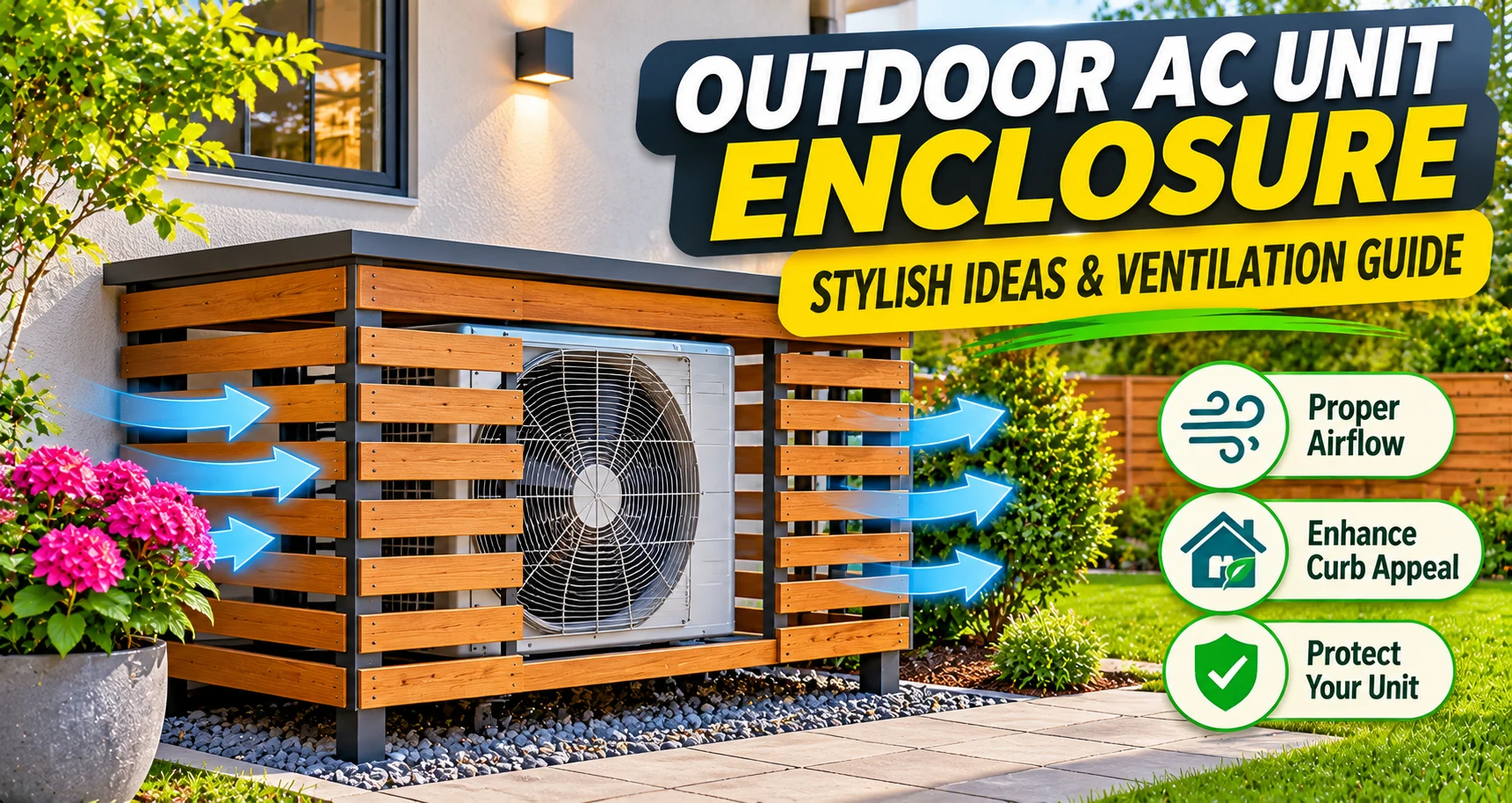
The design shown in our reference image uses brown perforated metal panels to conceal several outdoor air conditioning units installed against a stone wall. The doors open for maintenance, while the perforations provide a path for ventilation.
- What an outdoor AC enclosure is and why homeowners use one.
- How perforated metal screens can improve the appearance of an installation.
- Which materials are suitable for an outdoor enclosure.
- Why ventilation and manufacturer clearances are essential.
- How to plan access doors, drainage, and maintenance.
- Common mistakes to avoid when hiding outdoor condenser units.
1. What Is an Outdoor AC Unit Enclosure?
An outdoor AC unit enclosure is a protective or decorative structure installed around one or more air conditioner condenser units. It is designed to make the equipment less visible without interfering with its operation.
Related Post

Depending on the property, an enclosure may be constructed from:
- Perforated metal sheets
- Aluminum panels
- Powder-coated steel
- Weather-resistant wooden slats
- Decorative metal screens
- Purpose-designed architectural louvers
Some enclosures are simple three-sided screens, while others use hinged doors that completely open to provide access for technicians.
The most important principle is that an enclosure must be designed around the air conditioner’s airflow requirements. It should never function as a sealed cabinet.
2. Why Hide Outdoor Air Conditioning Units?
Improve the Appearance of Your Home
Outdoor condenser units can look industrial, especially when several machines are installed together. A coordinated enclosure creates a cleaner appearance and can match the colors and materials of the house.
Create a More Organized Outdoor Space
A properly designed screen can conceal visible pipes, brackets, and some installation components. It can help make patios, courtyards, gardens, and side passages look more organized.
Add a Decorative Architectural Feature
Perforated metal panels can introduce texture and geometric patterns to an exterior wall. Brown, black, bronze, and charcoal finishes can work particularly well with stone, concrete, and modern exterior materials.
Provide a Physical Screen
A well-designed enclosure can help discourage accidental contact with equipment and reduce its visibility. However, it should not prevent technicians from safely reaching the units.
3. Understanding the Perforated Metal Design
The reference design uses large brown metal panels with regularly spaced square openings. This creates a balance between visual privacy and airflow.
The structure includes several useful design elements:
Perforated Metal Doors
The perforated panels conceal the equipment while allowing air to pass through the openings. Their actual ventilation capacity depends on the open-area percentage, panel thickness, opening geometry, and the location of the panels.
Hinged Access Panels
Opening doors make it easier for technicians to inspect the condenser units, clean accessible surfaces, and perform repairs. The doors should have secure hinges and suitable latches.
Metal Support Frame
A separate frame supports the panels and transfers their weight to suitable structural fixing points. It should be designed to resist outdoor weather, vibration, and the weight of the doors.
Coordinated Exterior Finish
A brown or bronze powder-coated finish can complement natural stone and warm-colored walls. Other finishes can be selected to match the building’s windows, doors, or architectural details.
4. Choosing the Best Materials
Material selection affects the appearance, durability, maintenance requirements, and cost of an outdoor AC enclosure.
| Material | Advantages | Considerations |
|---|---|---|
| Powder-coated steel | Strong, rigid, and available in many finishes. | Damaged coatings can expose steel to corrosion. |
| Aluminum | Lightweight and naturally corrosion-resistant. | Panel thickness and frame strength must be appropriate. |
| Stainless steel | Durable and suitable for many exposed environments. | Can be more expensive. |
| Treated timber | Natural appearance and easy customization. | Requires suitable weather protection and maintenance. |
For the modern design in the reference image, powder-coated aluminum or properly protected steel are attractive options. The final selection should account for local weather, corrosion exposure, panel size, and structural requirements.
5. The Most Important Factor: Proper Ventilation
Ventilation is the most important technical consideration when building an outdoor AC unit enclosure.
An air conditioner condenser needs to exchange heat with outdoor air. If the enclosure restricts airflow, the unit may operate at higher temperatures, lose performance, consume more energy, or shut down under certain conditions.
The design must account for both the air entering the condenser and the hot air discharged by its fan.
Allow Air to Enter and Leave Freely
Do not assume that a perforated panel automatically provides enough ventilation. A panel may look open but still restrict airflow if its openings are too small or its open-area percentage is insufficient.
Prevent Hot Air Recirculation
Hot air discharged by one condenser should not be drawn back into the same unit or into another condenser. This is particularly important when several outdoor units are installed close together.
Follow the Manufacturer’s Clearance Requirements
Every air conditioner model has specific requirements for the space around its outdoor unit. These may include minimum distances behind, beside, above, and in front of the equipment.
The enclosure designer should use the installation manual for every unit rather than relying on a universal clearance measurement.
- Maintain the manufacturer’s required clearances.
- Provide adequate air intake and discharge openings.
- Prevent discharged hot air from recirculating.
- Avoid placing decorative objects directly in front of fan outlets.
- Allow enough space for inspection and servicing.
- Have the enclosure’s airflow design checked by a qualified HVAC professional.
6. How to Plan an Outdoor AC Enclosure
A successful project begins with accurate measurements and an understanding of the existing air conditioning installation.
Step 1: Measure the Installation Area
Record the dimensions and positions of all outdoor units. Include their height, width, depth, pipe connections, electrical connections, and required service access.
Do not measure only the equipment itself. The available space around each unit is equally important.
Step 2: Check the Airflow Direction
Identify where each unit draws in air and where it discharges air. Different condenser models may have different airflow arrangements.
Use the equipment installation documentation to identify the airflow path before planning the screen.
Step 3: Choose the Panel Design
Select a perforation pattern that suits the building. Square holes, circular openings, horizontal louvers, and decorative geometric patterns are common options.
The selected panel must provide sufficient net free area for the required airflow. Appearance alone should not determine the pattern.
Step 4: Design the Supporting Frame
The frame should support the weight of the panels and doors while remaining stable in outdoor conditions. Fixing points must be suitable for the wall or supporting structure.
Step 5: Include Opening Doors
Provide hinged doors or removable panels wherever technicians need access. Make sure the doors can open fully without hitting pipes, equipment, or nearby walls.
Step 6: Plan Drainage and Weather Protection
Rainwater, cleaning water, and condensate should not accumulate around the equipment. Avoid designs that trap water or direct it toward electrical components.
Step 7: Inspect Before Regular Operation
After installation, have a qualified HVAC technician verify airflow, operating conditions, access, and clearances. Check that the enclosure does not cause abnormal noise or equipment overheating.
7. Can You Enclose Several Outdoor AC Units Together?
Yes, multiple outdoor condenser units can sometimes share a decorative enclosure, but the design becomes more complicated as the number of units increases.
The reference image shows four outdoor units arranged vertically within one metal structure. This is a visually organized solution, but a similar installation must be engineered around the combined airflow requirements.
Important considerations include:
- The total airflow demand of all units.
- The discharge direction of each condenser.
- The possibility of hot air recirculation between units.
- Clearances between equipment and enclosure panels.
- Access for individual unit maintenance.
- Drainage and electrical safety.
- Structural support for the enclosure and doors.
A single enclosure should not be designed as a tightly packed cabinet. Each unit must have the airflow and service space specified by its manufacturer.
8. Outdoor AC Enclosure Design Ideas
Modern Brown Metal Screen
Brown perforated metal creates a warm appearance that works well with stone walls, textured plaster, and traditional exterior materials.
Black Aluminum Slatted Screen
Horizontal or vertical aluminum slats can create a minimalist appearance for contemporary homes. The spacing and orientation must still provide the required airflow.
Decorative Geometric Panels
Laser-cut panels can create custom patterns that coordinate with balconies, gates, and exterior railings. Their open area must be checked before use around HVAC equipment.
Timber-Effect Outdoor Screen
Weather-resistant materials with a timber appearance can help integrate the enclosure into a garden or patio design.
Three-Sided Privacy Screen
A three-sided screen may be appropriate where the equipment needs to remain accessible from one direction. It can also reduce the amount of material required.
9. Common Mistakes to Avoid
Mistake 1: Making the Enclosure Too Small
A tight enclosure can restrict airflow and prevent technicians from accessing the equipment. Design around the manufacturer’s clearances.
Mistake 2: Using Panels With Too Little Open Area
Small decorative holes may look attractive but may not provide enough ventilation. Check the net free area and airflow requirements.
Mistake 3: Blocking the Fan Outlet
Never place a solid panel directly in front of an air discharge opening unless the manufacturer-approved design specifically permits it.
Mistake 4: Forgetting Maintenance Access
A beautiful enclosure is not useful if technicians cannot open it or reach important components.
Mistake 5: Ignoring Corrosion
Outdoor metal panels need suitable corrosion protection, especially in coastal or humid environments.
10. Maintenance Tips
An outdoor AC enclosure needs occasional inspection to keep it looking good and to make sure it does not interfere with the equipment.
- Remove leaves, dust, and debris from ventilation openings.
- Inspect the panels for corrosion or damaged coatings.
- Check hinges, locks, and door fasteners.
- Keep the area around the condenser clear.
- Check that no plants or objects block airflow.
- Arrange regular air conditioner maintenance with a qualified technician.
- Make sure drainage paths remain clear.
Never open electrical compartments or attempt refrigerant-system repairs unless qualified to do so.
11. Is an Outdoor AC Unit Enclosure Worth It?
For homeowners who want a cleaner exterior appearance, an outdoor AC enclosure can be a worthwhile architectural improvement.
It is especially useful when several condenser units are installed in a visible courtyard, narrow side passage, or exterior service area.
However, the project should be evaluated according to three priorities:
- Appearance: Does the enclosure complement the building?
- Airflow: Can every condenser operate within its manufacturer’s requirements?
- Access: Can technicians safely inspect and service every unit?
If these three requirements are addressed, a decorative enclosure can help organize the outdoor installation without sacrificing essential equipment access.
Final Thoughts
A well-designed outdoor AC unit enclosure can transform an exposed condenser installation into a cleaner and more attractive part of the home’s exterior. Perforated metal panels, durable finishes, and hinged access doors offer a practical combination of appearance and functionality. The most important detail, however, is ventilation. Always follow the air conditioner’s installation requirements and have the enclosure checked by an HVAC professional before regular use.
Frequently Asked Questions
Can I put a screen around my outdoor AC unit?
Yes, provided the screen maintains the required airflow, manufacturer clearances, and service access. A decorative screen must not restrict the condenser’s air intake or discharge.
Are perforated metal panels good for AC enclosures?
They can be suitable when their open area, pattern, and position provide sufficient airflow. The panel design should be checked against the condenser manufacturer’s requirements.
Can I cover my AC condenser completely?
No. An outdoor condenser needs outdoor airflow to transfer heat. A sealed or poorly ventilated cover can cause performance problems and possible equipment shutdown.
Can several air conditioners share one enclosure?
Potentially, yes. However, the combined enclosure must provide sufficient airflow, prevent hot-air recirculation, maintain individual clearances, and allow access to every unit.
What is the best material for an outdoor AC screen?
Powder-coated steel and aluminum are common choices. The best material depends on the climate, corrosion exposure, design, budget, and structural requirements.
Does an AC enclosure reduce noise?
Some screens may change how sound travels, but noise reduction is not guaranteed. A poorly designed enclosure can create reflections or vibration. Do not sacrifice airflow to reduce noise.
Should the AC enclosure have doors?
Access doors are useful because technicians need to inspect and service the outdoor equipment. The doors should open sufficiently and should not obstruct airflow during operation.
How do I know if my AC enclosure has enough ventilation?
Check the manufacturer’s installation manual for clearances and airflow requirements. A qualified HVAC professional should evaluate the enclosure’s net free area, airflow path, and potential for hot-air recirculation.
Safety and editorial note: This article provides general design information, not a construction specification. Outdoor AC equipment contains electrical and refrigerant components. Structural fixing, electrical work, and HVAC modifications should be handled by appropriately qualified professionals and comply with local requirements.