
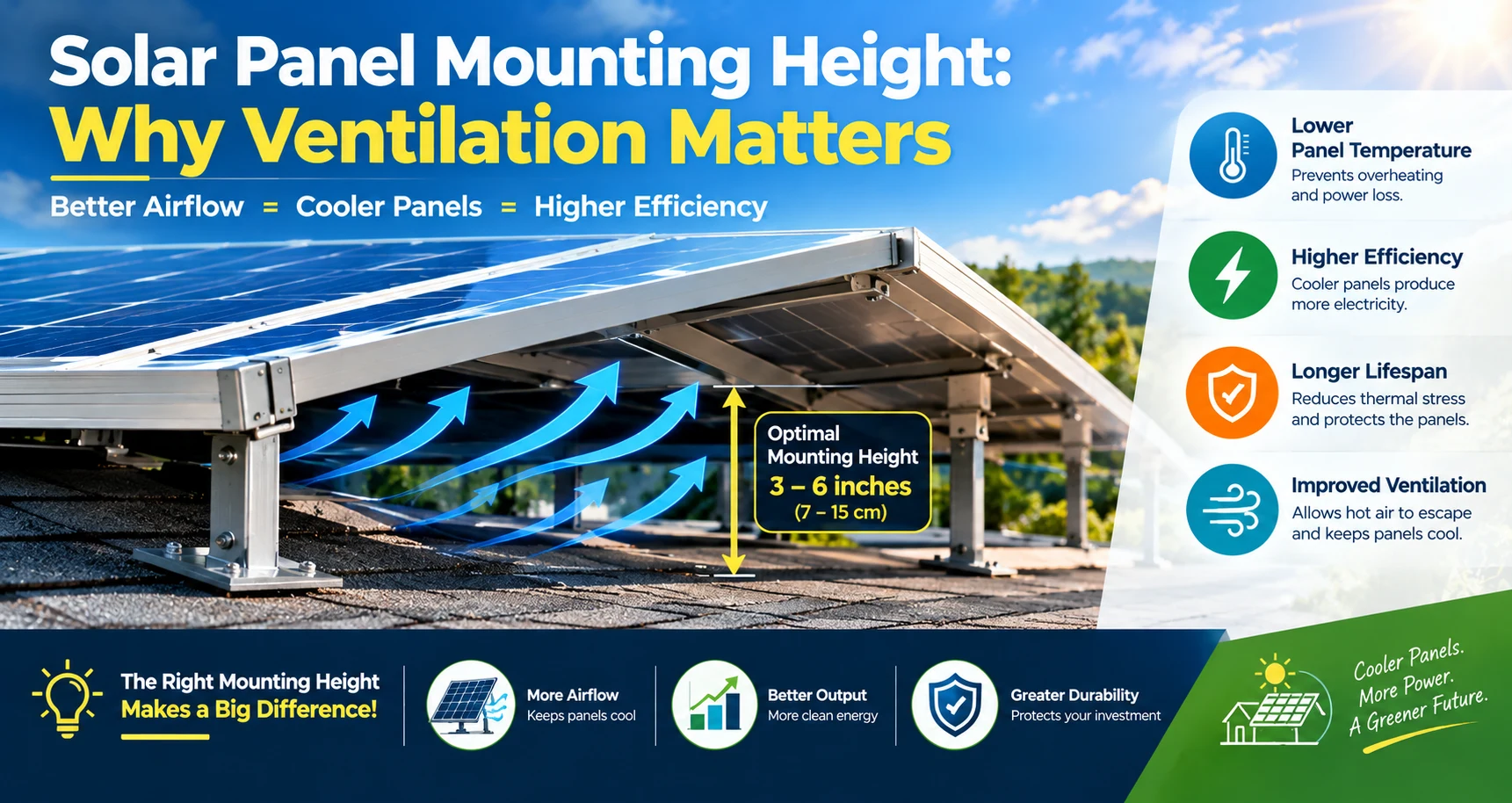
Solar Panel Mounting Height: Why Ventilation Matters
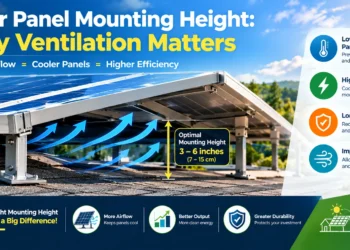
When installing a solar energy system, choosing the right solar panel mounting height is about more than appearance. The space between the panels and the roof or mounting surface can influence airflow, operating temperature, maintenance access, and the long-term reliability of the installation.
Solar panels convert sunlight into electricity, but they also absorb heat. If the air beneath the modules cannot circulate effectively, heat may accumulate and increase their operating temperature. Since photovoltaic panels generally produce less power as their temperature rises above their rated test conditions, good ventilation can help support better performance.
In this guide, you will learn why solar panel clearance matters, how mounting height affects ventilation, what to consider for different roof types, and how to plan a safe and practical solar installation.
What Is Solar Panel Mounting Height?
Solar panel mounting height refers to the distance between a solar module and the surface supporting it, such as a roof, ground-mounted frame, carport, or elevated structure.


The required clearance varies according to the mounting system, roof construction, local building requirements, weather conditions, cable routing, and the manufacturer’s installation instructions. There is no single mounting height that is ideal for every solar installation.
For rooftop systems, the panels are commonly installed above the roof surface using rails and brackets. Ground-mounted systems may use taller frames to provide additional clearance, simplify maintenance, or accommodate the intended site layout.
Why Does Ventilation Matter for Solar Panels?
1. It Helps Control Panel Temperature
Solar modules absorb solar radiation and convert part of that energy into electricity. The remaining energy contributes to heat, causing the modules to operate at temperatures that can be considerably higher than the surrounding air.
Air circulating around the back of a panel can carry away some of this heat. A mounting arrangement that allows air to move beneath the modules may therefore help keep their operating temperature lower than an otherwise comparable installation with restricted airflow.
The actual temperature difference depends on wind speed, ambient temperature, panel design, mounting geometry, and other site conditions.
2. It Can Help Maintain Electrical Output
Most conventional crystalline-silicon solar panels experience a reduction in power output as cell temperature rises. Manufacturers publish a temperature coefficient in the module datasheet that indicates how power changes with temperature.
For example, a hypothetical panel with a maximum-power temperature coefficient of -0.35% per degree Celsius would experience an approximate 7% reduction in maximum power when its cell temperature is 20°C above the reference temperature used for its rated specifications.
This is an illustration, not a prediction for every panel. Actual output also depends on irradiance, shading, inverter operation, wiring losses, and other factors.
3. It Supports Practical Maintenance
Appropriate clearance may make certain inspection and maintenance tasks easier, depending on the mounting design. Installers may need access to cables, connectors, roof attachments, or drainage areas beneath the array.
However, additional height does not automatically make a system easier or safer to maintain. Elevated installations must provide suitable access and fall protection, and maintenance should follow the manufacturer’s instructions.
4. It Helps Avoid Unintended Moisture Problems
A properly designed solar array should not obstruct the roof’s intended drainage or create avoidable moisture traps. Airflow can help surfaces dry, but ventilation alone does not prevent roof leaks or solve poor drainage.
Correct flashing, waterproofing, cable management, and mounting attachments are essential. Roof penetrations should be installed according to the roofing system’s requirements.
How Does Mounting Height Affect Solar Panel Efficiency?
Mounting height affects the airflow available around the modules, but it is only one factor in solar system performance. Panel orientation, tilt, shading, local weather, and equipment selection also influence energy production.
A panel installed with an open space beneath it may release heat more effectively than one with restricted airflow. However, increasing the gap does not guarantee a proportional increase in electricity production.
Once a mounting arrangement provides suitable ventilation, additional clearance may offer limited thermal benefit while increasing structural complexity or wind exposure. The best design balances ventilation with safety, cost, weather resistance, and the mounting manufacturer’s requirements.
Is There an Ideal Solar Panel Mounting Height?
No universal mounting height is appropriate for every installation. The correct clearance depends on the roof type, mounting hardware, panel orientation, local environmental conditions, and applicable building rules.
When planning a system, consider the following factors:
- Manufacturer requirements: Follow the module and mounting-system instructions for clearances, support locations, and installation methods.
- Roof design: Different roofing materials and structures require different attachment and waterproofing methods.
- Air circulation: Avoid unnecessary obstructions that restrict the intended airflow beneath the modules.
- Wind loads: Elevated panels and mounting frames must withstand the wind loads specified by the applicable design requirements.
- Snow and debris: In relevant climates, the design may need to accommodate snow accumulation, falling debris, and cleaning access.
- Electrical safety: Cables and connectors must be secured and protected from abrasion, water exposure, and other hazards.
- Maintenance access: Plan safe access for inspections without compromising the roof or the mounting system.
Use the mounting system’s specified clearances rather than selecting a height based only on general online recommendations.
Roof-Mounted vs. Ground-Mounted Solar Panels
Roof-Mounted Solar Panels
Rooftop solar systems use the building’s roof as the mounting surface. Rails and brackets typically hold the modules above the roof, creating a space where air can circulate.
Before installation, check the roof’s structural condition, attachment method, waterproofing requirements, and any restrictions associated with the roofing material. The panels should not interfere with roof drainage or required access routes.
Ground-Mounted Solar Panels
Ground-mounted systems use a dedicated frame anchored to the ground. Designers have more flexibility to choose the array height, tilt, orientation, and row spacing.
Greater clearance may help with vegetation management, access, or specific site conditions, but it may also require stronger supports and additional materials. The structure must be engineered for local wind, snow, soil, and other applicable loads.
Solar Carports and Elevated Structures
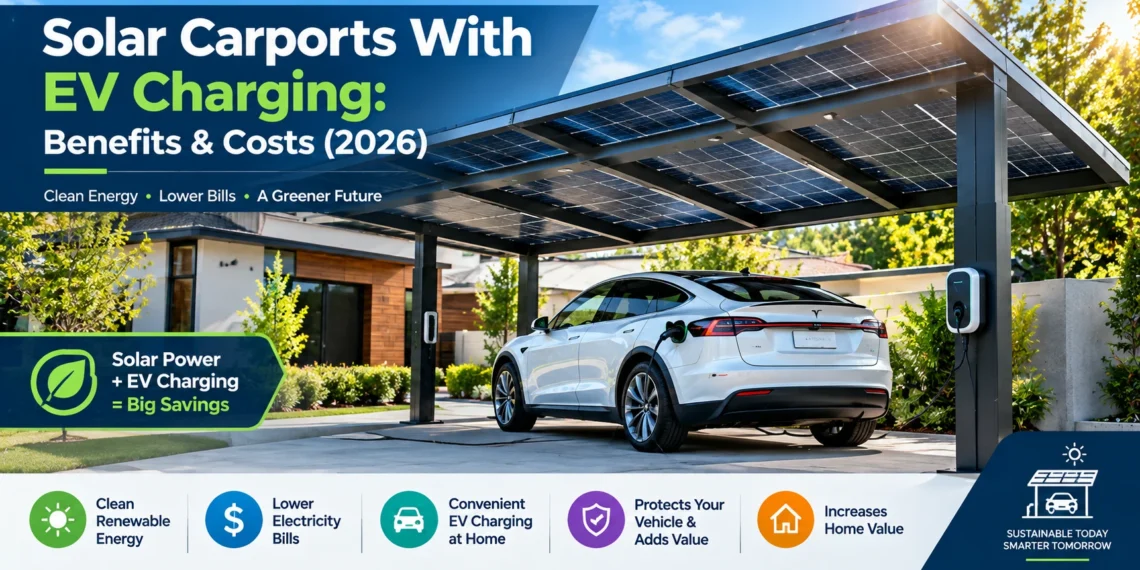
Solar carports place panels above parking areas, providing covered space while generating electricity. Their mounting height must account for vehicle clearance, pedestrian access, drainage, electrical equipment, and structural loading.
For these projects, ventilation is important, but it must be considered alongside safe clearance and the structural requirements of the canopy.
What Happens If Solar Panels Have Poor Ventilation?
Restricted airflow can contribute to higher operating temperatures, particularly in hot weather and under strong sunlight. Because panel output typically decreases as cell temperature rises, this may reduce instantaneous power production.
Other possible problems depend on the installation. Poorly planned layouts can make inspection difficult, obstruct drainage, or leave cables exposed to damage.
It is important not to assume that every low-mounted panel will overheat. Module construction, wind exposure, mounting design, and environmental conditions all affect performance. A qualified installer can assess whether the proposed clearance is suitable for the specific system.
Can You Improve Ventilation Without Rebuilding the System?
If you suspect that an existing installation has insufficient airflow, begin with an inspection rather than immediately changing the mounting height.
- Review the installation documents: Check the mounting-system instructions and the module manufacturer’s clearance requirements.
- Inspect for obstructions: Look for objects or structures that may unintentionally block airflow around the array.
- Check performance data: Compare production under similar sunlight and weather conditions, accounting for seasonal variation.
- Inspect the roof and cables: Look for drainage issues, loose cable management, visible damage, or other concerns.
- Consult a qualified installer: Ask for an assessment before changing brackets, rails, attachments, or structural components.
Do not lift panels, loosen mounting hardware, or modify the array while it is installed. Solar equipment can remain electrically energized in daylight, and changes to the mounting structure may create electrical, fall, or structural hazards.
Common Solar Panel Mounting Mistakes
- Ignoring manufacturer specifications: Using an unapproved mounting arrangement may compromise performance, safety, or warranty coverage.
- Blocking airflow unnecessarily: Poorly positioned components may restrict the intended ventilation beneath the panels.
- Overlooking roof waterproofing: Incorrect attachments can lead to leaks or damage to roofing materials.
- Using inadequate structural supports: Mounting systems must be designed for the applicable environmental loads.
- Leaving cables unsecured: Cables that rub against roof surfaces or sharp edges may suffer insulation damage.
- Choosing height based only on efficiency: Ventilation must be balanced with wind resistance, accessibility, structural safety, and cost.
- Attempting unsafe DIY adjustments: Modifying an installed solar array without appropriate expertise can create serious hazards.
How to Get the Best Results From Your Solar Installation
To support reliable performance, choose a mounting system designed for your roof or site, follow the equipment manufacturers’ instructions, and ensure that the installation complies with applicable building and electrical requirements.
Keep panels free of excessive shading, use appropriate cable management, and monitor system output for unexplained changes. Have qualified professionals inspect mounting attachments and electrical components according to the system’s maintenance requirements.
If you are comparing installation proposals, ask contractors to explain their mounting design, specified panel clearance, wind-load calculations, roof attachment method, and maintenance provisions. A well-designed system should balance thermal performance with safety and durability.
Frequently Asked Questions
Does raising solar panels always increase efficiency?
No. Increasing clearance may improve airflow in some circumstances, but the effect depends on the installation and local conditions. Extra height does not guarantee a proportional improvement in energy production.
Do solar panels need air underneath them?
Many conventional rooftop mounting systems provide clearance beneath the modules to allow airflow and accommodate mounting hardware. The required arrangement depends on the module and mounting-system specifications.
Can solar panels overheat in summer?
Solar panels can become hot during sunny weather. Their electrical output generally decreases as cell temperature increases, although actual performance depends on the module and environmental conditions.
Is a larger gap better for ventilation?
Not necessarily. A larger gap may change airflow, but it can also affect wind loads, structural requirements, cost, and appearance. Use a mounting height appropriate for the specific site and system.
Are ground-mounted solar panels better ventilated?
Ground-mounted systems may offer more flexibility in choosing clearance and row spacing. However, ventilation still depends on the mounting design, wind exposure, nearby obstructions, and other site conditions.
Can poor ventilation damage solar panels?
Restricted airflow can increase operating temperature and may reduce output. Whether it creates a long-term reliability concern depends on the panel, mounting arrangement, and environmental conditions. Follow the manufacturer’s installation requirements.
Should I change the mounting height of an existing solar array?
Do not make structural changes without a professional assessment. Altering brackets or rails can affect wind resistance, roof waterproofing, electrical safety, and the integrity of the mounting system.
Conclusion
Solar panel mounting height is an important part of planning a safe and effective photovoltaic installation. Suitable clearance can support airflow, help manage panel temperature, and provide space for mounting hardware and maintenance.
However, there is no single ideal height for every roof or ground-mounted system. The right design balances ventilation with structural strength, wind resistance, roof protection, electrical safety, and manufacturer requirements.
For the best results, use a mounting system suited to your site, follow the installation instructions, and consult qualified professionals when designing or modifying the array.
Disclaimer: This article is for educational purposes only. Solar mounting systems should be designed and installed in accordance with the manufacturer’s instructions and applicable local building and electrical requirements.