
How to Keep a Sump Pump Running During a Power Outage
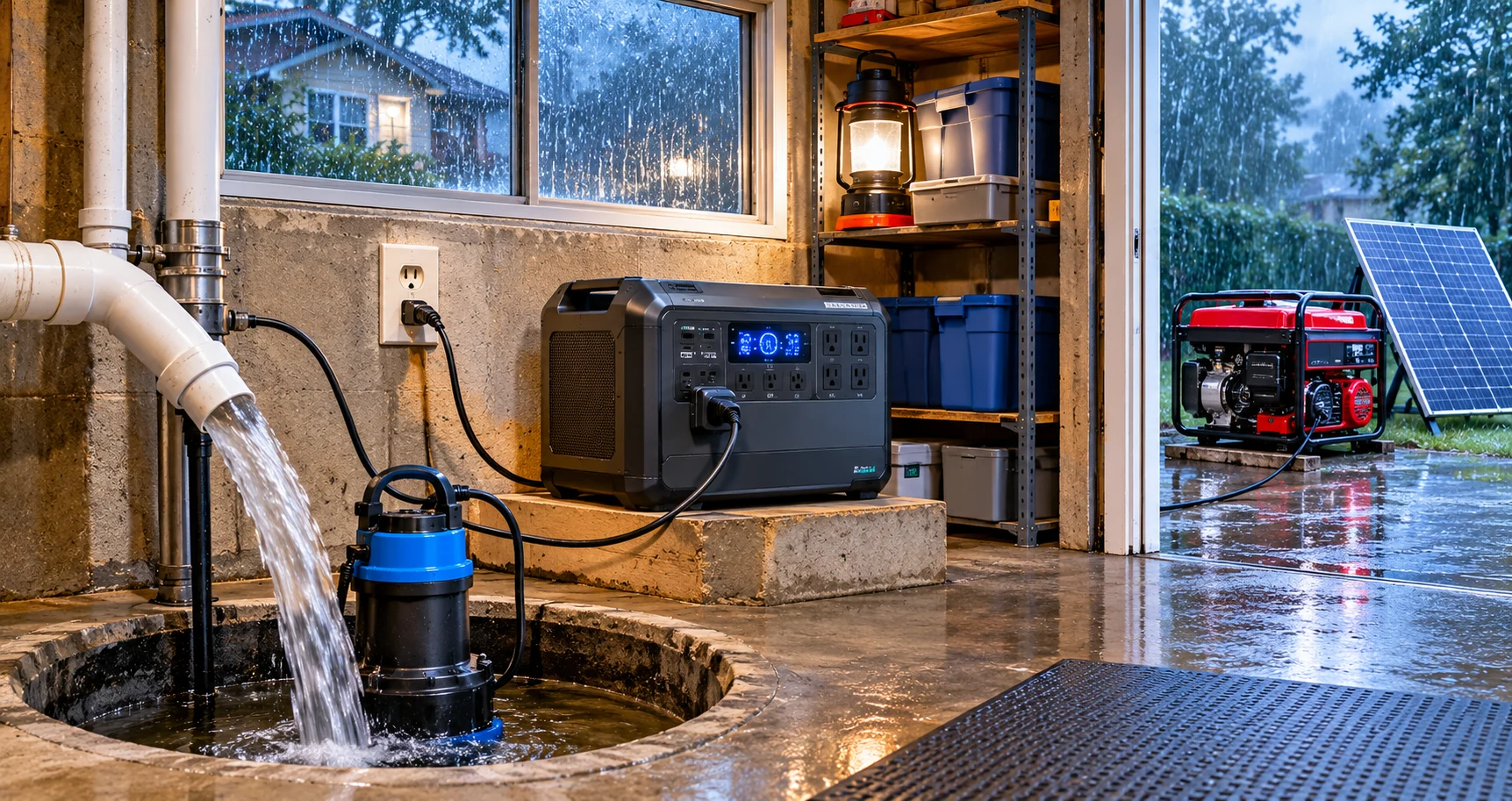
sump pump backup during power outage A sump pump plays an important role in protecting a basement or crawl space from unwanted water. It collects groundwater in a sump pit and pumps it away from the foundation before the water level becomes dangerous. However, what happens when a storm causes a power outage at the same time that heavy rain is filling the sump pit?
Without electricity, a conventional sump pump usually stops working. If water continues entering the pit, the basement may be at risk of flooding. This is why having a reliable sump pump backup during a power outage is an important part of home flood protection.
Fortunately, several solutions are available, including battery backup sump pumps, portable power stations, standby generators, and solar-powered backup systems. Each option has different costs, installation requirements, advantages, and limitations.
Quick Answer: The most direct backup solution is usually a dedicated battery-powered sump pump with its own float switch. A properly sized generator can power a compatible primary pump for longer periods, while a solar-plus-battery system may provide additional energy independence. The best option depends on pump power, water inflow, outage duration, and installation conditions.
Related Post
1. Why Does a Sump Pump Need Backup Power?
A sump pump normally operates when water collects inside a sump basin. A float switch or electronic sensor detects the rising water level and activates the pump. After the water is removed, the pump switches off automatically.
The problem is that many storms that produce heavy groundwater and surface runoff can also damage electrical infrastructure or interrupt utility service. If the primary pump loses power, water may continue entering the pit without being removed.
Several situations make backup power especially important:
- Heavy rainfall that increases groundwater pressure around the foundation.
- Storms that cause electricity outages.
- Properties with basements below the surrounding water table.
- Homes with drainage systems that depend on continuous pumping.
- Buildings that remain unattended for long periods.
- Properties where previous basement flooding has occurred.
A backup system is not simply a convenience. In properties that depend on active pumping, it can be an important part of a wider water-management and flood-prevention plan.
2. The Main Ways to Keep a Sump Pump Running Without Grid Electricity
There are four common approaches to maintaining sump pump operation during a power outage. They do not all work in the same way, so understanding their differences is important before purchasing equipment.
Option 1: Battery Backup Sump Pump
A battery backup sump pump is a secondary pump connected to a dedicated battery and control system. When utility power fails or the water level rises above a preset point, the backup pump can start automatically if the system is correctly installed and configured.
Many dedicated systems include a battery charger, monitoring controller, separate float switch, alarm, and backup pump. The charger normally maintains the battery while utility power is available.
When an outage occurs, the backup system uses stored battery energy to operate its pump. This provides an additional pumping method without requiring a fuel-powered generator.
Advantages:
- Can start automatically when water reaches the backup float switch.
- Does not require gasoline or propane.
- Can operate indoors without generator exhaust.
- Provides a separate pumping method if the primary pump fails.
- Many systems include audible alarms and battery monitoring.
Limitations:
- Runtime is limited by battery capacity and pump consumption.
- The battery must be maintained and replaced when necessary.
- The backup pump has its own flow and pumping-height limitations.
- It may not keep up with extremely high water inflow.
A dedicated battery backup pump is often a practical first layer of protection for homes that rely on a sump system.
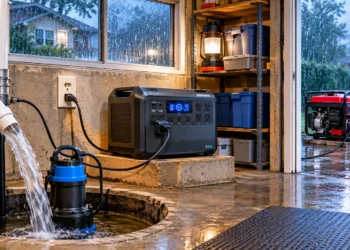
Option 2: Portable Power Station
A portable power station is a rechargeable battery system with an inverter that supplies AC electricity to compatible appliances. Depending on its specifications, it may be able to operate an existing sump pump during an outage.
This option can be useful when homeowners want a portable backup source for several essential devices, rather than a battery dedicated exclusively to the sump pump.
However, not every portable power station can start or operate every sump pump. Before connecting one, check the following specifications:
- Continuous AC output: Must support the pump’s operating power.
- Surge output: Must handle the motor’s startup demand.
- Battery capacity: Determines how much energy is available.
- Output voltage and frequency: Must match the pump’s requirements.
- Operating limitations: Check temperature, ventilation, and manufacturer instructions.
A portable power station can be convenient, but it should not be assumed to provide automatic sump protection. Someone may need to connect the pump and start the backup arrangement unless the equipment has an approved automatic transfer or backup feature.
Option 3: Portable or Standby Generator
A generator can supply electricity to a sump pump for an extended outage, provided it has sufficient output, fuel, and a safe connection arrangement.
A portable generator may be suitable for temporary emergency use. A permanently installed standby generator can provide a more automatic solution when paired with the appropriate transfer equipment and professionally designed electrical installation.
Before choosing a generator, consider:
- The pump’s running wattage.
- The motor’s starting or surge power.
- Other appliances that may operate at the same time.
- Fuel availability and expected outage duration.
- Generator maintenance and operating requirements.
- Safe outdoor placement and electrical connections.
A generator may provide longer operation than a small battery when fuel is available. However, it requires more attention to fuel, maintenance, noise, weather protection, and carbon monoxide safety.
Option 4: Solar Panels With Battery Storage
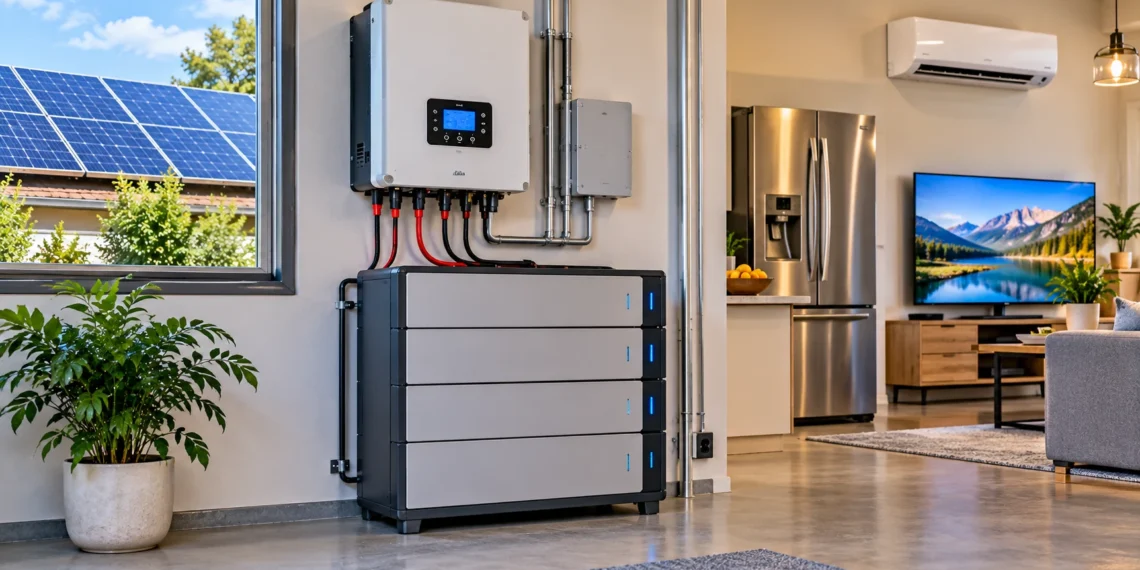
A solar-plus-battery system can provide another way to operate a sump pump when grid electricity is unavailable. Solar panels generate electricity during daylight, while the battery stores energy for periods when sunlight is insufficient.
A typical arrangement may include:
- Solar panels.
- A compatible solar charge controller or hybrid inverter.
- A battery bank with suitable battery management.
- An inverter capable of starting the sump pump.
- Appropriate electrical protection and backup-load connections.
Solar power can help recharge the battery during an extended outage, but actual production depends on weather, shading, panel orientation, season, and system configuration.
Importantly, ordinary grid-tied solar panels do not necessarily continue supplying electricity when the grid fails. The system must be specifically designed and configured for backup operation.
For homeowners who already have a compatible solar battery system, adding a properly designed sump pump backup circuit may be worth evaluating with a qualified electrician.
3. Battery Backup vs. Generator vs. Solar: Which Is Better?
Each solution has a different purpose. A dedicated battery backup pump is designed specifically for sump protection, while a generator or larger battery system may support the existing pump and additional household loads.
| Feature | Battery Backup Pump | Generator | Solar + Battery |
|---|---|---|---|
| Automatic operation | Common with suitable systems | Depends on installation | Depends on system design |
| Fuel required | No | Yes, unless fuel-free standby source | No |
| Indoor exhaust | None | Dangerous if generator is indoors | None during battery operation |
| Extended operation | Limited by battery | Limited by fuel and maintenance | Depends on battery and solar production |
| Can support other loads | Usually limited to backup pump | Yes, within generator capacity | Yes, within inverter and battery limits |
| Installation complexity | Moderate | Varies; electrical connection is important | Higher |
| Best use | Dedicated sump protection | Longer outages and multiple loads | Solar-powered backup and energy resilience |
For many homes, a dedicated battery backup pump provides a useful first layer of protection. A generator or solar-plus-battery system can provide additional backup capacity depending on the property’s requirements.
4. How to Calculate Sump Pump Battery Runtime
Battery runtime is one of the most important factors when selecting a backup system. A battery’s advertised capacity does not automatically tell you how many hours a sump pump will operate.
You need to know the usable battery energy, the pump’s actual power consumption, inverter efficiency if applicable, and how frequently the pump operates.
The Basic Runtime Formula
Estimated Runtime (hours) = Usable Battery Energy (Wh) ÷ Pump Power (W)
For AC pumps supplied through an inverter, use the energy available after the relevant conversion losses.
For example, assume a battery system has 1,000 Wh of usable energy available to the pump and the pump consumes 500 W while running.
1,000 Wh ÷ 500 W = 2 hours of continuous operation.
This is a simplified example. It does not include additional standby consumption, changing motor demand, or other system limitations.
Understand Pump Duty Cycle
A sump pump normally does not operate continuously under every condition. It starts when the water reaches a trigger level and stops after pumping the water down to the switch-off level.
This means the battery may last longer in real use than a continuous-runtime calculation suggests. However, during severe rainfall or high groundwater conditions, the pump may run much more frequently or almost continuously.
Consider an illustrative example:
| Assumption | Example |
|---|---|
| Usable battery energy | 1,000 Wh |
| Pump running power | 500 W |
| Operating time per hour | 15 minutes |
| Energy used per hour | 125 Wh |
| Estimated operating duration | 8 hours |
This example assumes the pump operates for 15 minutes in every hour and consumes 500 W while running. It is not a guarantee of eight hours of flood protection. The actual duty cycle depends on how quickly water enters the sump pit and how effectively the pump removes it.
5. How to Choose the Right Battery for a Sump Pump
Choosing a battery involves more than comparing advertised amp-hour or watt-hour numbers. The battery must be compatible with the pump’s electrical requirements and the backup equipment.
Check Battery Capacity
Battery capacity determines how much energy can be stored. A larger battery may provide longer operating time, but actual performance also depends on discharge limits, temperature, battery condition, and the pump’s operating pattern.
Check Voltage Compatibility
Many dedicated backup sump pump systems use a battery voltage specified by the manufacturer. Do not assume that a 12 V, 24 V, or 48 V battery can be substituted without checking compatibility with the pump controller and charging system.
Choose the Correct Battery Type
Deep-cycle lead-acid batteries, including suitable AGM designs, have traditionally been used in many sump pump backup systems. Some modern systems support lithium batteries, including LiFePO4, but compatibility must be confirmed.
Do not connect a different battery chemistry to an existing charger unless the manufacturer explicitly approves it. Charging voltage, current limits, battery management, temperature requirements, and controller settings must match the battery.
Consider Battery Maintenance
Battery maintenance requirements vary by design. Follow the manufacturer’s instructions for charging, inspection, ventilation, temperature, and replacement intervals.
A battery that has been left discharged or has deteriorated over time may not provide the expected backup duration during an emergency.
6. Can a Portable Power Station Run a Sump Pump?
Yes, a portable power station may operate a compatible sump pump if its inverter output and battery capacity are sufficient. However, motor startup requirements make this more complicated than simply matching the pump’s running wattage.
For example, a pump that normally consumes 500 W may require substantially more power for a short period when starting. The exact surge depends on the motor and pump design.
Before relying on a portable power station, verify:
- AC output voltage and frequency.
- Continuous inverter output rating.
- Surge rating and surge duration.
- Battery capacity in Wh.
- Compatibility with the sump pump motor.
- Whether the unit can recharge while supplying the pump.
- Whether the system supports safe automatic backup operation.
Test the complete arrangement before an emergency, following the manufacturers’ instructions. Do not rely on an untested power station as the only protection for a flood-prone basement.
7. Can Solar Panels Keep a Sump Pump Running?
Solar panels can help maintain sump pump backup power when they are connected to a compatible battery and inverter system. This can be especially useful during extended outages when the battery might otherwise become depleted.
However, a sump pump is a demand-driven appliance. It may need to operate during the night, during heavy rain, or when solar production is low. This makes battery storage particularly important for a solar backup design.
How a Solar Sump Pump Backup System Works
A typical solar-plus-battery arrangement works as follows:
- Solar panels generate electricity during daylight.
- A compatible controller or inverter manages solar energy.
- The battery stores available electricity.
- The inverter supplies compatible AC power to the sump pump.
- The backup system operates when utility power is unavailable.
The system must be designed so that the pump can start reliably and the battery can support the required operating period. Solar production should be estimated using local weather and seasonal conditions rather than assuming maximum panel output throughout the day.
Why Solar Alone May Not Be Enough
Connecting a sump pump directly to ordinary solar panels is generally not a reliable household backup strategy. Solar output changes with sunlight, while the pump may need power at any time.
A suitable battery, compatible power electronics, and appropriate backup configuration are normally needed when the goal is reliable operation during an outage.
8. Is a Water-Powered Backup Sump Pump a Good Alternative?
Some homes may be able to use a water-powered backup sump pump. Instead of relying on electricity or a battery, this type of system uses water pressure from an approved municipal supply to create suction and remove water from the sump pit.
Water-powered backup pumps are not suitable for every property. Their operation depends on adequate and reliable water pressure, approved plumbing arrangements, local plumbing regulations, and appropriate backflow protection.
They may also consume a significant amount of municipal water while operating. A qualified plumbing professional should evaluate whether this option is permitted and practical for the property.
9. How to Install a Reliable Sump Pump Backup Plan
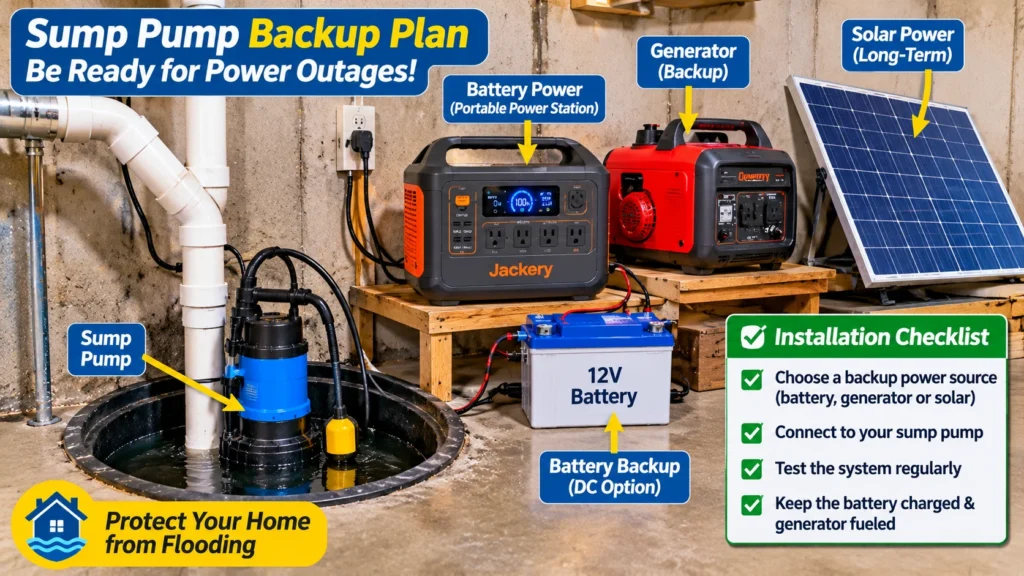
A good backup arrangement should be designed around the actual water conditions, pump specifications, and expected outage duration. The following planning steps can help identify the equipment and installation requirements.
Step 1: Check Your Existing Sump Pump
Record the pump model, voltage, running current or wattage, discharge capacity, and maximum pumping head. Check the manufacturer’s documentation for electrical and operating requirements.
Step 2: Estimate Water Inflow
Understand how quickly water enters the sump basin during normal conditions and heavy rainfall. A backup pump must be able to remove water at a rate suitable for the property’s actual inflow conditions.
Step 3: Choose the Backup Method
Decide whether a dedicated battery pump, portable power station, generator, solar-plus-battery system, or a combination of solutions best meets your needs.
Step 4: Check Electrical Compatibility
Confirm that the selected equipment supports the pump’s voltage, running power, startup surge, and operating requirements. Electrical connections to household wiring or a dedicated backup circuit should be designed and installed by a qualified electrician.
Step 5: Verify the Discharge Arrangement
The backup pump must discharge water to a suitable location without causing it to flow back toward the foundation. Check the discharge piping, check valves, pipe routing, freezing exposure, and local drainage requirements.
Step 6: Test the Complete System
Test the backup pump, float switch, alarm, charger, and power source according to the manufacturer’s instructions. Confirm that the backup pump activates at the correct water level and that the discharge arrangement works properly.
Testing should be performed before storm season and repeated at the intervals recommended by the manufacturer.
10. Common Sump Pump Backup Problems
Even a backup system can fail if the battery is weak, the float switch is obstructed, or the pump is unable to remove water effectively. Regular inspection can help identify these problems before an emergency.
| Problem | Possible Cause | What to Check |
|---|---|---|
| Backup pump does not start | Low battery, faulty controller, blocked float | Battery condition, alarms, and float movement |
| Battery does not charge | Charger fault, disconnected power, battery failure | Charging indicator and manufacturer diagnostics |
| Pump runs but water level stays high | High inflow, blocked discharge, insufficient pump capacity | Water inflow and discharge condition |
| Backup alarm sounds | Power loss, low battery, or system fault | Alarm code and system manual |
| Portable power station shuts down | Overload, startup surge, low battery | Inverter rating and pump compatibility |
| Generator cannot start the pump | Insufficient surge capacity or incorrect connection | Generator output and pump starting requirements |
These symptoms are not definitive diagnoses. Follow the equipment manufacturer’s troubleshooting procedure. Never bypass an alarm, protective device, breaker, or electrical safety feature to keep a pump running.
11. Important Generator and Electrical Safety Rules
Backup power equipment can introduce serious hazards if it is installed or operated incorrectly. Water, electricity, batteries, and fuel-powered generators require particular care in basement and crawl-space environments.
Never Run a Portable Generator Indoors
Never operate a portable gasoline, diesel, or propane generator inside a home, basement, garage, crawl space, or other enclosed or partially enclosed area. Generator exhaust contains carbon monoxide, an invisible and odorless gas that can cause serious injury or death.
Operate generators outdoors in a suitable location away from doors, windows, vents, and air intakes. Follow the manufacturer’s placement instructions and applicable local safety guidance.
Do Not Backfeed Household Wiring
Never connect a portable generator to a standard wall outlet or attempt to feed electricity into household wiring using an improvised cable. This can create a dangerous backfeed condition and expose occupants, utility workers, and equipment to electrical hazards.
A generator connected to household circuits requires properly designed transfer equipment that isolates the home from the utility supply. Have this work completed by a qualified electrician.
Keep Electrical Equipment Away From Water
Never handle plugs, electrical connections, battery controllers, or appliances while standing in water or on a wet surface. If water has reached electrical equipment or outlets, do not enter the affected area or attempt to operate equipment. Have the electrical hazard assessed by qualified professionals.
Install Appropriate Protection
Use suitable electrical protection, grounding, weather-rated equipment where required, and correctly selected wiring. Battery systems must also be installed according to their chemistry, ventilation, temperature, and environmental requirements.
Keep portable generators, fuel, and electrical equipment in locations that comply with manufacturer instructions and local safety regulations.
12. How to Maintain Your Sump Pump Backup System
Backup equipment is only useful if it works when the main power supply fails. Regular maintenance is therefore an important part of basement flood prevention.
- Inspect the sump pit: Remove debris that could obstruct the pump or float switch.
- Check the battery: Follow the manufacturer’s inspection and replacement recommendations.
- Test the alarm: Confirm that audible or visual warnings operate correctly.
- Inspect discharge piping: Look for blockages, leaks, damage, and possible freezing.
- Check the charger: Confirm that the battery charging system indicates normal operation.
- Test backup activation: Follow the manufacturer’s safe testing procedure.
- Maintain the generator: Follow service intervals and store fuel safely according to local requirements.
- Review solar production: Check panel condition, battery state of charge, and inverter warnings.
Keep a record of inspections and test results. This can make it easier to identify declining battery performance or changes in pump operation.
13. Frequently Asked Questions
Can a sump pump work without electricity?
A conventional electric sump pump normally requires electricity. However, a separate battery-powered backup pump or a suitable water-powered backup system may continue removing water when grid electricity is unavailable.
How long will a battery backup sump pump run?
Runtime depends on battery capacity, pump consumption, battery condition, pumping height, water inflow, and how frequently the pump operates. Check the manufacturer’s runtime information under conditions similar to your installation.
Can a portable power station run my existing sump pump?
It may be possible if the power station supports the pump’s voltage, continuous power, and motor startup surge. Its battery capacity must also be sufficient for the expected operating time. Test compatibility before depending on it during an outage.
Is a generator better than a battery backup sump pump?
Neither is automatically better for every property. A dedicated battery backup pump can start automatically and does not produce exhaust. A generator can provide power for longer periods when fuel is available and may operate other appliances. Some homes benefit from using both as separate layers of protection.
Can solar panels power a sump pump at night?
Solar panels do not generate normal electricity at night. A compatible battery system can store daytime solar energy and supply the pump when sunlight is unavailable.
Should I replace my primary sump pump with a battery backup pump?
Usually, a dedicated backup pump is intended to provide secondary protection rather than replace the primary pump. Its capacity and operating limits may differ. Follow the system manufacturer’s design and installation instructions.
What happens if the backup battery runs out?
Once the battery reaches its discharge limit, the backup pump may stop operating. A generator, compatible solar charging system, or another approved backup method may provide additional protection, depending on the system design.
Can I use a car battery for a sump pump backup?
Do not assume an automotive starting battery is suitable for repeated sump pump backup operation. Many dedicated systems require a specified deep-cycle battery and compatible charger. Use only battery types approved by the pump manufacturer.
Conclusion: Choose a Reliable Sump Pump Backup Before the Next Outage
A power outage during heavy rainfall can leave a basement vulnerable if its sump pump depends entirely on grid electricity. Preparing a backup system before an emergency can help reduce the risk of water damage.
A dedicated battery backup sump pump is often a practical starting point because it can operate independently of the primary pump. A generator may provide longer operation when fuel is available, while solar panels combined with battery storage can help recharge a compatible backup system.
The right choice depends on your pump’s electrical requirements, water inflow, desired backup duration, available space, and budget. Most importantly, test and maintain the complete system before relying on it during a storm.
Related reading: Learn more about solar power systems with battery storage, solar-powered water pumps, and DIY solar battery backup systems.
Disclaimer: This article is for general educational purposes. Sump pump, battery, generator, plumbing, and electrical installations must follow manufacturer instructions and applicable local regulations. Consult qualified professionals for electrical connections, generator transfer equipment, and flood-protection system design.