
Wood Stove Heat Exchanger: How to Capture More Heat and Improve Heating Efficiency
Discover how wood stove heat exchangers work, how they transfer heat into your home, and what to consider before choosing a safer, more efficient heating system.
A wood-burning stove can provide comfortable heat during cold weather, especially in cabins, rural homes, workshops, and off-grid buildings. However, some of the heat produced during combustion leaves the building through the exhaust system.
This has inspired homeowners and DIY enthusiasts to explore wood stove heat exchangers—systems designed to transfer useful heat from a wood-burning appliance or its approved heat-transfer surfaces into the surrounding living space.
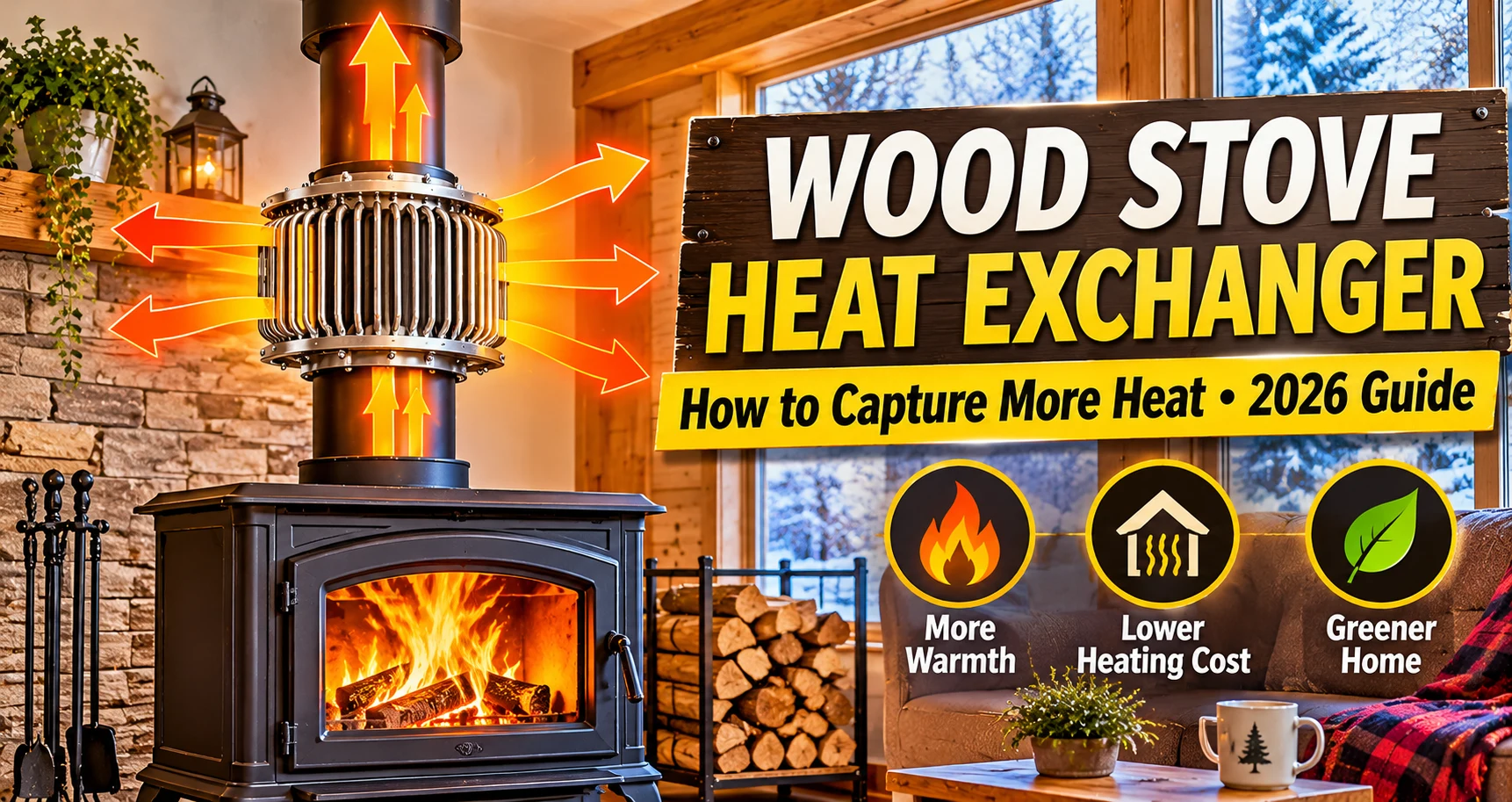
The illustration accompanying this article shows a wood stove connected to a separate chamber containing internal passages. The concept is to expose a larger heat-transfer surface to hot gases and recover some of their energy before the gases exit through the chimney.
Although this idea sounds simple, modifying a stove’s exhaust path can be dangerous. The chimney is an essential part of the combustion system, and restricting or excessively cooling exhaust gases can cause serious problems.
1. What Is a Wood Stove Heat Exchanger?
A wood stove heat exchanger is a device or engineered arrangement that transfers heat from one medium to another.
In residential heating, the objective is to make more of the heat generated by a wood-burning appliance useful inside the building.
Depending on the design, heat can be transferred through:
- Radiation: Heat travels from a hot surface to surrounding objects and surfaces.
- Convection: Moving air absorbs heat from a warm surface and carries it into the room.
- Conduction: Heat moves through solid materials that are in contact.
Commercial wood-burning appliances already use engineered firebox and heat-transfer designs. Some also include approved secondary combustion systems that improve the combustion of wood gases.
These technologies are different from an improvised device installed in the exhaust pipe.
2. How Does a Wood Stove Heat Exchanger Work?
The basic principle is heat transfer.
Burning wood releases thermal energy. Some heats the stove body and surrounding room, while hot combustion gases travel through the approved venting system.
A properly engineered heating appliance is designed to balance heat transfer with the temperature and flow requirements of its exhaust system.
The General Heating Process
Wood burns inside the approved firebox and releases heat.
The appliance transfers heat through its engineered surfaces.
Radiant and convective heat warm the indoor environment.
Combustion products leave through a correctly designed chimney.
The purpose of a good heating system is not simply to remove as much heat as possible from the exhaust. It must also maintain proper combustion, chimney draft, and safe exhaust temperatures.
3. Understanding the Heat Exchanger in the Illustration
The reference illustration shows a wood stove, connecting pipework, an exhaust outlet, and a separate chamber with internal passages.
It represents a heat-recovery concept in which hot gases travel through a longer path and transfer heat to surrounding metal surfaces.
The illustrated components can be understood conceptually as follows:
The main appliance where wood combustion produces heat for the room.
The diagram depicts a connection between the stove and the secondary chamber. Actual venting components must follow the appliance’s approved configuration.
The chimney safely carries combustion products outside while maintaining the draft required by the appliance.
This chamber represents a secondary heat-transfer surface. The pictured homemade arrangement should not be copied or connected to a real stove without a professionally engineered and approved system.
The indoor environment receives heat from the appliance and its approved heat-transfer surfaces.
4. Different Types of Wood Stove Heat Exchangers
Not all heat exchangers work in the same way. Some are integrated into the appliance, while others transfer heat through a separate approved heating circuit.
1. Built-In Stove Heat Exchangers
Many modern wood stoves use carefully designed firebox geometry and heat-transfer surfaces to deliver heat to the room.
These components are engineered as part of the appliance and tested for the intended operating conditions.
2. Convection Jackets
Some stoves use an outer jacket or convection channels around the firebox.
As air moves around the hot stove body, it absorbs heat and rises into the room. This can improve heat distribution compared with relying only on direct radiation.
3. Approved Stovepipe Heat-Transfer Accessories
Some manufacturers offer specific accessories designed for compatible appliances. Their suitability depends on the stove model, flue configuration, and installation requirements.
Never assume that a generic pipe-mounted device is safe for every wood stove.
4. Thermal Mass Heating Systems
Thermal mass systems use materials such as masonry or other suitable dense materials to absorb heat and release it gradually.
Some purpose-designed masonry heaters incorporate engineered internal gas pathways. These are complete heating systems that require professional design, rather than simple modifications to an ordinary stove chimney.
5. Hydronic Wood Heating Systems
Some purpose-built wood-fired boilers and approved hydronic appliances transfer heat into water.
The heated water can then circulate through compatible radiators or underfloor heating systems.
These systems require appropriate controls, pressure protection, expansion arrangements, and professional installation.
5. Benefits of a Properly Designed Wood Stove Heat-Transfer System
More Useful Indoor Heat
A well-designed appliance can transfer a substantial portion of its available heat into the intended living space.
Improved Heat Distribution
Convection-based designs can help move warm air around a room rather than concentrating all the heat near the stove.
Potentially Better Fuel Efficiency
A properly sized and well-designed wood-burning appliance can provide more useful heat from the fuel consumed.
However, efficiency depends on the complete appliance and venting system, not simply the presence of an additional metal chamber.
Useful for Off-Grid Buildings
Wood heating can provide warmth without depending entirely on an electrical grid connection.
This makes properly installed wood-burning appliances relevant to cabins, rural properties, and some off-grid homes.
Compatibility With Other Heating Strategies
Wood heating can be combined with insulation, passive solar design, thermal mass, and efficient ventilation to reduce the overall heating demand of a building.
6. The Biggest Risk: Creosote Buildup
One of the most important considerations when discussing wood stove heat exchangers is creosote.
Creosote is a combustible residue formed when wood combustion gases cool and condense inside the chimney or connecting flue.
It can appear as flaky deposits, sticky tar-like material, or hard shiny buildup.
If enough creosote accumulates, it can ignite and cause a dangerous chimney fire.
- They may cool exhaust gases excessively.
- They can interfere with the chimney draft.
- They may create additional locations for creosote accumulation.
- They can make cleaning and inspection more difficult.
- They may cause smoke or carbon monoxide to enter the building.
The U.S. Environmental Protection Agency explains that restricted airflow, unseasoned wood, and cooler chimney conditions can contribute to creosote formation.
For this reason, the chimney must remain correctly sized, installed, maintained, and compatible with the stove.
7. Why Chimney Draft Matters
Chimney draft is the movement of combustion gases from the stove toward the outside atmosphere.
It is influenced by several factors:
- Chimney height.
- Flue diameter.
- Flue temperature.
- Outdoor temperature.
- Building air pressure.
- Chimney configuration.
- Appliance design.
When draft is inadequate, a stove may burn poorly or release smoke into the room.
Adding an unapproved heat exchanger to the exhaust path can change gas temperature and flow resistance. This is why the chimney and stove must be evaluated as one complete system.
8. Safer Ways to Improve Wood Stove Heating Efficiency
Homeowners do not need to modify the chimney to make meaningful improvements to their heating setup.
Choose an Efficient Wood Stove
Consider a properly sized, certified appliance that meets applicable emissions and safety requirements.
Modern appliances may include engineered combustion and heat-transfer features that improve performance compared with older designs.
Burn Properly Seasoned Wood
Wet wood uses energy to evaporate moisture and can produce more smoke.
Use dry firewood that meets the appliance manufacturer’s fuel recommendations. A moisture meter can help assess firewood moisture content.
Improve Home Insulation
Insulating the roof, walls, and floor can reduce the amount of heat required to maintain comfortable indoor temperatures.
Seal Unwanted Air Leaks
Uncontrolled air leakage can increase heating demand. Properly sealing suitable gaps around doors, windows, and building penetrations can help reduce heat loss.
Use Approved Heat Shields
Some stove installations can use manufacturer-approved heat shields to meet specified clearance requirements.
Do not improvise wall or ceiling protection. Follow the stove manual and local building requirements.
Improve Room Air Circulation
A suitable room circulation fan can help distribute warm air more evenly, provided it is positioned and operated according to the manufacturer’s instructions.
9. Wood Stove Heat Exchanger vs. Thermal Mass Heater
These systems both use heat from wood combustion, but they have different designs and operating principles.
| Feature | Wood Stove | Masonry Heater |
|---|---|---|
| Main Material | Usually steel or cast iron | Masonry and other suitable thermal materials |
| Heat Storage | Depends on appliance mass | Designed for substantial thermal storage |
| Heat Delivery | Radiation and convection | Gradual heat release from masonry surfaces |
| Installation | Requires approved stove and chimney installation | Requires specialized design and construction |
| Typical Application | Homes, cabins, workshops | Purpose-designed residential heating |
10. Can a Wood Stove Heat an Off-Grid Home?
Yes. A properly installed wood stove can be one component of an off-grid home’s heating strategy.
It can provide useful space heating without requiring an electric heating element or a grid connection.
A well-planned off-grid home may combine wood heating with:
- Solar photovoltaic panels for electricity.
- Battery storage for electrical backup.
- Good insulation and airtight construction.
- Passive solar heating through appropriately designed windows.
- Thermal mass to help moderate indoor temperatures.
- Mechanical ventilation designed for indoor air quality.
Each system serves a different purpose. Solar panels generate electricity, batteries store electrical energy, and a wood stove provides heat through combustion.
Combining these technologies can reduce dependence on external energy supplies, but each must be designed and installed safely.
11. Wood Stove Heat Exchanger: Common Mistakes to Avoid
Installing an Unapproved Chamber in the Flue
This can change draft, exhaust temperature, and creosote accumulation. Do not copy improvised exhaust designs.
Using Wet Firewood
Wet wood can increase smoke and creosote formation while reducing useful heat output.
Ignoring Chimney Maintenance
A chimney that is not inspected and cleaned when needed can become a serious fire hazard.
Choosing an Oversized Stove
An oversized appliance may be operated inefficiently if its output is continually restricted. Correct sizing matters.
Ignoring Carbon Monoxide Protection
Install and maintain carbon monoxide alarms according to the alarm manufacturer’s instructions and local requirements.
Placing Combustible Materials Too Close
Furniture, curtains, timber, and other combustible materials must remain outside the clearances specified by the appliance manufacturer.
12. Wood Stove Safety and Maintenance Checklist
Before the heating season, review the following items:
☐ Have the stove and chimney professionally inspected.
☐ Check the appliance for damage or deterioration.
☐ Confirm that the chimney is compatible with the appliance.
☐ Check the required clearances to combustible materials.
☐ Use the correct type of dry firewood.
☐ Inspect and clean the chimney when required.
☐ Check smoke and carbon monoxide alarms.
☐ Keep combustible materials away from the stove.
☐ Follow the appliance manufacturer’s operating instructions.
☐ Avoid unapproved modifications to the stove or flue.
The Chimney Safety Institute of America recommends regular inspection and appropriate cleaning of chimneys to reduce the risk of chimney fires.
13. Is a Wood Stove Heat Exchanger Worth It?
A heat exchanger can be a useful part of a properly engineered heating system. However, the design and installation are more important than simply increasing the amount of metal exposed to hot exhaust gases.
For most homeowners, the sensible approach is to start with an efficient, correctly sized wood stove and its approved accessories.
Before considering any additional heat-transfer equipment, evaluate:
- The stove manufacturer’s approved accessories.
- The existing chimney configuration.
- Required chimney draft.
- Combustion performance.
- Creosote and maintenance requirements.
- Installation and fire-safety requirements.
A qualified wood-heating professional can determine whether a particular heat-recovery accessory is compatible with the appliance.
Final Thoughts
A wood stove heat exchanger is an interesting concept for improving the use of heat produced by burning wood. By understanding radiation, convection, conduction, and thermal storage, homeowners can make better decisions about heating efficiency.
However, recovering more heat is not simply a matter of forcing hot smoke through a longer or more complicated pipe. The stove and chimney must work together to maintain safe combustion and reliable exhaust flow.
For a safer and more efficient heating system, choose a properly sized appliance, burn dry wood, maintain the chimney, improve home insulation, and use only manufacturer-approved heat-transfer accessories.
Frequently Asked Questions
1. What is a wood stove heat exchanger?
It is a device or engineered arrangement that transfers heat from a wood-burning appliance or another heat source to the surrounding air or a separate heating medium.
2. Can I build a homemade heat exchanger for my wood stove?
You should not improvise a device that modifies the stove’s exhaust path. Incorrect designs can interfere with draft, increase creosote buildup, and create fire or carbon monoxide hazards. Use approved equipment and qualified installation services.
3. Does a wood stove heat exchanger save wood?
A properly designed and compatible heating system may improve useful heat delivery, but actual fuel savings depend on the appliance, building, fuel quality, and operating conditions.
4. What is creosote in a wood stove chimney?
Creosote is a combustible residue produced when wood combustion gases cool and condense inside the chimney. Excessive buildup can cause a chimney fire.
5. Can a heat exchanger reduce chimney heat loss?
An engineered appliance may transfer heat effectively while maintaining the required exhaust conditions. However, excessive cooling of chimney gases can create draft and creosote problems.
6. Is a masonry heater better than a regular wood stove?
It depends on the building, heating needs, budget, and installation possibilities. Masonry heaters are designed to store heat and release it gradually, while conventional stoves generally provide more immediate heat.
7. Do wood stoves need carbon monoxide alarms?
Carbon monoxide alarms are an important safety measure in buildings with combustion appliances. Install them according to the manufacturer’s instructions and applicable local requirements.
8. How often should a wood stove chimney be inspected?
Fire-safety organizations recommend regular professional inspections, generally at least annually, with cleaning and repairs based on the chimney’s condition and usage.
Disclaimer: This article is for educational purposes only. Wood-burning appliances and chimney systems involve fire, smoke, and carbon monoxide hazards. Do not modify a stove or flue using an improvised heat exchanger. Follow manufacturer instructions, applicable building codes, and qualified professional advice.