
SOLAR MAINTENANCE GUIDE · 2026
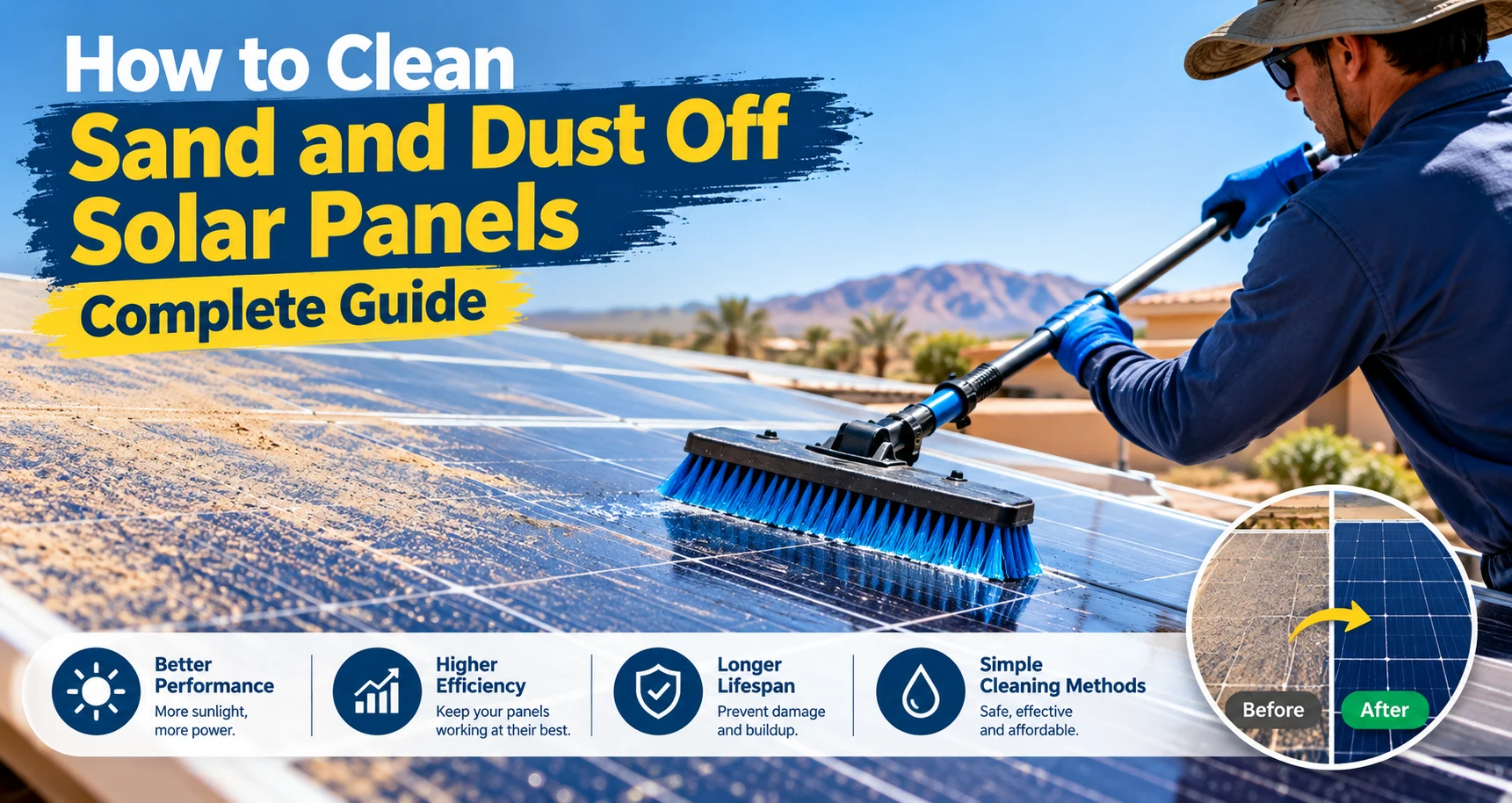
How to Clean Sand and Dust Off Solar Panels: Complete Guide
Discover how to remove sand, dust, and stubborn dirt from solar panels without scratching the glass or damaging your solar energy system.
To clean sand off solar panels, first check the manufacturer’s cleaning instructions, switch off the system if required, and allow the panels to cool. Gently rinse loose sand away with clean, low-pressure water. If necessary, use a soft, non-abrasive brush designed for solar panels. Never scrub dry sand across the glass, use a pressure washer, or walk on the panels.
Sand and dust can quickly cover solar panels, especially in desert climates, dry regions, and areas exposed to strong winds. A thin layer of dust may seem harmless, but heavy sand accumulation can block sunlight and reduce the amount of electricity your photovoltaic (PV) system produces.

Knowing how to clean sand off solar panels correctly can help maintain energy production, protect the glass surface, and prevent unnecessary maintenance costs.
In this guide, you will learn why sand affects solar performance, how to clean dirty panels safely, which tools to use, and when professional solar panel cleaning is the better option.
1. Why Sand and Dust Are a Problem for Solar Panels
Solar panels generate electricity when sunlight reaches their photovoltaic cells. When sand, dust, and other contaminants cover the glass, less sunlight may reach those cells.
The impact depends on the amount of dirt, the type of particles, the panel’s angle, local weather, and the design of the solar installation. Light dust may have little effect in some conditions, while heavy or uneven deposits can cause more noticeable losses.
Reduced Sunlight
Dust and sand can obstruct light before it reaches the photovoltaic cells.
Lower Energy Output
Heavy contamination can reduce electricity production and affect system performance.
Stubborn Residue
Dust mixed with moisture can leave deposits that are more difficult to remove.
In desert environments, wind can deposit sand on panels repeatedly. Waiting for rain may not always solve the problem because light rain can leave muddy streaks or mineral residue.
2. Signs Your Solar Panels Need Cleaning
Solar panels do not necessarily need cleaning every week. The best approach is to inspect their condition and compare energy production with normal performance under similar sunlight and weather conditions.
- Visible layers of sand or dust covering the glass.
- Thick deposits around panel frames and lower edges.
- Persistent dirt marks following a sandstorm or dusty rain.
- A sustained drop in energy production that cannot be explained by weather or shading.
- Bird droppings or other localized deposits that remain after rainfall.
If the panels are difficult to reach, installed on a steep roof, or part of a large solar array, arrange a professional inspection rather than risking a fall.
3. Tools You Need to Clean Solar Panels Safely
Using the correct equipment helps remove sand without damaging the protective glass or surface coatings.
| Tool | Purpose | Safety Note |
|---|---|---|
| Clean water | Rinses loose sand and dust. | Avoid thermal shock from cold water on hot glass. |
| Soft solar cleaning brush | Loosens remaining dirt. | Use only a non-abrasive brush approved for the panel surface. |
| Telescopic cleaning pole | Provides reach from a safer position. | Keep well away from overhead electrical lines. |
| Manufacturer-approved cleaner | Helps remove stubborn residue when needed. | Follow the panel manufacturer’s instructions. |
For most routine cleaning, clean water and a suitable soft brush are sufficient. Avoid abrasive pads, rough cloths, and household chemicals unless the panel manufacturer specifically approves them.
4. How to Clean Sand Off Solar Panels Step by Step
Follow these steps to remove accumulated sand while minimizing the risk of scratches and electrical hazards.
Step 1: Check the Weather and Panel Temperature
Choose a cool period, such as early morning, when the panels are not excessively hot. Avoid cleaning during strong winds, thunderstorms, or other unsafe weather conditions.
Why it matters: Sudden temperature changes can stress hot glass, and wet surfaces can become slippery.
Step 2: Follow the Manufacturer’s Safety Instructions
Review the solar panel and inverter documentation before cleaning. Follow the manufacturer’s required shutdown and isolation procedures. Switching off an inverter does not necessarily make every part of a solar installation electrically safe.
If electrical isolation is required and you are unsure how to do it safely, contact a qualified solar technician.
Step 3: Rinse Away Loose Sand
Use clean water at low pressure to loosen and carry away loose sand. Allow the water to do the work instead of immediately rubbing the dusty glass.
Never use a pressure washer. High-pressure water can damage seals, connectors, or other components.
Step 4: Remove Remaining Dirt Gently
After rinsing away loose particles, use a soft, non-abrasive solar cleaning brush if necessary. Work gently and follow the panel manufacturer’s recommended cleaning method.
Do not scrub dry sand across the glass. Sand particles can act like abrasives and may scratch the surface.
Step 5: Rinse Thoroughly
Rinse away loosened dirt and any approved cleaning solution. If your local water leaves mineral spots, consider using demineralized water where recommended by the manufacturer.
Do not apply detergents, solvents, or other chemicals unless they are explicitly approved for your panels.
Step 6: Inspect the Panels and Check Performance
Look for remaining deposits, cracks, damaged frames, or loose cables that are visible without touching electrical components. Once the system is safely returned to its normal operating state, check the monitoring app or inverter display.
Compare production under similar sunlight and weather conditions rather than relying on a single reading.
Pro Tip for Desert and Dusty Regions
After a major sandstorm, inspect your panels and review the production data. Clean them when the contamination is significant enough to justify the cost, water use, and safety risks. A routine based on actual conditions is usually better than cleaning on an arbitrary schedule.
5. Solar Panel Cleaning Mistakes to Avoid
Improper cleaning can cause damage that costs more to repair than the cleaning itself.
| Mistake | Why to Avoid It | Better Approach |
|---|---|---|
| Dry scrubbing sand | Can scratch the glass. | Rinse loose particles first. |
| Pressure washing | May damage seals and components. | Use low-pressure water. |
| Cleaning hot panels | May create thermal stress. | Clean when panels are cool. |
| Using abrasive brushes | Can damage the surface. | Choose a suitable soft brush. |
| Walking on panels | Can cause dangerous falls and panel damage. | Clean from a safe position or hire professionals. |
6. How Often Should You Clean Solar Panels?
There is no universal cleaning schedule for every solar installation. The right frequency depends on local rainfall, wind, dust levels, panel angle, nearby roads, and the cost of maintenance.
Suggested Inspection Schedule
- Dry desert climates: Inspect after significant dust events and during routine maintenance.
- Areas with frequent dust storms: Check panels and production data after major storms.
- Rainy climates: Rain may remove some dust, but inspect for persistent residue.
- Solar farms: Use performance monitoring and maintenance records to plan cleaning.
- Residential systems: Inspect periodically and clean when visible contamination or production data indicates a need.
Instead of cleaning too frequently, compare the estimated benefit of restoring production with labor, water, equipment, and safety costs. This is especially important for large solar farms.
7. Can You Clean Solar Panels Without Water?
Yes. Some specialized solar panel cleaning systems use dry brushes, automated equipment, or electrostatic methods to remove dust while reducing water consumption.
However, not every dry-cleaning method is suitable for every panel or type of dirt. Dragging sand across the glass with an unsuitable brush may cause scratches. Sticky residue and dirt mixed with moisture can also be difficult to remove without water.
Research has explored alternative cleaning technologies, including ionic-wind systems designed to move sand particles without direct mechanical scrubbing. These technologies should not be confused with ordinary household air blowers or treated as universally available commercial solutions.
Choose a waterless cleaning method only when it is compatible with your panel manufacturer’s instructions and the type of contamination. In areas where water is scarce, compare the cost, effectiveness, and maintenance needs of different cleaning options.
8. Are Automatic Solar Panel Cleaning Robots Worth It?
Automatic solar panel cleaning robots can be useful for large installations, particularly solar farms in dry and dusty environments. Depending on the design, they may use soft brushes, controlled water delivery, or other cleaning technologies.
Some systems operate along rails or across panel rows, helping maintenance teams clean large areas with less manual labor. Waterless robotic systems may also be attractive in locations where water is expensive or difficult to obtain.
Benefits of Automated Cleaning
- Can reduce repeated manual cleaning work.
- May support more consistent maintenance schedules.
- Can reduce water use when designed for dry cleaning.
- May improve maintenance efficiency across large solar arrays.
Potential Limitations
- Initial equipment and installation costs.
- Maintenance requirements for moving parts and control systems.
- Compatibility limitations across different panel layouts.
- Potential need for manual cleaning when sticky dirt remains.
For a small home solar installation, manual cleaning by a qualified professional may be more economical. For a large solar farm, a detailed cost analysis can help determine whether automation is worthwhile.
9. How to Prevent Sand From Accumulating on Solar Panels
You cannot completely prevent windblown sand from reaching a solar array, but several practical steps can make maintenance easier.
- Monitor local dust conditions: Schedule inspections after major sandstorms.
- Track energy production: Use your inverter or monitoring platform to identify unusual changes.
- Keep the surrounding area maintained: Where practical, reduce avoidable dust sources near ground-mounted installations without obstructing airflow or sunlight.
- Follow suitable installation guidance: Ensure panel mounting and tilt comply with the system design and local conditions.
- Use a planned maintenance program: Record cleaning dates, visible contamination, and production before and after cleaning.
- Consider professional cleaning: Choose qualified service providers for large, elevated, or difficult-to-access systems.
10. Is Professional Solar Panel Cleaning Worth the Cost?
Professional cleaning can be worthwhile when panels are heavily contaminated, difficult to access, or installed on a large commercial site. A professional service may have suitable equipment, safe access systems, and experience working with photovoltaic installations.
Before booking a service, consider:
- The size of the solar installation.
- The amount and type of dirt on the panels.
- The cost of cleaning compared with the expected production benefit.
- Water availability and cleaning requirements.
- Roof access, electrical hazards, and fall risks.
Ask the provider which cleaning methods they use, whether the methods follow the manufacturer’s recommendations, and whether the service includes inspection for visible damage.
Frequently Asked Questions
1. Does sand reduce solar panel efficiency?
Yes. Sand can block sunlight from reaching photovoltaic cells and reduce electricity production. The actual impact depends on the amount of contamination, panel design, weather, and operating conditions.
2. What is the safest way to remove sand from solar panels?
Follow the manufacturer’s cleaning instructions, allow hot panels to cool, rinse loose sand away with clean low-pressure water, and use an approved soft brush only when necessary. Avoid dry scrubbing.
3. Can rain clean sand off solar panels?
Rain can remove some loose dust, but it may leave residue or muddy streaks, especially when rainfall is light. Inspect your panels after dusty weather to determine whether further cleaning is needed.
4. Can I use a pressure washer on solar panels?
Avoid pressure washers unless the panel manufacturer explicitly approves a specific method. High-pressure water can damage seals, electrical components, and other parts of the installation.
5. Should I clean solar panels every month?
Not necessarily. Cleaning frequency depends on dust exposure, rainfall, panel angle, energy production, and cleaning costs. Inspect panels periodically and clean them when conditions justify it.
6. Can I clean solar panels while they are producing electricity?
Solar panels can remain electrically energized in daylight even when an inverter is switched off. Follow the manufacturer’s procedures and consult a qualified technician when electrical isolation or safe access is uncertain.
7. Are solar panel cleaning robots suitable for homes?
Some robots can clean residential systems, but their cost and compatibility vary. For a small installation, professional manual cleaning may be more economical than buying an automated system.
Final Thoughts
Sand and dust are common maintenance challenges for solar panels, especially in dry and desert climates. Although some dirt may be removed by rain or wind, heavy deposits can interfere with sunlight reaching the photovoltaic cells.
The safest approach is to inspect your panels, monitor electricity production, and use a gentle cleaning method approved by the manufacturer. Rinse loose sand away before using a brush, avoid abrasive tools and high-pressure water, and never take unnecessary risks on a roof.
With sensible inspections and an appropriate maintenance plan, you can help protect your solar investment and keep your system operating as intended.
Keep Your Solar Panels Clean and Protected
Inspect regularly, clean carefully, and use your solar monitoring data to make informed maintenance decisions.
Disclaimer: This article provides general solar maintenance information. Always follow the instructions supplied by your solar panel and inverter manufacturers. Roof work, electrical isolation, and cleaning of large or elevated installations may require qualified professionals.